

What Is the East Africa Tourist Visa and How Does It Work? Complete 2026 Guide
What Is the East Africa Tourist Visa and How Does It Work? The East Africa Tourist Visa is a regional tourism visa created to make it easier for international visitors to travel through Rwanda, Uganda and Kenya during the same holiday without obtaining a completely separate tourism visa each time they cross from one participating country into another. Under the current arrangement, the visa costs USD 100, is generally valid for 90 days and allows multiple travel between Rwanda, Uganda and Kenya while the holder remains within the participating three-country area. It is intended specifically for tourism, meaning it is particularly useful for travellers planning an East African safari that combines Rwanda’s mountain gorillas, Uganda’s primates and wildlife parks, and Kenya’s famous savannah safari destinations. Rwanda Immigration and Uganda Immigration continue to describe the East Africa Tourist Visa as a joint tourism arrangement covering these three countries, with the issuing country serving as the traveller’s first point of entry.

The East Africa Tourist Visa can be one of the most convenient immigration arrangements for travellers who want to experience several of East Africa’s major destinations during one journey. Instead of treating Rwanda, Uganda and Kenya as three entirely separate holidays, the regional visa allows the traveller to design one connected itinerary. A journey might begin in Kigali with a city stay before continuing to Volcanoes National Park for gorilla trekking, cross into Uganda for Bwindi Impenetrable National Park, Queen Elizabeth National Park and Kibale Forest, then continue toward Kenya for the Maasai Mara, Nairobi or another safari destination. When the visa has been correctly issued and remains valid, movement between the three participating countries does not require the traveller to purchase a fresh standard tourist visa every time one of those internal regional borders is crossed.
Although the concept sounds simple, travellers need to understand several important conditions before applying. The East Africa Tourist Visa is not a universal visa covering every East African country, it is not a work permit, and it should not be confused with the broader East African Community membership structure. Tanzania, Burundi, South Sudan and the Democratic Republic of the Congo are not currently included in the joint tourism visa even though some of these countries are part of the East African Community. The visa is specifically structured around tourism travel between Rwanda, Uganda and Kenya. This distinction becomes especially important when travellers design itineraries that include destinations such as Serengeti National Park in Tanzania, Zanzibar, Victoria Falls or gorilla trekking in the Democratic Republic of the Congo because crossing outside the three-country East Africa Tourist Visa area can affect the validity and practical use of the regional visa.
What Exactly Is the East Africa Tourist Visa?
The East Africa Tourist Visa is a joint visitor visa that enables an eligible international tourist to travel within Rwanda, Uganda and Kenya under a single regional tourism arrangement. It was created to make East Africa easier to experience as one connected tourism region rather than forcing travellers to navigate completely separate immigration systems for every border crossing. Uganda’s current immigration information describes it as a joint tourist visa allowing travel to Uganda, Kenya and Rwanda for tourism purposes, while Rwanda Immigration identifies it as the V11 East African Tourist Visa and confirms that it is intended for foreign tourists visiting countries that are signatories to the regional agreement.

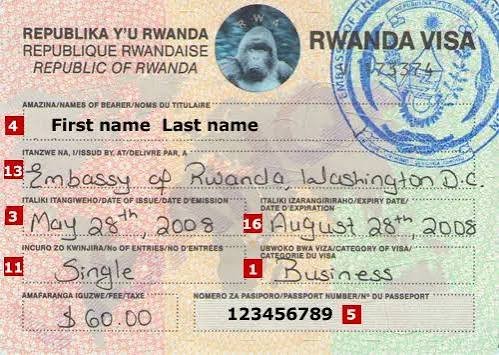
For the traveller, the main practical advantage is simplicity. Once the correct visa has been issued and the visitor enters through the country that issued it, the traveller can move between the three participating countries during the authorised period without applying for another conventional tourist visa every time they enter one of them. This is especially valuable for safari travel because wildlife routes frequently cross national boundaries. Rwanda, Uganda and Kenya offer very different tourism experiences, and combining them can create a much richer East African journey than visiting only one destination.
The regional visa should nevertheless be viewed as an immigration document rather than a safari package. It provides permission to travel under the agreed tourism framework, but it does not include gorilla permits, national park fees, hotel accommodation, wildlife activities, internal flights, safari vehicles or guided tours. Those expenses remain separate and should be budgeted according to the itinerary.
Which Countries Does the East Africa Tourist Visa Cover?
The East Africa Tourist Visa currently covers Rwanda, Uganda and Kenya. A traveller holding a valid visa can move between these three countries according to the conditions of the regional arrangement. Uganda’s immigration authority explicitly describes the visa as applying to Uganda, Kenya and Rwanda only and states that it does not grant entry into Tanzania, Burundi or South Sudan.
This is one of the most important details for safari planning because the term “East Africa Tourist Visa” can make travellers assume that the visa covers the entire East African region. It does not. A visitor combining Rwanda, Uganda and Kenya can use the regional visa, but someone adding Tanzania to the itinerary will need to meet Tanzania’s separate immigration requirements. The same principle applies when a route includes Burundi, South Sudan or the Democratic Republic of the Congo.
This distinction should be considered before paying for the visa. If a traveller’s itinerary involves only Rwanda and Uganda, the East Africa Tourist Visa may still be useful, depending on nationality and the cost of separate entry permissions. If the holiday includes Rwanda, Uganda and Kenya, the regional visa becomes even more relevant. If the trip is Rwanda and Tanzania, however, the East Africa Tourist Visa may not provide the same value because Tanzania is outside the arrangement.
How Much Does the East Africa Tourist Visa Cost?
The East Africa Tourist Visa currently costs USD 100 per traveller. Rwanda Immigration publishes the USD 100 fee for its East African tourist visa category, while Uganda Immigration also lists the regional visa at USD 100. Kenya’s current immigration fee framework likewise lists an East African Tourist eTA at USD 100.
The USD 100 charge is paid per individual rather than per couple, family or safari booking. Two travellers who both require the regional visa should therefore budget USD 200, while four travellers would normally budget USD 400. Children travelling on their own passports or requiring individual immigration permission should also be considered separately rather than assuming that they are automatically included under a parent’s visa.
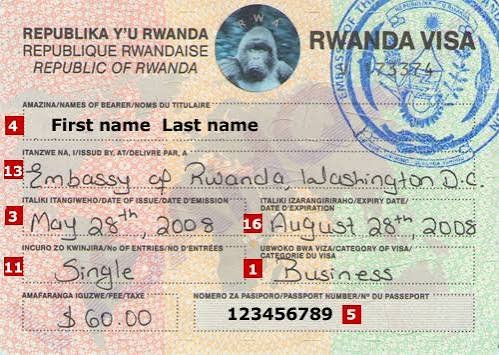
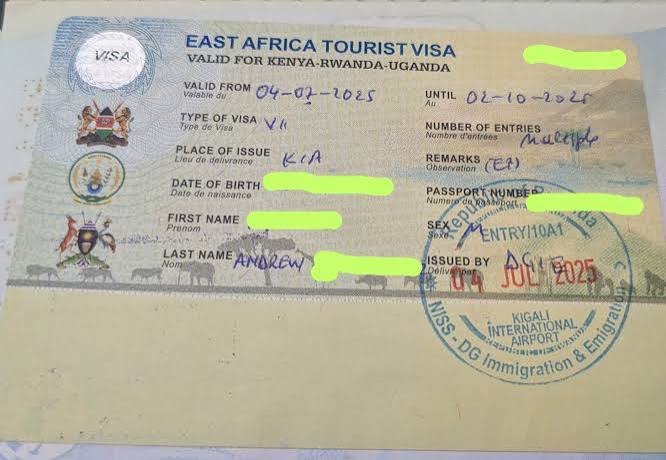
Whether USD 100 represents a financial saving depends on nationality and itinerary. A traveller whose passport requires paid tourism permission in all three participating countries may find the regional visa excellent value. Another traveller may qualify for visa-free or reduced-cost entry into Rwanda or Kenya and therefore discover that separate arrangements cost less. The visa should consequently be chosen because it suits the travel route, not simply because it sounds easier.
How Long Is the East Africa Tourist Visa Valid?
The East Africa Tourist Visa is generally valid for 90 days. Uganda Immigration states that the joint tourism visa is valid for three months, while Rwanda’s immigration information also describes the regional arrangement as a 90-day visa.
A 90-day validity period gives travellers substantial freedom when planning an extended East African journey. Most organised safaris last considerably less than three months, so a visitor taking a two-week Rwanda and Uganda safari followed by a week in Kenya will usually remain comfortably inside the authorised period.
The important point is that the validity period does not mean a visitor must remain in each participating country for 90 days. It refers to the overall visa framework. The traveller can spend different amounts of time in Rwanda, Uganda and Kenya as the itinerary requires, subject to immigration permission and the continuing validity of the regional visa.
Travellers should also distinguish the visa’s validity from the date they intend to travel. An approval issued significantly before the holiday can affect how much usable validity remains. The application should therefore be timed carefully rather than submitted unnecessarily early.
Is the East Africa Tourist Visa a Multiple-Entry Visa?
Yes. The East Africa Tourist Visa is structured as a multiple-entry regional tourism visa. This means a traveller can move between Rwanda, Uganda and Kenya without purchasing a new tourist visa each time they cross from one participating country to another, provided the regional visa remains valid and the traveller continues to meet its conditions. Rwanda Immigration describes it as multiple entry, while Uganda’s official information states that it can be used multiple times for tourism within the participating countries.
This feature makes the visa especially attractive for itineraries that do not follow a simple one-way route. A traveller might enter Rwanda, continue to Uganda and later return to Rwanda before flying home from Kigali. Under the correct East Africa Tourist Visa arrangement, that return into Rwanda does not require the traveller to purchase another standard Rwanda tourist visa.
The multiple-entry feature also allows travel planners to choose international airports according to flight availability rather than forcing the journey into a rigid structure. Someone might arrive in Kigali, explore Rwanda and Uganda, continue into Kenya and depart from Nairobi. Another traveller might begin in Uganda and later cross between Rwanda and Uganda before continuing to Kenya.
The freedom only applies within the conditions of the three-country agreement, so travellers should not assume that the same multiple-entry privileges automatically continue after leaving the participating region.
Which Country Should I Apply Through?
The most important rule when deciding where to apply is that the country issuing the East Africa Tourist Visa should be the traveller’s first point of entry into the participating region. Rwanda Immigration states that when the East Africa Tourist Visa is obtained before travel, the traveller’s first entry point must be the country through which the visa was applied for. Uganda Immigration similarly states that the issuing country should be the first entry point.
A traveller beginning the journey in Rwanda should therefore arrange the visa through Rwanda’s applicable immigration process. Someone beginning in Uganda should apply through Uganda. Travellers whose first entry is Kenya need to follow Kenya’s current immigration system for the appropriate regional travel authorisation.
This rule should influence safari planning before flights are booked. If a traveller applies through Rwanda but later changes the international ticket so that the journey begins in Entebbe, Uganda, the visa arrangement no longer matches the intended first point of entry. Changes to international flights should therefore be reviewed alongside immigration documentation rather than treated as completely separate matters.
The easiest approach is to finalise the basic route first, identify the country where the international arrival will occur and then use that country as the issuing country.
How Does the East Africa Tourist Visa Work When Rwanda Is the First Country?
Rwanda is a particularly convenient gateway for regional tourism because Kigali International Airport offers access to Kigali, Volcanoes National Park and road connections toward Uganda. A traveller whose itinerary begins in Rwanda can apply for the East Africa Tourist Visa through Rwanda and then enter the participating region through Rwanda.

Rwanda Immigration currently states that the visa can be issued upon arrival at a border post, online, through a Rwandan diplomatic mission in the applicant’s country of residence or through another place determined by the Directorate General. The applicant needs a genuine acceptable travel document valid for at least six months, the fee is USD 100 and employment is not permitted.
Once admitted into Rwanda under the regional visa, the traveller can begin the tourism itinerary before continuing to Uganda or Kenya. This works particularly well for gorilla-focused journeys because Rwanda’s Volcanoes National Park can be combined naturally with Uganda’s Bwindi Impenetrable National Park or Mgahinga Gorilla National Park.
A typical route might begin with Kigali, continue north toward Volcanoes National Park, cross into Uganda, travel through southwestern Uganda and eventually continue toward Kenya. The visa supports the immigration side of that regional journey while the safari operator arranges transportation, accommodation and activities separately.
How Does the East Africa Tourist Visa Work When Uganda Is the First Country?
Travellers beginning their journey in Uganda can apply through Uganda’s official immigration portal. Uganda’s current East African Tourist Visa requirements state that the applicant should provide a passport bio-data page showing at least six months of validity, a recent passport-size photograph, yellow fever vaccination documentation, a return ticket and a travel itinerary. Applications are handled online through the country’s immigration system.
After approval, the traveller enters the participating region through Uganda. Once admitted, the visa can support onward tourism travel to Rwanda and Kenya during the authorised period.
This arrangement is particularly suitable for itineraries beginning at Entebbe International Airport. A visitor may start with Murchison Falls National Park, Kibale Forest, Queen Elizabeth National Park and Bwindi before crossing into Rwanda. From Rwanda, the traveller may later continue into Kenya or return to Uganda depending on the final flight arrangements.
Uganda’s immigration authority advises travellers to carry the relevant approval documentation and present themselves for the necessary border procedures. Holding an approval letter should never be treated as permission to bypass immigration on arrival.
How Does the Visa Work When Kenya Is the First Country?
Kenya’s immigration framework now operates primarily through an Electronic Travel Authorisation system, and official Kenyan material continues to recognise the East African regional tourism product. A Kenyan government aviation fee schedule effective from 2025 lists an East African Tourist eTA at USD 100. Kenya’s immigration information also identifies the East Africa Tourist Visa as a joint tourism arrangement for travel to and within Kenya, Rwanda and Uganda.

Travellers beginning in Kenya should pay particular attention to the live Kenyan application procedure because Kenya’s immigration system has changed substantially since the introduction of the eTA framework. Current Kenya Immigration information states that visitors generally use the electronic travel authorisation system, subject to nationality exemptions.
Because some older Kenyan eCitizen visa pages still display the East Africa Tourist Visa as “Coming Soon” while more recent official fee schedules reference an East African Tourist eTA, visitors starting their regional trip in Kenya should confirm the current application path on Kenya’s official immigration or eTA system immediately before applying. This is a useful example of why travellers should avoid relying on old travel blogs when dealing with immigration requirements.
What Documents Are Needed for the East Africa Tourist Visa?
The precise application requirements depend partly on the country issuing the visa, but a valid passport is fundamental. Rwanda requires a genuine acceptable travel document valid for at least six months, and Uganda similarly requires a passport bio-data page showing at least six months of validity.
Uganda’s current application guidance also identifies a recent passport photograph, yellow fever vaccination certificate, return ticket and travel itinerary among the materials required for an East African Tourist Visa application.
For a safari traveller, preparing these documents is normally straightforward because the itinerary is already available through the tour operator. The document can show where the traveller plans to stay, which countries will be visited and how the journey progresses across the region.
The passport should be checked well before the application is submitted. Someone whose passport is close to expiry should renew it before committing to expensive non-refundable travel arrangements because six-month validity requirements can affect both immigration approval and airline boarding.
Does Every Traveller Need Their Own East Africa Tourist Visa?
Yes. The East Africa Tourist Visa is issued to individuals rather than entire families under one application. Uganda’s official consular information states that all persons must apply in their own right under the regional tourism visa arrangement.
Parents travelling with children should therefore consider each traveller’s immigration requirements individually. A family of four should not assume that a USD 100 parental visa automatically covers the children.
Children’s passports deserve particular attention because they often have shorter validity periods than adult passports. A child’s passport may appear relatively new but still fail the required validity period by the actual travel date.
Families should also keep immigration requirements separate from safari activity rules. A child may be eligible to enter all three participating countries under the appropriate visa but still be below the minimum age for a particular activity such as gorilla trekking. Entry permission and wildlife activity eligibility are separate matters.
Can I Work Using an East Africa Tourist Visa?
No. The East Africa Tourist Visa is specifically intended for tourism, and employment is not permitted. Rwanda Immigration states that work is not allowed under the regional visa, while Uganda provides the same restriction.
This means the visa should be used for holidays, sightseeing, safari travel and other legitimate tourism activities rather than employment. A visitor cannot take a paid job simply because the visa permits movement across three countries.
Travellers combining tourism with professional activities should determine whether another immigration category is required. Business meetings, conferences, consultancy assignments, employment and long-term work can each involve different regulations.
Tourism operators should also avoid describing the East Africa Tourist Visa as a general regional entry permit. Its function is specific and should be presented accurately.
Can the East Africa Tourist Visa Be Extended?
Travellers should plan on completing the regional journey within the original 90-day validity period rather than relying on an extension. Uganda Immigration explicitly states that its East African Tourist Visa is not renewable upon expiry and describes it as non-extendable.
Rwanda’s visa-class information includes wording allowing extension in exceptional circumstances for its V11 East African Tourist Visa category, but this should not be interpreted as a normal tourism extension available simply because the traveller wants to stay longer.
For practical safari planning, the safest approach is to treat the 90-day period as the available travel window. Someone intending to remain in East Africa longer should research the national immigration options appropriate to the planned extended stay rather than assuming another 90 days will automatically be added.
Unexpected emergencies can always be discussed with the relevant immigration authority, but they should not form part of the original holiday plan.
What Happens If I Leave Rwanda, Uganda and Kenya?
This is one of the most important rules surrounding the East Africa Tourist Visa. Uganda Immigration currently states that the visa is not renewable upon expiry or upon exit from the regional block formed by Kenya, Uganda and Rwanda. Rwanda’s general immigration guidance also describes the visa as multiple entry provided the traveller remains within the three participating countries.

The practical implication is that travellers should be very careful when adding a destination outside Rwanda, Uganda and Kenya in the middle of an itinerary. A route that travels from Rwanda to Uganda, then Tanzania, then back into Kenya cannot automatically be treated in the same way as continuous travel within the three-country visa area.
A traveller planning Tanzania, Zanzibar, Burundi, South Sudan, the Democratic Republic of the Congo or another outside destination should check how that departure affects the East Africa Tourist Visa before finalising flights and border transfers.
For many travellers, the easiest route is to complete the Rwanda-Uganda-Kenya portion consecutively and then continue to any outside destination afterward rather than leaving the three-country region and trying to return on the same visa.
Does the East Africa Tourist Visa Include Tanzania?
No. Tanzania is not currently covered by the East Africa Tourist Visa. Uganda’s official immigration information specifically states that the joint visa covers Uganda, Kenya and Rwanda only and does not grant entry into Tanzania.
This is particularly important because Tanzania is one of East Africa’s most popular safari destinations. Travellers often want to combine Rwanda gorillas with the Serengeti, Ngorongoro Crater or Zanzibar and naturally assume that an “East Africa Tourist Visa” will cover the entire itinerary.
A Rwanda, Uganda, Kenya and Tanzania holiday can certainly be organised, but Tanzania’s immigration requirements must be handled separately.
Travellers should also consider the order of travel carefully because entering Tanzania means leaving the three-country East Africa Tourist Visa block. The itinerary should therefore be designed with the regional visa’s conditions in mind.
Does the East Africa Tourist Visa Include Zanzibar?
Zanzibar forms part of the United Republic of Tanzania, so it is not included within the Rwanda-Uganda-Kenya East Africa Tourist Visa.
A traveller combining gorilla trekking in Rwanda with a beach holiday in Zanzibar will need to meet Tanzania’s separate immigration requirements.

This combination remains extremely popular because it brings together primate trekking and an Indian Ocean beach experience, but the visa arrangements should never be presented as one regional immigration package.
The most practical route may be to complete the countries covered by the East Africa Tourist Visa first and then continue to Zanzibar at the end of the safari, depending on flights and the traveller’s overall itinerary.
Does It Cover the Democratic Republic of the Congo?
No. The Democratic Republic of the Congo is not part of the East Africa Tourist Visa arrangement.
This matters particularly for travellers interested in combining Rwanda with destinations around Goma or other parts of eastern DRC. Crossing the border into the DRC takes the traveller outside the Rwanda-Uganda-Kenya regional visa area.
In addition to immigration considerations, travel near the Rwanda-DRC border can be affected by changing security and health conditions, so travellers should check official advisories close to the departure date.
Tourists interested in multi-country gorilla trekking should therefore distinguish carefully between what the regional visa covers and what requires separate immigration documentation.
Is the East Africa Tourist Visa Good for Gorilla Trekking Safaris?
The East Africa Tourist Visa can be extremely useful for gorilla trekking itineraries because Rwanda and Uganda are both major destinations for mountain gorilla tourism. A traveller can combine Volcanoes National Park in Rwanda with Bwindi Impenetrable National Park or Mgahinga Gorilla National Park in Uganda while using one regional immigration arrangement.
The visa does not include gorilla permits. Rwanda and Uganda issue their gorilla trekking permits separately, and the traveller must secure the relevant permit for each scheduled trek.


This distinction is essential when budgeting. The USD 100 regional visa covers immigration travel under its conditions, while the much larger conservation and trekking costs are separate.
The same applies to chimpanzee trekking in Uganda or other specialised wildlife activities. The East Africa Tourist Visa makes crossing national borders easier, but it does not replace tourism activity permits.
Is the Visa Useful for Rwanda and Kenya Safaris?
Yes. Rwanda and Kenya create a particularly attractive safari combination because the destinations offer very different wildlife experiences.
Rwanda is internationally known for mountain gorilla trekking in Volcanoes National Park, chimpanzee trekking in Nyungwe and increasingly strong savannah wildlife tourism in Akagera. Kenya offers some of Africa’s most famous classic safari landscapes, including the Maasai Mara and major wildlife areas elsewhere in the country.
A traveller can begin with gorillas in Rwanda and continue to Kenya for a traditional savannah safari, creating an itinerary that combines primates and big game.
The East Africa Tourist Visa can help simplify the immigration side of this combination, provided the application and route follow the current rules.
Is It Useful for Uganda and Kenya Safaris?
Uganda and Kenya can also be combined effectively under the regional visa. Uganda provides gorillas, chimpanzees, the Nile and diverse national parks, while Kenya adds globally recognised savannah destinations and strong international flight connections.
A visitor may begin at Entebbe, travel through Uganda’s western safari circuit and later fly or travel toward Kenya.

Because both countries participate in the East Africa Tourist Visa along with Rwanda, the same regional framework can support a wider itinerary that includes all three.
Again, the tourist visa should be selected only after the route is clear because the first-entry country determines where the application should originate.
Is the East Africa Tourist Visa Cheaper Than Separate Visas?
Sometimes it is, but not always. The answer depends heavily on nationality because each participating country has its own visa exemptions and standard entry arrangements.
A traveller who would otherwise pay for separate tourist entry permissions into several countries may find the USD 100 regional visa financially attractive. Another traveller may qualify for free entry into Rwanda or Kenya, making separate arrangements less expensive.
Kenya’s current immigration system, for example, includes nationality-based eTA exemptions and other arrangements. Rwanda likewise provides visa-fee waivers to many travellers. The cost comparison therefore needs to be based on the actual passport being used rather than a generic assumption that three individual visas will always cost more than USD 100.
Convenience can still make the East Africa Tourist Visa worthwhile even when the financial saving is small. Travellers following complex overland routes may value the simplicity of having one regional immigration arrangement.
When Should I Apply for the East Africa Tourist Visa?
The application should be made after the main route and first-entry country have been confirmed but early enough to allow immigration processing before departure.
Applying too early can be unnecessary because the visa has a limited validity period, while applying at the final moment creates avoidable risk if additional documents are requested.
Uganda’s official information advises applicants to use its online portal and notes that extra documentation can be requested during processing. Approval should therefore be treated as a formal travel requirement rather than something to arrange casually on the way to the airport.
Travellers beginning in Rwanda benefit from Rwanda’s flexible system, which currently permits the East Africa Tourist Visa to be issued through several channels, including online and at points of entry. Even so, organising the visa in advance can be more comfortable for travellers who prefer having immigration paperwork settled before leaving home.
Should I Use a Private Visa Agent?
Travellers should be very careful with private online visa companies. Rwanda Immigration warns that there is no single affiliated agent authorised to apply for visas on travellers’ behalf and that outside agents may mislead applicants or charge significantly more than official visa fees.
The official regional visa price is USD 100, so a website charging substantially more should be examined carefully to determine whether the difference represents an optional commercial service rather than a government fee.
Some travellers may choose to use a legitimate visa-assistance service for convenience, but they should understand exactly what they are purchasing.
For most ordinary safari travellers, dealing through the official immigration system or receiving guidance from a reputable tour operator is safer than submitting passport information to an unfamiliar third-party website.
Do I Still Need Yellow Fever Vaccination Documents?
Health-entry requirements remain separate from the visa itself. Uganda currently lists a yellow fever vaccination certificate among the required attachments for an East African Tourist Visa application through its system.

Travellers should therefore review vaccination requirements for every country on the itinerary rather than assuming the regional visa automatically satisfies public-health regulations.
The countries visited before entering East Africa can also influence health documentation requirements, particularly where yellow fever risk classifications apply.
Since health regulations can change in response to disease outbreaks, visitors should check current official information shortly before travelling even if their visa was approved months earlier.
Can I Enter Rwanda More Than Once on the Visa?
Yes, provided the visa remains valid and the travel continues within the applicable three-country regional arrangement. The multiple-entry structure is one of the major advantages of the East Africa Tourist Visa.
A traveller could enter Rwanda, continue into Uganda and later return to Rwanda without purchasing a second standard Rwanda tourist visa under the normal regional framework.
This flexibility can be extremely helpful when Kigali offers the most convenient international flight home. A safari may therefore begin in Rwanda, continue through Uganda and then return to Kigali for departure.
The traveller should still keep passport and visa documentation readily accessible at every crossing because regional multiple entry does not mean borders are eliminated.
Can I Enter Uganda More Than Once?
The same general principle applies to Uganda. The East Africa Tourist Visa supports multiple travel within the participating countries while the visa remains valid and the traveller stays within the three-country arrangement.
An itinerary could therefore move from Uganda into Rwanda and later return to Uganda without purchasing another ordinary Uganda tourist visa solely because the border was crossed.
This is useful for gorilla safaris because southwestern Uganda lies geographically close to Rwanda, allowing tour operators to design routes according to wildlife and accommodation rather than immigration inconvenience.
Every crossing still involves formal immigration procedures, so travellers should never assume that possession of the visa allows them to use an unofficial border route.
Can I Enter Kenya More Than Once?
The joint visa is designed to permit multiple travel throughout Rwanda, Uganda and Kenya during its validity, subject to the regional conditions.
This means travellers may incorporate Kenya into a wider route without treating every return as a completely new holiday visa application.
However, Kenya’s immigration system has undergone important changes with the introduction of the electronic travel authorisation framework, so travellers should confirm current Kenyan procedures before departure, particularly when Kenya is the first country on the itinerary.
Once the regional visa or recognised East African travel authorisation is properly in place, the traveller should keep the approval documentation available throughout the journey.
Is the East Africa Tourist Visa Worth It?
For a traveller planning a genuine multi-country safari through Rwanda, Uganda and Kenya, the East Africa Tourist Visa can be extremely useful because it brings three major safari destinations together under one tourism immigration framework.
The greatest benefit is not necessarily the USD 100 price. The real advantage is the ability to design a regional journey with fewer separate visa arrangements and smoother repeated movement between participating countries.
A traveller can experience Rwanda’s mountain gorillas, Uganda’s primate forests and Kenya’s savannah wildlife during one connected holiday without treating every border crossing as the beginning of an unrelated trip.
However, travellers who plan to visit only one of the three countries should normally investigate that country’s ordinary entry arrangements before purchasing a regional visa. Likewise, people whose passports qualify for generous visa exemptions should compare costs carefully.
What Is the East Africa Tourist Visa and How Does It Work in 2026?
What Is the East Africa Tourist Visa and How Does It Work in 2026? It remains a regional tourism arrangement designed for travel between Rwanda, Uganda and Kenya. The current official price is USD 100, the standard validity is 90 days and the visa is intended to support multiple tourism travel within the three participating countries. Rwanda and Uganda continue to publish the visa as an active immigration category, and Kenya’s current government fee framework includes an East African Tourist eTA at USD 100.
The issuing country should be the traveller’s first point of entry. Someone applying through Rwanda should begin the regional journey in Rwanda, while someone applying through Uganda should enter through Uganda. Travellers beginning in Kenya should follow Kenya’s current electronic travel authorisation framework and confirm the live application method before submitting because Kenya’s immigration platform has evolved in recent years.
The visa is designed for tourism only and does not permit employment. Travellers should hold passports meeting the required validity rules and comply separately with public-health, vaccination and border requirements.
The visa should also not be mistaken for an all-East-Africa visa. Its regional coverage is Rwanda, Uganda and Kenya, not Tanzania, Zanzibar, Burundi, South Sudan or the Democratic Republic of the Congo.
Final Answer: What Is the East Africa Tourist Visa and How Does It Work?https://visitrwandasafari.com/
What Is the East Africa Tourist Visa and How Does It Work? It is a joint tourism visa that allows eligible international visitors to travel through Rwanda, Uganda and Kenya under one regional immigration arrangement rather than buying an ordinary tourist visa every time they cross between these participating countries. The visa currently costs USD 100, is generally valid for 90 days and supports multiple travel within the three-country region.
The most important rule is that the country issuing the visa should be the first country you enter. If your safari begins in Kigali, you should arrange the visa through Rwanda’s appropriate system. If you fly first into Entebbe, the application should be handled through Uganda. Travellers starting in Kenya should use Kenya’s current official immigration or eTA framework and confirm the regional application procedure before travelling.
Once admitted, the visa can make an East African safari significantly easier. You can explore Rwanda, cross into Uganda, continue into Kenya and move between the participating countries while the visa remains valid and its conditions are respected. You do not need to purchase a completely new ordinary tourist visa at every internal border crossing simply because the safari moves from one participating country to another.
The visa is particularly attractive for travellers interested in combining mountain gorilla trekking with a classic wildlife safari. Rwanda and Uganda provide outstanding primate experiences, while Kenya adds some of Africa’s best-known savannah wildlife destinations. Instead of planning these experiences as completely separate journeys, the East Africa Tourist Visa helps connect them into one regional holiday.
Travellers should nevertheless remember that Tanzania, Zanzibar, Burundi, South Sudan and the Democratic Republic of the Congo are outside the current regional visa arrangement. If one of these destinations appears in the itinerary, separate entry rules apply and leaving the Rwanda-Uganda-Kenya block can affect continued use of the East Africa Tourist Visa. Uganda’s current immigration guidance specifically advises that the visa is no longer renewable upon exit from the three-country block, so multi-country routing should be planned carefully.
The visa also does not include tourism permits or safari costs. A traveller still needs separate gorilla trekking permits, national park arrangements, accommodation, transportation and any other activity reservations. The USD 100 payment is for the regional immigration document rather than the safari experiences themselves.
For most travellers whose itinerary genuinely includes Rwanda, Uganda and Kenya, the East Africa Tourist Visa offers an efficient way to reduce immigration complexity. Before applying, confirm your first-entry country, make sure your passport has adequate validity, review vaccination requirements and compare the USD 100 regional visa with any nationality-specific exemptions that might apply to you.
When these details are organised correctly, the East Africa Tourist Visa can make a regional safari remarkably seamless. It allows travellers to focus less on separate border paperwork and more on the extraordinary variety of East Africa, moving from Rwanda’s volcanic landscapes and mountain gorillas to Uganda’s forests, lakes and wildlife parks before continuing toward Kenya’s legendary savannahs. For anyone planning a carefully designed Rwanda, Uganda and Kenya safari, understanding how this visa works is one of the most useful steps in preparing for the journey.