
What Can You Expect From Gorilla Trekking in Rwanda?
What Is Gorilla Trekking Like in Rwanda? Gorilla trekking in Rwanda is an immersive wildlife experience that takes travellers on foot into the misty mountain forests of Volcanoes National Park to search for a habituated family of endangered mountain gorillas and, once the family is located, spend a carefully controlled hour observing the gorillas in their natural habitat. The experience combines physical adventure, anticipation, conservation, extraordinary scenery and remarkably intimate wildlife viewing. Unlike a conventional safari where animals are often viewed from a vehicle, gorilla trekking requires you to walk through the forest with professional guides and trackers, sometimes climbing muddy volcanic slopes, moving through bamboo and dense vegetation and adjusting your pace according to the location of the gorilla family allocated to your group. The trek itself may be relatively short or physically demanding, but the moment the gorillas are found usually changes the entire atmosphere of the morning. Conversations become quieter, cameras come out, instructions from the guides become especially important and travellers suddenly realise that the animals they have travelled across the world to see are moving, feeding, resting and interacting only a short distance away. Rwanda Development Board currently limits the actual gorilla-viewing period to one hour and allows a maximum of eight visitors per trekking group, while Visit Rwanda states that visitors gather at the Volcanoes National Park headquarters in Kinigi at 7:00 a.m. for briefing and allocation.
For many travellers, the most surprising part of gorilla trekking in Rwanda is that the experience is about much more than standing beside gorillas. The day begins before entering the forest, develops gradually through the search and reaches its emotional peak only when the trekking group meets the gorillas. There is the early start from a lodge near Volcanoes National Park, the cool mountain air around Kinigi, the excitement of other travellers preparing for their own trek, the briefing with park staff, the drive to the assigned trailhead and then the walk through one of Africa’s most beautiful montane landscapes. The environment can be wet, uneven and physically challenging, but it is also part of what makes the encounter feel authentic. You are not walking into an enclosure or predictable viewing platform. The gorillas are wild animals moving naturally through a protected forest, and trackers determine where their family has travelled since the previous day’s observation. This uncertainty means that no two Rwanda gorilla trekking days are exactly alike.
Where Does Gorilla Trekking Take Place in Rwanda?
Gorilla trekking in Rwanda takes place in Volcanoes National Park in the far northwestern part of the country. The park protects Rwanda’s portion of the Virunga Massif, the remarkable chain of volcanic mountains extending across Rwanda, Uganda and the Democratic Republic of the Congo. The Rwandan landscape here is dramatically different from the open savannah associated with many African safaris. Volcanoes National Park contains steep volcanic slopes, bamboo zones, evergreen and montane forest, grassland, swamp and high-altitude vegetation, all set beneath the silhouettes of volcanoes including Karisimbi, Bisoke, Sabyinyo, Gahinga and Muhabura. Visit Rwanda describes the park as protecting steep slopes and a rich mosaic of montane ecosystems, with Mount Karisimbi reaching 4,507 metres.
Most gorilla travellers stay around Musanze or Kinigi because this places them close to the national park headquarters and the morning trekking operations. The park can also be reached from Kigali by road, and Visit Rwanda commonly describes the drive from Kigali to the Volcanoes region as approximately three hours depending on the route and conditions. For travellers who want the trek to feel comfortable rather than rushed, spending the night near the park before trekking is usually much more relaxing than attempting a very early departure from Kigali. Staying close to the forest allows you to wake before sunrise, have breakfast, prepare your equipment and travel only a relatively short distance to the headquarters.
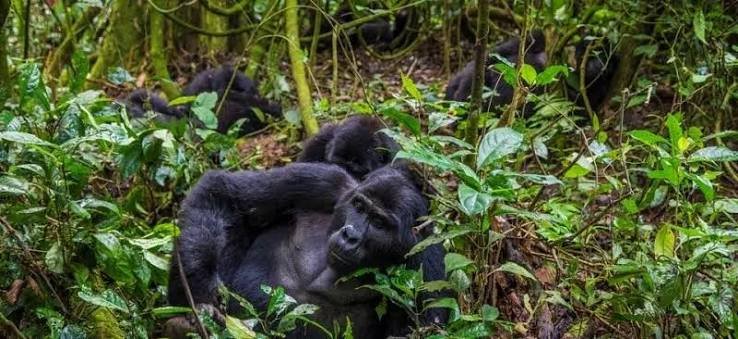
The setting around Volcanoes National Park contributes significantly to the experience. The surrounding countryside is intensively cultivated and deeply green, with farms climbing the lower slopes and volcanic mountains appearing dramatically beyond villages and fields. As you approach the park, agricultural land gives way to thicker forest, creating a visible boundary between human settlement and protected mountain habitat. That transition reminds visitors how valuable and limited the gorillas’ remaining natural environment is.
What Happens on the Morning of Gorilla Trekking?
A Rwanda gorilla trekking morning begins early. Visitors are expected at the Volcanoes National Park visitor or registration centre at around 7:00 a.m., where park staff organise the day’s trekking groups, verify permits and provide a briefing before participants travel to their assigned trailheads. Current Rwanda Development Board information confirms the 7:00 a.m. reporting time, while Visit Rwanda explains that visitors are allocated to a gorilla family on the day, taking fitness levels and other practical factors into consideration.
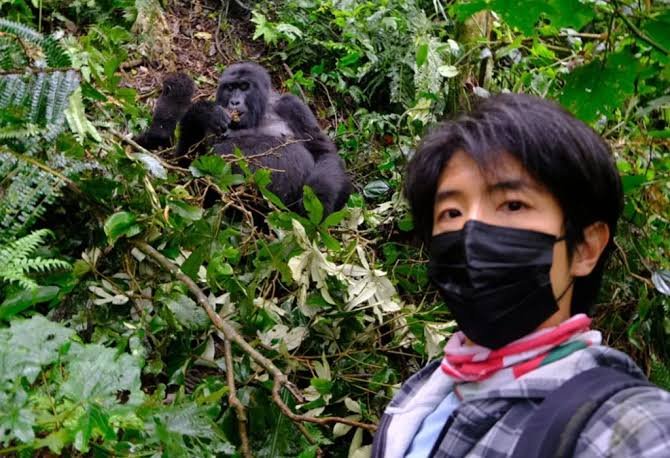
The atmosphere at the headquarters is usually a mixture of excitement and quiet nervousness. Some visitors have dreamed about the experience for years and are finally only hours away from seeing mountain gorillas. Others may be wondering how difficult their trek will be, whether the forest will be muddy or how long it will take to locate the family. Guides use the briefing to explain the behaviour expected in the forest and particularly once the gorillas are encountered. This is also the time when travellers can communicate relevant concerns about fitness or mobility so that park staff can take them into consideration when allocating groups.
Once your group and gorilla family have been assigned, you normally travel from the headquarters toward a particular trailhead. The drive can pass through rural communities and farmland before reaching the edge of the protected forest. Depending on the assigned gorilla family, the trailhead and hiking conditions can be very different from those experienced by another group trekking on exactly the same morning.
How Difficult Is Gorilla Trekking in Rwanda?
The difficulty of gorilla trekking in Rwanda varies considerably because the gorillas move freely through their natural habitat. One group of visitors may reach its assigned family relatively quickly, while another may climb through the forest for several hours before the trackers locate the gorillas. Visit Rwanda states that hikes to the different gorilla locations can range from around 30 minutes to four hours or more and may reach elevations between approximately 2,500 and 4,000 metres. Another official Visit Rwanda itinerary describes tracking as lasting from around 90 minutes to the whole morning depending on the allocated family.
The challenge is not determined only by distance. Elevation, mud, vegetation, rain and steepness can make a relatively short walk demanding. Parts of the trail can be slippery after rainfall, while other sections may require stepping over roots, moving around vegetation or climbing steadily uphill. The high altitude can also make exertion feel more intense for travellers arriving from lower elevations.
This unpredictability is part of the experience rather than a flaw in it. Gorilla trekking is not designed as a paved nature walk leading to animals waiting in a fixed place. The gorillas choose where they feed and rest, trackers follow signs of their movement and visitors enter the forest with the understanding that the route is determined by wildlife behaviour.
A reasonable level of general fitness makes the day more enjoyable, but travellers do not need to be elite hikers. Many people of different ages and fitness levels successfully complete Rwanda gorilla treks. What helps most is being comfortable walking for several hours, wearing appropriate footwear, moving at a steady pace and communicating honestly with guides about any difficulty.
What Is the Forest Trek Actually Like?
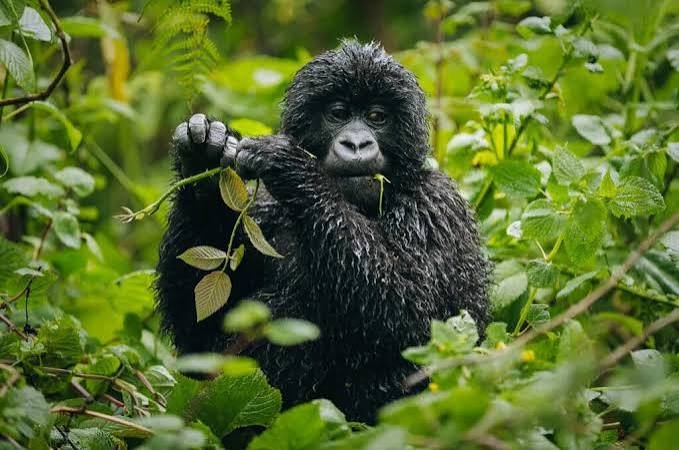
Once you leave cultivated land and enter Volcanoes National Park, the landscape becomes denser and more atmospheric. Depending on the route, you may walk through bamboo forest, areas of thick undergrowth and sections dominated by montane vegetation. Mist can hang between the trees, especially in wetter conditions, while shafts of sunlight occasionally pass through openings in the canopy. Bird calls, movement in the vegetation and the sound of people walking through damp forest replace the engine noise and open horizons of a conventional game-drive safari.
The guides and trackers are central to the experience. The location of each habituated gorilla family is monitored regularly, and tracking teams use their knowledge of the forest together with signs left by the gorillas to determine their current location. Visitors may notice broken vegetation, feeding remains or other clues during the walk, but professional trackers understand these signs at a much deeper level.
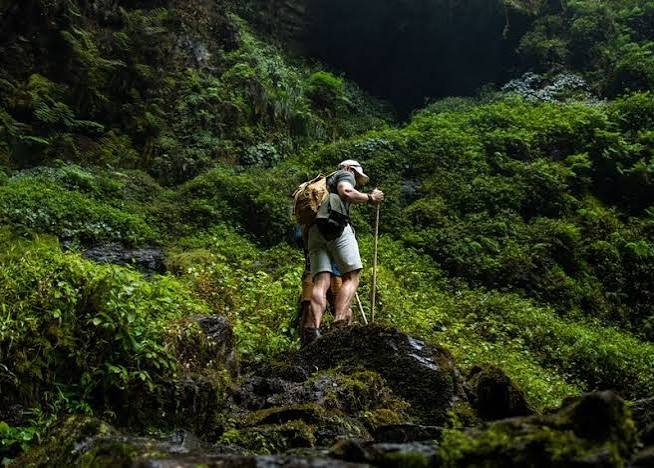
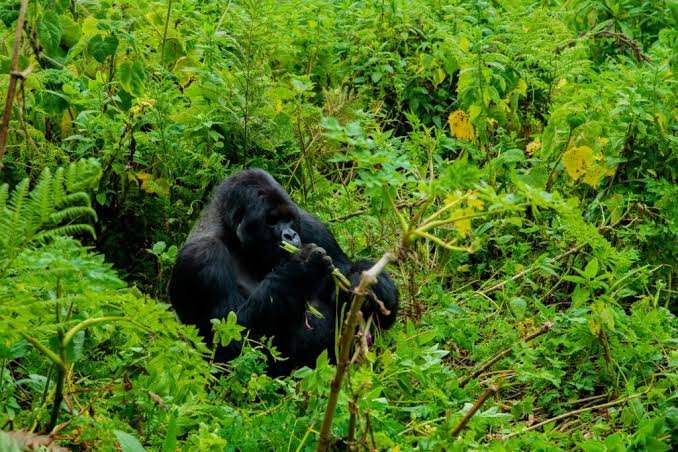
As the group gets closer, the mood often changes. The guides may ask everyone to become quieter, prepare cameras and leave unnecessary equipment behind with porters. The awareness that the gorillas are somewhere just beyond the vegetation creates an intensity that is difficult to reproduce in other wildlife experiences. Sometimes you hear movement or vegetation breaking before you actually see an animal. At other times the first gorilla appears suddenly through leaves only a few metres away.
What Does the First Gorilla Encounter Feel Like?
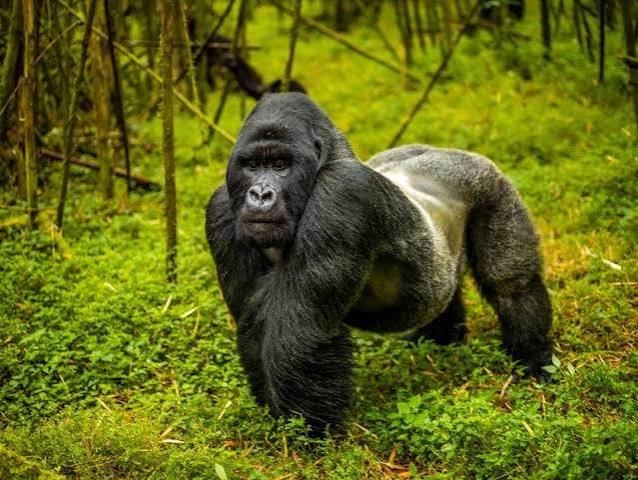
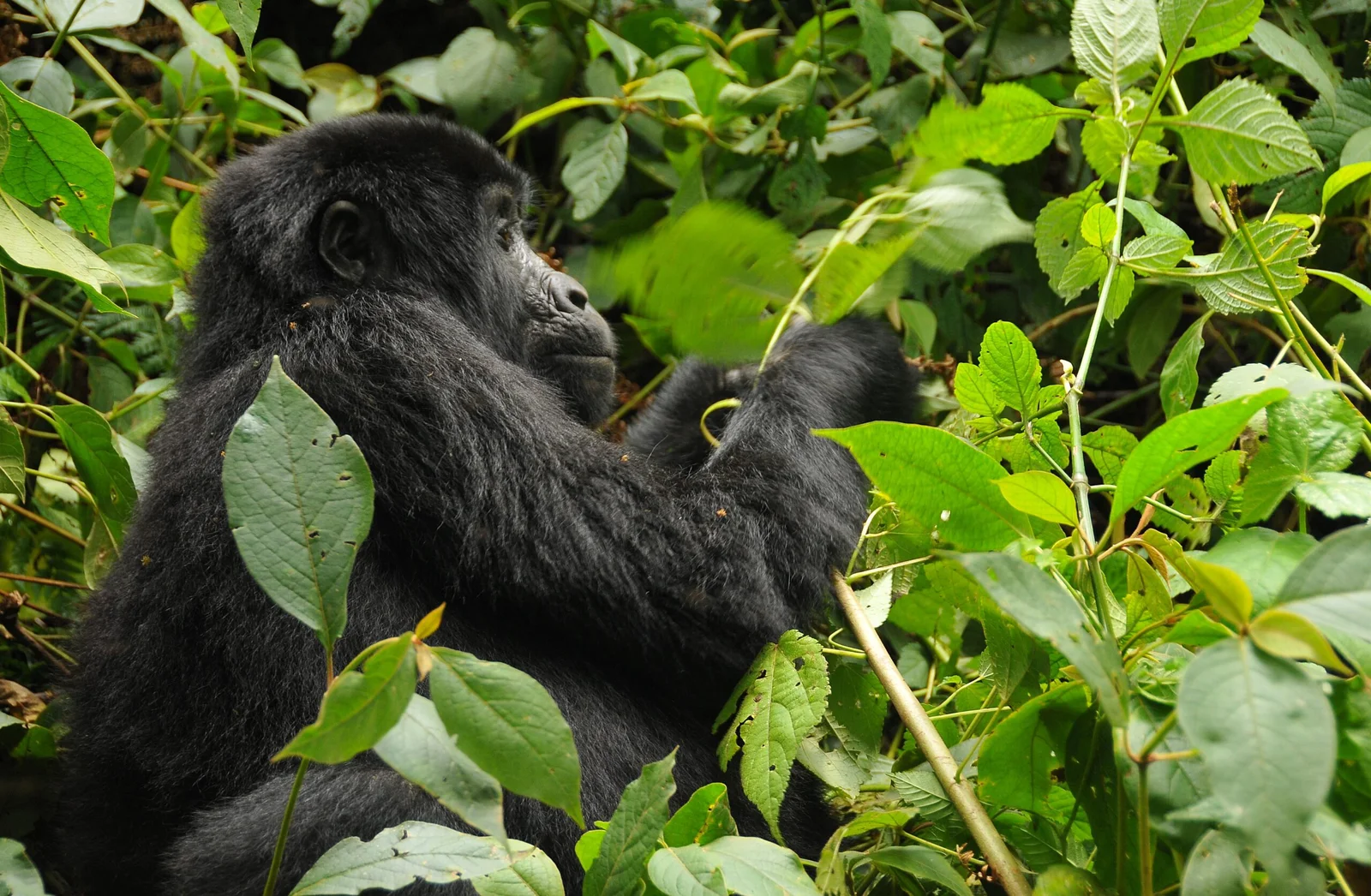
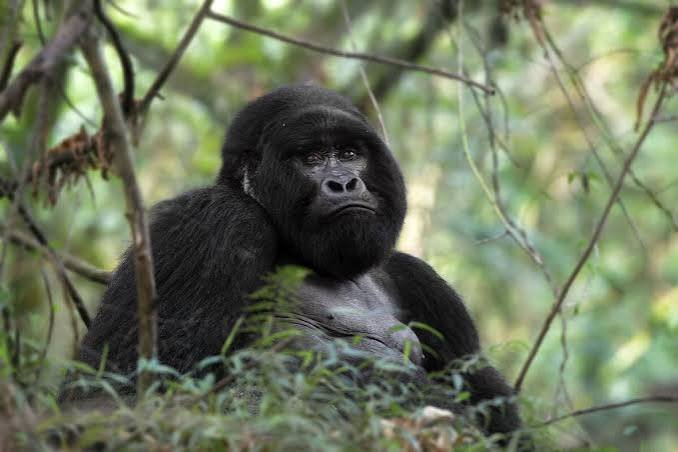
The first clear view of a mountain gorilla is often the moment travellers remember most strongly. Photographs and wildlife documentaries can prepare you for the appearance of a silverback or female gorilla, but they do not fully communicate the scale, movement and presence of the animal when encountered in its own environment. An adult silverback can appear immensely powerful while remaining surprisingly calm, sitting among vegetation, feeding slowly or watching activity around the family.
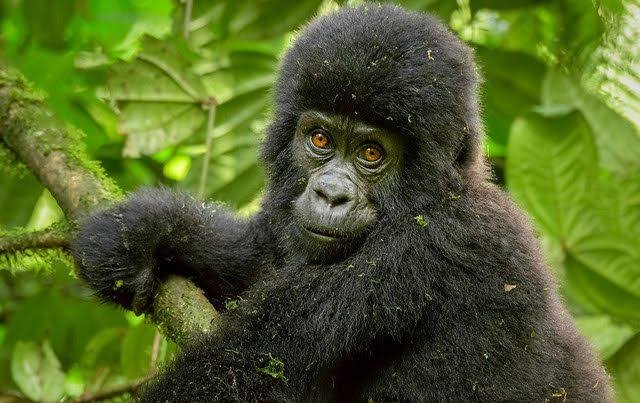
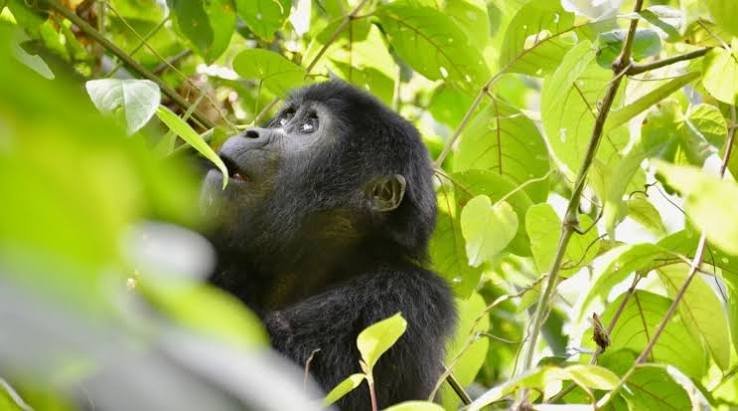
There is usually a brief period in which visitors become accustomed to being so close to wild great apes. The gorillas may be resting, feeding, grooming or moving gradually through vegetation. Youngsters can be much more active, climbing, playing or moving between adults, while females may remain close to infants. The silverback’s position and behaviour can change depending on what the group is doing.
The encounter is not staged. There is no guarantee that the gorillas will face cameras or sit in open vegetation. One family may spend much of the hour feeding in a relatively clear area, while another may move steadily through thick plants and require visitors to reposition under the direction of guides. That natural unpredictability makes the experience feel genuinely wild.
How Long Do You Spend With the Gorillas?
Once the allocated gorilla family has been located and the formal viewing period begins, visitors are allowed to spend a maximum of one hour with the gorillas. Rwanda Development Board states that viewing time is limited to one hour, and the groups are carefully controlled to reduce prolonged disturbance to the animals.
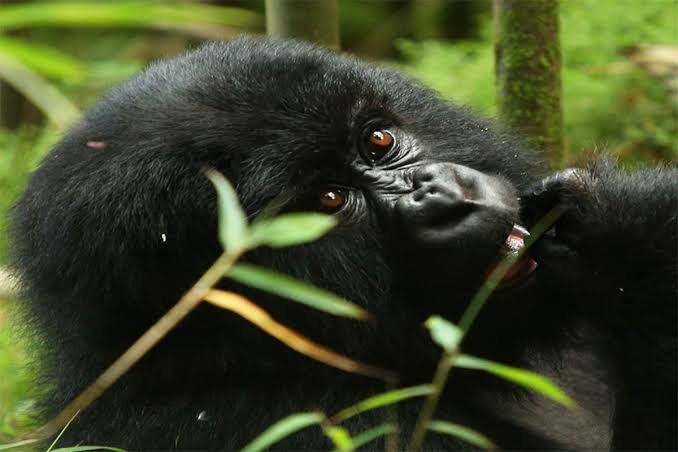
The hour can feel surprisingly short because there is so much happening. Visitors may initially concentrate intensely on taking photographs and then realise they also want to put the camera down and simply watch. During the encounter you might observe feeding behaviour, grooming, interaction between adults and youngsters, resting or the slow movement of the entire family through vegetation.
The guides help position visitors where viewing is possible without surrounding or disturbing the gorillas. They also interpret some of the behaviour, identify individual animals and ensure that the group respects the rules.
For many travellers, the best approach is to balance photography with observation. Capturing a few strong photographs is rewarding, but experiencing the quiet moments without continuously looking through a screen often creates the strongest memory.
How Close Do You Get to Mountain Gorillas?
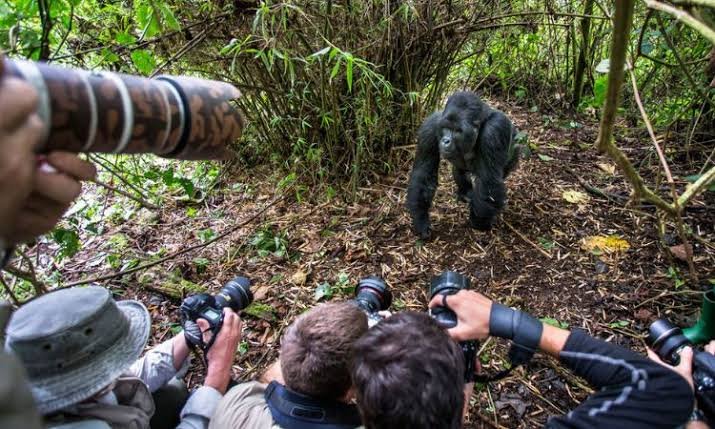
Rwanda Development Board currently instructs visitors to maintain approximately seven metres of distance from the gorillas whenever possible. The rule exists partly to reduce disturbance and partly to minimise the risk of humans transmitting disease to gorillas.
Wild gorillas, however, do not understand human distance rules. A gorilla may occasionally move closer while changing feeding position or crossing a path. If this happens, visitors should remain calm and follow the guide’s instructions rather than attempting to approach, touch or retreat suddenly.
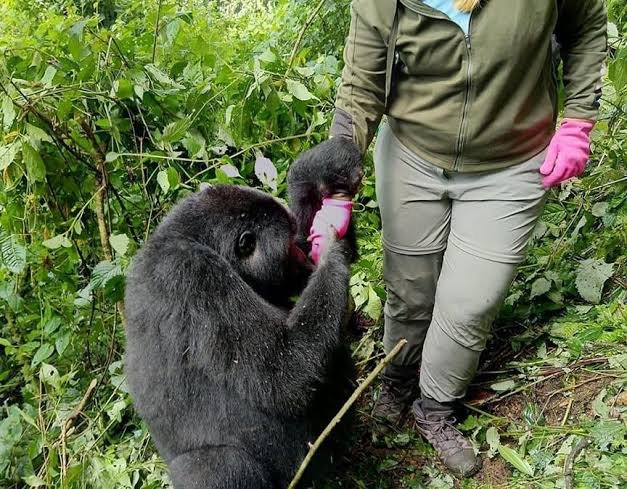
The fact that visitors may be relatively close to such powerful wild animals can initially feel intimidating, particularly when a large silverback moves nearby. Guides understand gorilla behaviour and explain how visitors should respond. Rwanda Development Board specifically advises visitors not to panic if a gorilla vocalises or displays, but to remain still, look away and follow instructions.
The controlled nature of the encounter does not make it feel artificial. The gorillas are habituated to a limited human presence, but they remain wild animals making their own decisions within their natural environment.
Are the Gorillas Used to People?
The gorilla families visited by tourists have undergone a long habituation process that allows them to tolerate carefully managed human presence without changing their status as wild animals. Visit Rwanda currently identifies twelve gorilla families in Volcanoes National Park as fully habituated for tourism, with additional groups used for scientific research.
Habituation does not mean domestication. The gorillas are not trained to perform, accept food or interact physically with tourists. They continue feeding, travelling, breeding, raising young and maintaining their social relationships according to natural behaviour.
This distinction is central to the appeal of Rwanda gorilla trekking. Visitors are not attending an animal presentation. They are being temporarily permitted into the daily environment of a wild gorilla family under strict conservation rules.
How Many People Are in a Gorilla Trekking Group?
Rwanda limits a standard gorilla trekking group to a maximum of eight visitors per habituated gorilla family per day. The Rwanda Development Board’s current rules confirm this group limit, while Visit Rwanda explains that the restriction helps keep encounters relatively intimate and reduces disturbance to the animals.
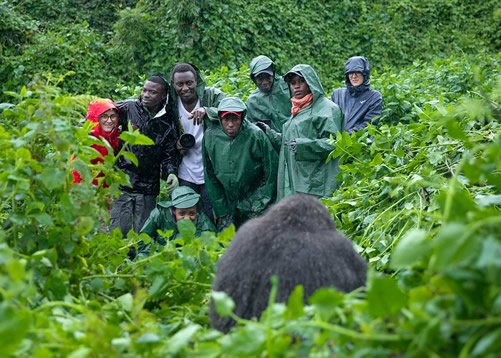
A small group changes the character of the experience. Eight people can move through forest far more quietly than a large tour group, and once the gorillas are located it is easier for guides to control positioning and ensure everyone has an opportunity to observe.
The restricted group size is also why permit availability is limited. Visit Rwanda currently states that twelve habituated tourism families receive eight visitors each per day, resulting in a relatively small number of daily trekking opportunities.
Travellers planning to visit during popular months should therefore avoid treating the gorilla permit as something that can always be purchased after arriving in Rwanda.
How Much Does Gorilla Trekking in Rwanda Cost?
The standard Rwanda mountain gorilla trekking permit for an international foreign visitor currently costs USD 1,500 per person for one trek. The permit provides access to the organised gorilla tracking experience and the one-hour encounter once the allocated family has been reached. Rwanda Development Board’s current booking system continues to publish USD 1,500 as the foreign visitor rate.
Different rates can apply to qualifying Rwandan citizens, East African citizens, African citizens and certain residents, and Rwanda has periodically introduced promotional rates for some categories. The official 2026 booking information specifically notes promotional conditions for several categories and states that those promotional rates are not applicable during June through October 2026. Travellers relying on a reduced resident or regional rate should therefore verify eligibility and the travel period directly before booking.
The permit should be viewed separately from the total safari price. Accommodation, private road transportation, driver-guide services, meals, porter assistance and other activities are normally additional elements of the trip. A luxury Rwanda gorilla safari can therefore cost substantially more than the permit alone.
Why Is Rwanda Gorilla Trekking Expensive?
Rwanda has deliberately positioned gorilla trekking as a high-value, tightly controlled wildlife experience rather than mass tourism. The limited number of visitors protects the quality of the encounter and reduces pressure on a critically important habitat. Permit revenue also supports conservation and communities connected to the park. Visit Rwanda states that a portion of permit revenue is channelled toward surrounding communities, including local infrastructure and development initiatives, while tourism provides employment for trackers, rangers, porters, drivers and lodge staff.
For travellers, the high permit cost can initially appear substantial because the formal gorilla encounter lasts one hour. However, the experience depends on a much larger conservation system operating every day whether tourists are present or not. Rangers monitor gorilla families, veterinary and research teams contribute to protection, habitat requires continuous management and nearby communities need to benefit from conservation if long-term protection is to remain sustainable.
The permit is therefore not simply payment for sixty minutes of photography. It is part of the financial model that helps make carefully managed wild gorilla tourism possible.
Is Gorilla Trekking in Rwanda Worth the USD 1,500 Permit?
Whether any expensive wildlife experience is worth the cost is personal, but Rwanda gorilla trekking offers something fundamentally different from conventional safari viewing. Mountain gorillas cannot be seen in zoos or ordinary wildlife reserves in the same way as lions, elephants or giraffes. Their surviving wild population occupies a limited highland range in this part of Africa, meaning travellers who want to observe them naturally must travel to their habitat.
The hour with the gorillas is also only one part of the day. The approach through Rwanda’s volcanic countryside, the briefing, forest walk, anticipation and return trek all contribute to the overall experience.
For travellers whose main wildlife interest is mountain gorillas, the permit is often the central investment of the entire Rwanda holiday. Someone who is less interested in primates and more interested in extensive savannah game viewing may place greater value on spending the same budget differently. A well-designed Rwanda safari should therefore match the traveller’s interests rather than treating gorilla trekking as compulsory simply because it is the country’s best-known wildlife experience.
What Should You Wear for Gorilla Trekking in Rwanda?
Clothing needs to be practical rather than fashionable because the forest can be damp, muddy and dense. Visit Rwanda recommends sturdy clothing, solid walking shoes and, in rainy conditions, gaiters and a lightweight waterproof. Its gorilla guidance also recommends long sleeves and gloves because trekkers can encounter thick vegetation and stinging nettles.
Good hiking boots with reliable grip can make an enormous difference, especially on wet slopes. Long trousers protect the legs from vegetation, while a long-sleeved shirt helps reduce scratches and exposure to nettles. A light rain jacket is useful even during relatively dry periods because mountain weather can change quickly.
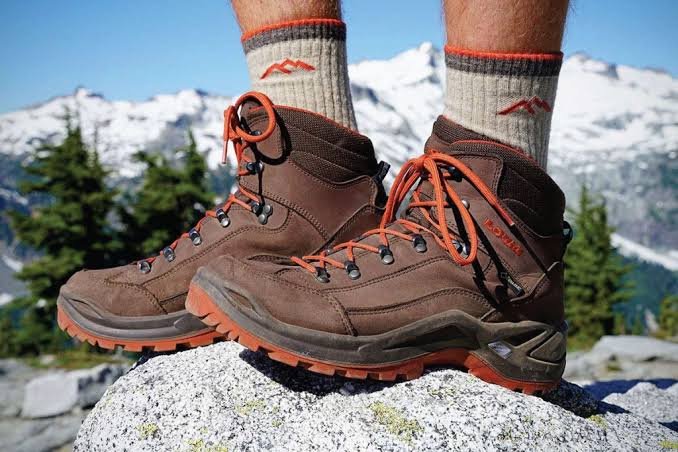
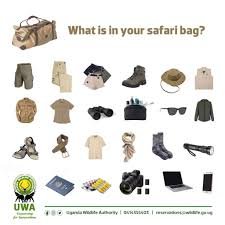
Travellers should dress in layers rather than assuming the tropical location means constant heat. Volcanoes National Park sits at significant altitude, and early mornings can feel cool, particularly when mist or rain moves across the mountains.
Comfort is more valuable than carrying excessive equipment. A small daypack with water, rain protection, essential personal items and camera equipment is usually enough for the trek.
Should You Hire a Porter?
Hiring a porter can make gorilla trekking considerably easier, particularly if the assigned family requires a longer or steeper walk. Porters can carry a daypack or camera equipment and may also provide a steady hand on slippery or uneven sections of trail. Visit Rwanda notes that porters are available to assist trekkers and carry backpacks and cameras.
The value of a porter becomes especially clear later in a demanding trek. A camera bag that feels light at the trailhead can feel surprisingly heavy after several hours of climbing at altitude.
Using a porter also creates a direct local economic benefit connected to conservation tourism. Gorilla trekking supports livelihoods around Volcanoes National Park not only through lodges and formal park employment but through opportunities such as porter work.
Even fit travellers may therefore find a porter worthwhile rather than viewing assistance as something needed only by people who expect physical difficulty.
What Is Photography Like During Gorilla Trekking?
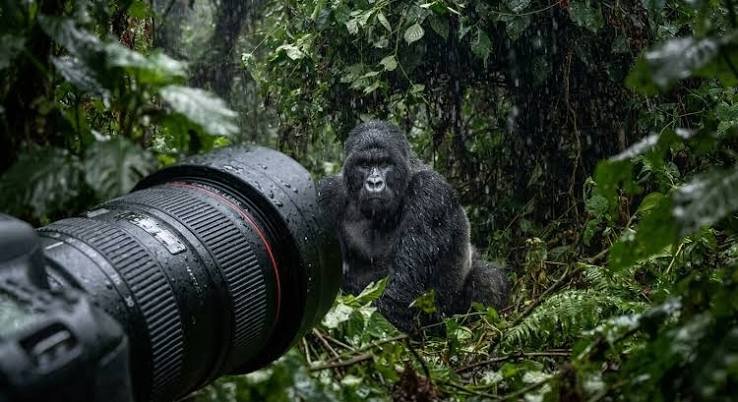
Gorilla photography in Rwanda can be extraordinary because of the proximity and the expressive behaviour of the animals, but forest conditions can make photography more challenging than people expect. Light levels can be low beneath vegetation, backgrounds may be complicated and gorillas’ dark fur requires careful exposure.
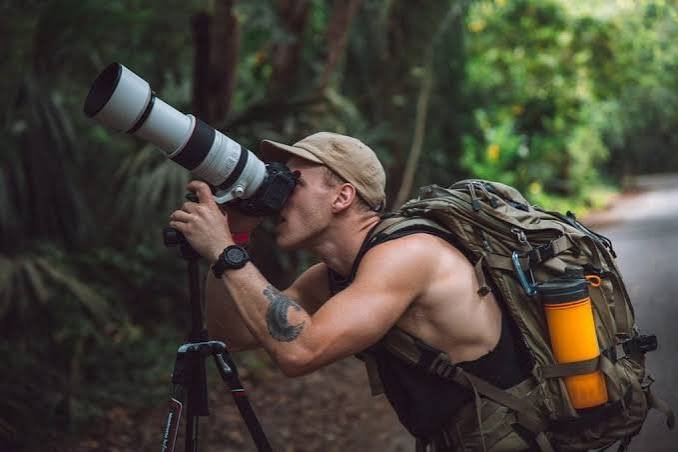
The most memorable photographs often come from waiting rather than shooting continuously. A gorilla may lift its head, a youngster may move into an opening or a silverback may turn toward the group after several minutes facing another direction.
Visitors should avoid using flash because it can disturb wildlife and is generally inappropriate in a controlled gorilla encounter. A camera capable of handling lower light conditions is useful, but travellers do not need professional equipment to return with meaningful images. Modern smartphones can also produce impressive results when the gorillas are relatively close and light conditions are favourable.
Photography should never interfere with the guide’s instructions. Moving outside the designated viewing position simply to improve an angle can disturb the animals and compromise the experience for the rest of the group.
What Happens If a Gorilla Moves Toward You?
One of the most memorable situations during a trek can occur when a gorilla chooses to move closer to the group. Visitors are instructed not to approach the gorillas, but the animals themselves may occasionally cross a path or pass closer than the preferred distance.
When this happens, the correct response is normally to remain calm, avoid sudden movement and follow the guide’s instructions. Rwanda Development Board advises visitors not to make rapid movements that could frighten the gorillas and to follow the guide’s direction during displays or vocalisation.
The guides read behaviour much better than a first-time visitor can. Something that looks dramatic to a traveller may be ordinary movement within the family, while subtle signals that tourists might overlook can be immediately recognised by experienced staff.
Respecting that expertise is a major part of trekking safely and responsibly.
Is Gorilla Trekking in Rwanda Safe?
Rwanda’s gorilla trekking system is closely managed, with professional guides, trackers and rangers accompanying visitors. The gorilla families used for tourism have been habituated gradually to controlled human presence, which allows carefully regulated viewing.
The physical elements of trekking often deserve as much attention as the gorillas themselves. Slippery ground, uneven trails, altitude and changing weather are more common practical challenges for visitors than aggressive gorilla behaviour.
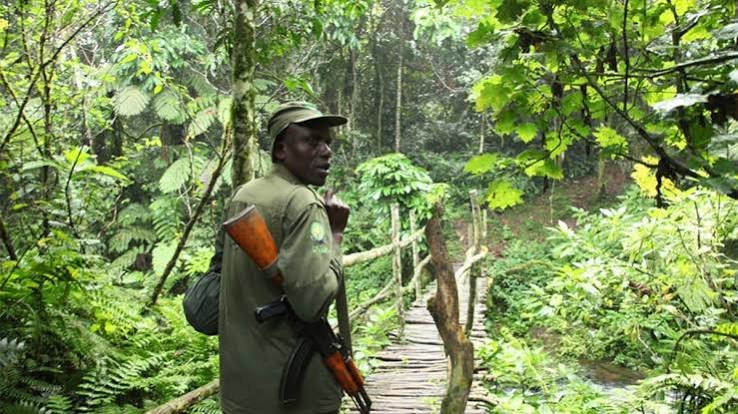
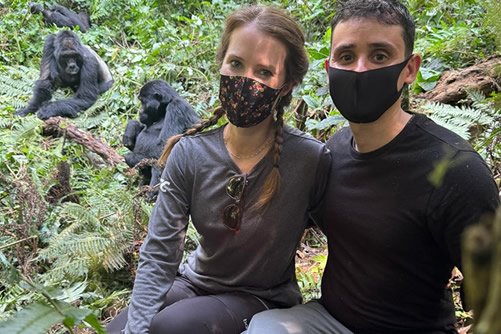
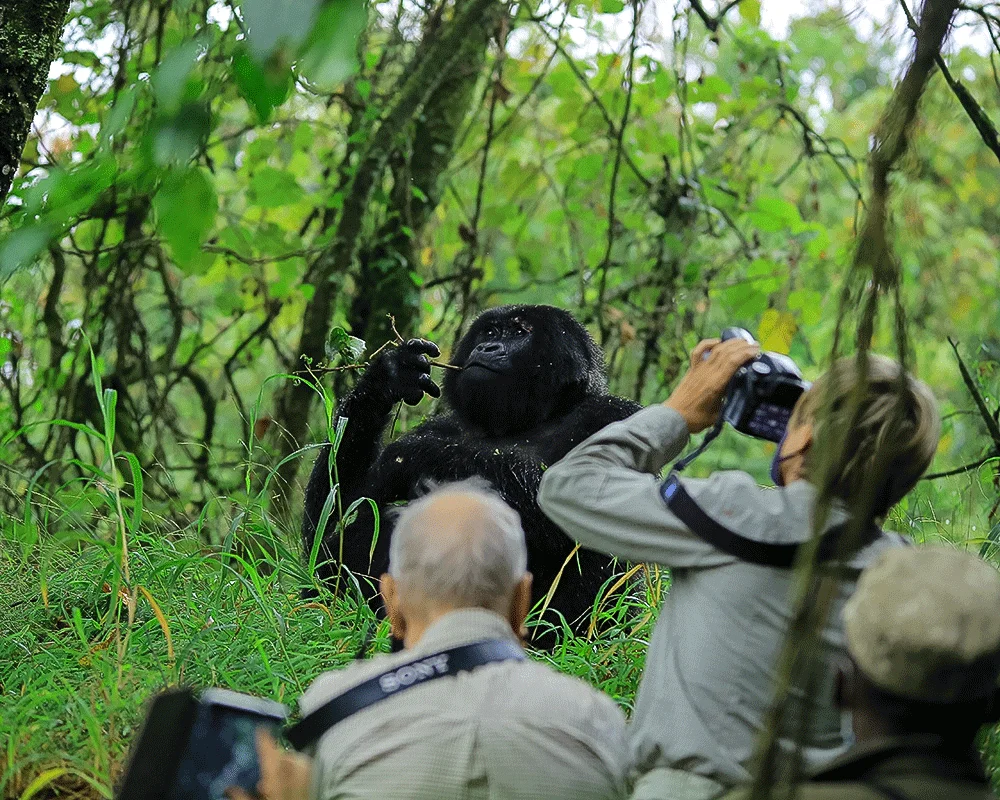
Following guide instructions is essential. Visitors should not attempt to touch gorillas, wander away from the group or provoke interaction for photographs. The animals remain wild even though they tolerate human observers.
Travellers with mobility or fitness concerns should discuss them in advance with the safari operator and again during the morning allocation so that appropriate assistance can be considered.
Why Must Sick Travellers Avoid Gorilla Trekking?
Mountain gorillas are susceptible to some diseases carried by humans, which is why health rules around trekking are taken seriously. Rwanda Development Board states that visitors can be denied park access if they are suffering from a cold, flu or another contagious illness. Visitors are also instructed to maintain distance, cover their mouths when coughing and follow hygiene rules intended to reduce disease transmission.
This can be deeply disappointing for someone who has travelled internationally and paid for an expensive permit, but protecting the gorillas must take priority. Habituated gorilla families encounter tourists repeatedly, so allowing infectious visitors into close proximity could create conservation risks extending far beyond one person’s holiday.
Travellers should therefore protect their own health in the days before trekking, disclose significant symptoms honestly and follow park guidance rather than attempting to hide illness.
What Is the Minimum Age for Gorilla Trekking in Rwanda?
The minimum age for mountain gorilla trekking in Rwanda is currently 15 years. Rwanda Development Board’s booking system states clearly that participants must be at least 15 years old.
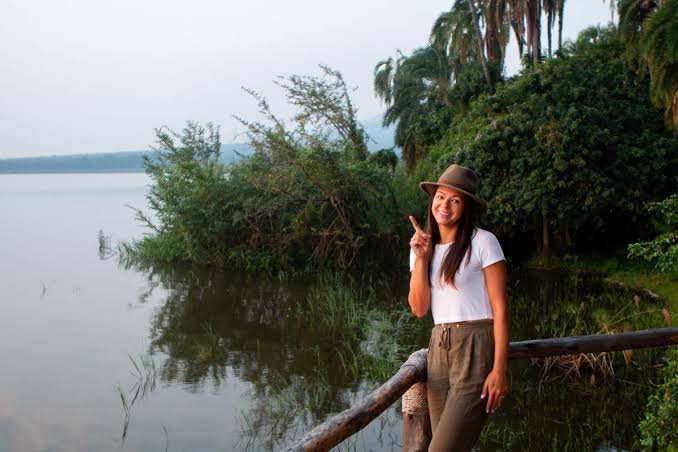
This is particularly important for families planning Rwanda well in advance. A child can travel throughout Rwanda and enjoy many safari activities while still being too young for gorilla trekking.
Families with teenagers who meet the age requirement should still consider physical readiness. Being old enough to receive a permit does not guarantee that every teenager will enjoy several hours of climbing through wet mountain forest.
For families travelling with younger children, an itinerary can be designed so that adults trek separately while the children participate in another suitable activity with appropriate supervision.
What Is the Best Time of Year for Gorilla Trekking?
Gorilla trekking takes place throughout the year because the gorillas remain within their habitat regardless of tourism season. The practical difference between months is mainly trekking conditions rather than whether gorillas are present.
Drier periods can make forest trails less muddy and therefore easier underfoot, which is why many travellers favour the drier months. Wetter periods can produce heavier mud and rain but also keep the landscape intensely green and atmospheric.
Even in a dry season, visitors should not expect the mountain rainforest to remain completely dry. Rain can occur and the ground can remain damp, so appropriate boots and waterproof protection are useful throughout the year.
Permit availability, accommodation prices and personal travel schedules can be just as important as weather when choosing dates.
What Happens After the One-Hour Gorilla Encounter?
When the permitted hour ends, the guides lead the group away from the gorilla family and begin the return journey toward the trailhead. The walk back can feel very different from the approach because the main uncertainty has disappeared. Visitors often become more relaxed, talk about what they have just seen and finally notice parts of the landscape they overlooked while concentrating on locating the gorillas.
Depending on where the family was found, the return may still take considerable time. A trek does not end the moment the sixty-minute encounter is finished.
Once visitors reach the trailhead, they normally reunite with their driver-guide and return to the lodge or continue with the day’s programme. Many itineraries intentionally keep the afternoon light because travellers appreciate time to shower, have lunch, rest and process the experience.
Trying to schedule a long afternoon programme immediately after an unpredictable mountain trek can make the day unnecessarily rushed.
Can Gorilla Trekking Be Done as a Day Trip From Kigali?
It is physically possible to organise gorilla trekking with Kigali as the starting and ending point because Volcanoes National Park is reachable by road in a few hours, and Rwanda’s relatively compact geography makes short itineraries practical.
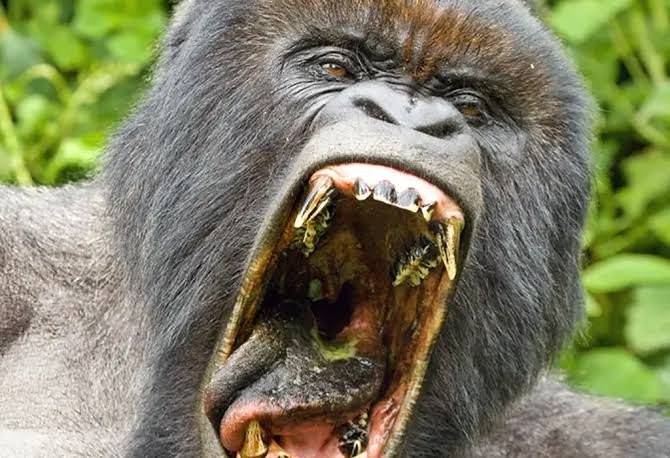
However, staying near Volcanoes National Park the night before normally creates a more comfortable experience. The official reporting time is early, and approaching the morning after a relaxed night near Kinigi is very different from leaving Kigali in the middle of the night and then beginning a potentially strenuous forest trek.
Travellers with limited time can still design a short Rwanda gorilla itinerary, but convenience should be balanced against rest and enjoyment. A two-day or three-day format often allows the experience to feel less compressed while leaving room for other activities around the Volcanoes region.
What Else Can You Do Around Volcanoes National Park?
Although gorillas dominate the international image of Volcanoes National Park, the region offers much more than one trekking morning. Visitors can combine the gorilla experience with golden monkey tracking, volcano hiking, conservation-focused visits and cultural activities in the surrounding area. Visit Rwanda also highlights hiking, canoeing, mountain biking and village experiences around the Volcanoes region.
This creates an opportunity to remain in the area for several nights rather than arriving only for the gorilla trek and immediately leaving.
Travellers interested in the conservation history of mountain gorillas may also explore experiences connected with Dian Fossey and modern gorilla research. The wider landscape tells a much larger story about wildlife conservation, local communities and the long effort to protect mountain gorillas across the Virunga region.
How Does Gorilla Trekking Support Conservation?
Gorilla tourism works only if the presence of visitors contributes meaningfully to the continued protection of the species and its habitat. Visit Rwanda states that revenue from gorilla permits supports conservation and communities around Volcanoes National Park, while tourism creates employment for rangers, trackers, porters, drivers and accommodation staff.
This relationship between tourism and conservation is visible during the trek itself. Strict group sizes, one-hour viewing periods, health rules and controlled permits may sometimes feel restrictive to tourists, but those restrictions are precisely what prevent the experience from becoming uncontrolled mass wildlife tourism.
The aim is not to maximise the number of people who see gorillas each day. It is to generate enough economic and conservation value from a deliberately limited number of encounters.
For responsible travellers, understanding this makes the experience deeper. The permit is not simply purchasing access to an animal; it is entering a conservation system in which tourism is used to help sustain the species, its habitat and communities living near the park.
What Makes Rwanda Different From Other Gorilla Trekking Destinations?
One of Rwanda’s strongest advantages is accessibility. Volcanoes National Park can be reached relatively easily from Kigali, allowing visitors to integrate gorilla trekking into both short luxury journeys and longer Rwanda safaris.
The country’s gorilla tourism infrastructure is also highly developed. The Volcanoes region has accommodation ranging from comfortable mid-range properties to some of Africa’s most exclusive luxury lodges, making Rwanda especially appealing to travellers who want a demanding wildlife experience without sacrificing comfort before and after the trek.
The high permit price reinforces Rwanda’s low-volume, high-value tourism strategy. This makes the country particularly attractive to travellers who value carefully managed wildlife encounters and convenient logistics.
Rwanda can also be combined naturally with Uganda for a second gorilla trek or with Akagera National Park for traditional game viewing, Nyungwe for chimpanzees and Lake Kivu for relaxation.
What Does Gorilla Trekking Feel Like Emotionally?
The emotional side of the experience is difficult to capture in practical travel advice because every visitor responds differently. Some people become intensely focused on photography, some are surprisingly quiet, and others feel overwhelmed by the resemblance between gorilla gestures and human behaviour.
Watching a mother hold an infant, seeing youngsters play around an adult silverback or observing a gorilla calmly feed can create a sense of familiarity that is unusual in wildlife viewing.
At the same time, their strength and physical presence make it impossible to forget that these are wild animals.
There is often a strange contrast between the effort involved in reaching them and the calmness of the actual encounter. After climbing through mud and vegetation with a racing heart, you may suddenly spend ten quiet minutes watching a gorilla sit almost motionless while eating leaves.
That contrast is one reason the experience remains vivid long after the safari is over.
Is One Gorilla Trek Enough?
For many first-time visitors, one gorilla trek provides a complete and satisfying experience. The permit is expensive and the physical effort can be significant, so a single carefully planned encounter is sufficient for most Rwanda itineraries.
Other travellers choose to trek twice because each gorilla family and each day can be completely different. One trek may involve a long mountain climb and a family resting inside thick vegetation, while another may require a shorter walk and provide extended views in a more open setting.
Photography enthusiasts and travellers with a particularly strong interest in primates can therefore find a second trek worthwhile.
However, adding more trekking days should not prevent travellers from experiencing Rwanda’s broader diversity. Akagera, Nyungwe, Lake Kivu and Kigali provide very different dimensions of the country and can make the overall journey richer.
What Is Gorilla Trekking Like in Rwanda for First-Time Visitors?
For someone who has never trekked gorillas before, the biggest surprise is often how organised the experience feels while still remaining genuinely wild. The permit system, briefing, guides and strict regulations provide structure, but once the group enters the forest the movements of the gorillas determine what happens next.
You cannot know exactly how long you will walk, which individual gorilla will be most visible or whether the family will remain stationary during the viewing hour.
That combination of structure and unpredictability creates a rare kind of wildlife experience. Travellers are protected by a highly managed tourism system without being separated from the reality of the forest.
First-time visitors should arrive prepared for physical effort and weather rather than expecting a guaranteed easy walk. Accepting the unpredictability usually makes the day more enjoyable.
What Is Gorilla Trekking Like in Rwanda in 2026?
What Is Gorilla Trekking Like in Rwanda in 2026? It remains a tightly managed, high-value wildlife experience centred on mountain gorillas in Volcanoes National Park. Current Rwanda Development Board rules set the standard foreign visitor permit at USD 1,500, require participants to be at least 15 years old, limit tourist groups to eight people and restrict the gorilla viewing period to one hour. Visitors currently report to the park’s registration facilities at 7:00 a.m. before trekking begins.
Visit Rwanda currently describes twelve fully habituated gorilla families used for tourism and notes that trekking routes can take anything from roughly 30 minutes to four hours or more depending on the gorillas’ location, with parts of the experience reaching substantial elevations.
The basic character of the experience therefore remains intentionally exclusive. Visitors are not being taken into a crowded attraction. They are entering a sensitive protected habitat in small groups and following strict rules designed to keep tourism compatible with gorilla conservation.
Final Answer: What Is Gorilla Trekking Like in Rwanda?
What Is Gorilla Trekking Like in Rwanda? It is an early-morning journey into the volcanic forests of northwestern Rwanda that combines adventure, physical challenge, conservation and one of the most intimate wildlife encounters available anywhere in Africa. You begin the day at Volcanoes National Park headquarters in Kinigi, receive a briefing, join a small trekking group and travel toward the trailhead assigned to your gorilla family. From there, professional guides and trackers lead you into the forest, following the gorillas’ movements through bamboo, montane vegetation and volcanic terrain until the family is located.
The walk may be short and relatively straightforward or it may demand several hours of climbing through mud and thick vegetation. No one can predict the exact difficulty because the gorillas are wild and move freely through their habitat. That uncertainty is part of what separates gorilla trekking from ordinary wildlife viewing.
When the family is found, the pace of the day changes completely. You are allowed one carefully controlled hour to watch the gorillas feed, rest, groom, move through vegetation and interact with one another. A silverback may sit quietly only metres away, youngsters may climb and play, and mothers may remain close to infants while the guides carefully manage the visitors’ position.
The encounter feels close, but it is governed by strict conservation rules. Rwanda currently limits a standard group to eight visitors, asks trekkers to maintain approximately seven metres from the gorillas whenever possible and does not permit people suffering from contagious illness to participate. These measures are designed to protect the gorillas while allowing visitors to experience their natural behaviour.
The standard international permit currently costs USD 1,500 per person, making Rwanda one of the premium mountain gorilla trekking destinations. The price reflects not simply the time spent in front of the gorillas but the wider conservation system that protects the animals and their forest while creating economic opportunities around Volcanoes National Park.
Travellers should arrive prepared for changing weather, uneven terrain and physical exertion. Sturdy hiking boots, long clothing and lightweight rain protection make the trek significantly more comfortable, while hiring a porter can provide valuable assistance on difficult sections. Visitors should also arrive rested, healthy and ready to follow the instructions of the park guides throughout the experience.
What ultimately makes gorilla trekking in Rwanda exceptional is the contrast between the difficult journey and the quiet encounter at its centre. You may spend hours climbing through wet forest only to stop suddenly and watch an enormous silverback calmly eating leaves. You may travel thousands of kilometres to Rwanda and then find yourself fascinated by something as simple as a young gorilla reaching toward its mother or two juveniles playing beside a tree.
That hour passes quickly, but the memory usually lasts far longer. For travellers drawn to wildlife, conservation and experiences that cannot be replicated elsewhere, gorilla trekking in Rwanda is not simply another safari activity. It is a carefully controlled opportunity to enter the natural world of one of humanity’s closest wild relatives, surrounded by the volcanic landscapes of the Virunga Mountains and supported by a conservation system designed to ensure that future generations can experience the same extraordinary encounter.