
Ultimate Lake Kivu Safari – Rwanda’s Unforgettable Lakeside Adventure
A Lake Kivu Safari introduces travellers to one of Rwanda’s most beautiful and relaxing landscapes, where deep blue-green water meets rolling hills, small islands, waterfront towns and the dramatic mountains of western Rwanda. While many Rwanda holidays are built around mountain gorillas, chimpanzees and Big Five wildlife, Lake Kivu adds a completely different dimension to the journey. Here, the pace becomes slower as travellers exchange forest trails and safari vehicles for scenic boat cruises, kayaking, peaceful beaches, waterfront dining and magnificent sunsets over the lake.
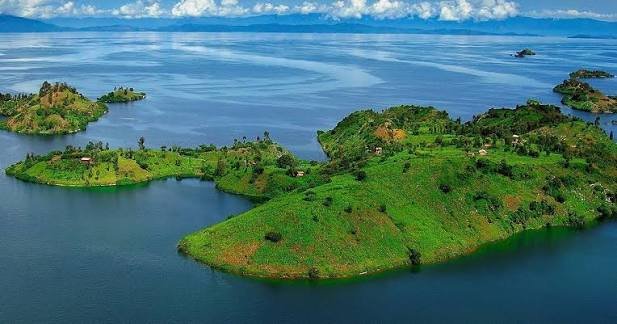
Lake Kivu forms part of Africa’s Great Rift Valley and lies along Rwanda’s western border with the Democratic Republic of the Congo. Covering approximately 2,700 square kilometres, it is Rwanda’s largest lake and is described by Visit Rwanda as the sixth largest lake in Africa. Its irregular shoreline creates countless bays, peninsulas and islands, while steep cultivated hills descend toward the water and give the landscape the unmistakable appearance of Rwanda’s “Land of a Thousand Hills.”
A thoughtfully designed Lake Kivu Safari can be adventurous, luxurious, romantic or completely relaxing depending on your interests. You can paddle along the shoreline by kayak, cruise between islands, watch local fishermen head onto the water at sunset, explore sections of the Congo Nile Trail, visit coffee-growing communities or simply spend an afternoon beside the lake. It is also exceptionally easy to combine Lake Kivu with Rwanda’s major wildlife destinations, making it an ideal addition to a complete safari.
Where Is Lake Kivu Located in Rwanda?
Lake Kivu stretches along western Rwanda and forms part of the international boundary between Rwanda and the Democratic Republic of the Congo. On the Rwandan side, three of the principal destinations are Rubavu in the north, Karongi in the central section and Rusizi in the south. Each offers a different style of Lake Kivu experience, giving travellers considerable flexibility when choosing where to include their lakeside stay.
Rubavu, formerly widely known as Gisenyi, is particularly convenient for travellers coming from Volcanoes National Park. Visit Rwanda places it roughly an hour from the gorilla region, which makes it an appealing place to relax after an active mountain gorilla trek. Karongi, historically known as Kibuye, occupies the central part of the lake and has a quieter resort atmosphere framed by steep green hills and islands. Rusizi in the south provides convenient access to the Nyungwe region and can fit naturally into a route between the rainforest and Lake Kivu.
This geography makes a Lake Kivu Safari particularly useful when planning a longer Rwanda holiday. Instead of treating the lake as a destination requiring a major detour, it can become part of the route connecting Volcanoes National Park and Nyungwe National Park. Travellers can therefore move gradually through western Rwanda while combining gorillas, lakeside relaxation, chimpanzees, tea landscapes and rainforest scenery within one well-paced itinerary.
Why Choose a Lake Kivu Safari?
One of the biggest reasons to choose a Lake Kivu Safari is the contrast it brings to a Rwanda wildlife itinerary. Gorilla and chimpanzee trekking can involve early starts, forest terrain and physically demanding walks, while game drives in Akagera require long periods exploring by safari vehicle. Lake Kivu offers the chance to slow down, sleep a little longer and experience Rwanda from the water without losing the feeling of discovery and adventure.
The lake is also remarkably versatile. Travellers who want relaxation can spend their time at a waterfront lodge, enjoy leisurely boat trips and watch the sunset. More active visitors can choose kayaking, cycling, hiking and sections of the Congo Nile Trail. Couples can arrange romantic lakeside experiences, while photographers can concentrate on islands, fishing boats, terraced hills and the changing colours of the evening sky.
A Lake Kivu Safari also helps reveal everyday life in western Rwanda. Fishing remains highly visible along the shoreline, while coffee, tea and agriculture shape many surrounding communities. Visit Rwanda particularly highlights the sight and sound of fishermen heading onto the lake together around dusk, especially around Karongi, adding a cultural element to an otherwise scenic experience.
Boat Cruises During a Lake Kivu Safari
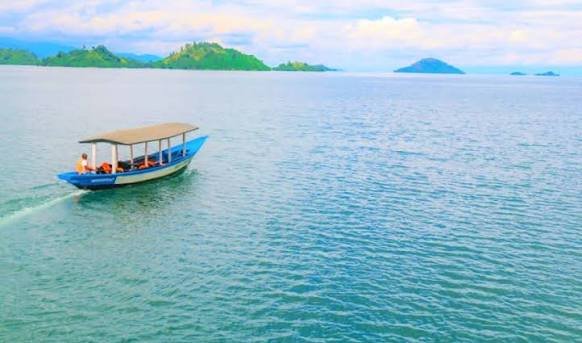
A boat cruise is one of the most enjoyable ways to experience a Lake Kivu Safari because it allows travellers to appreciate the lake from the perspective that defines it best: the water. Leaving the shoreline reveals the scale of the surrounding hills, the irregular shape of the coast and numerous small islands that can remain hidden when travelling only by road.
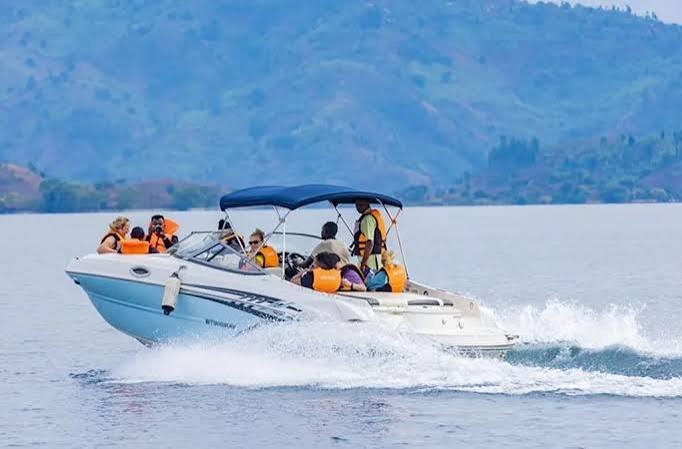
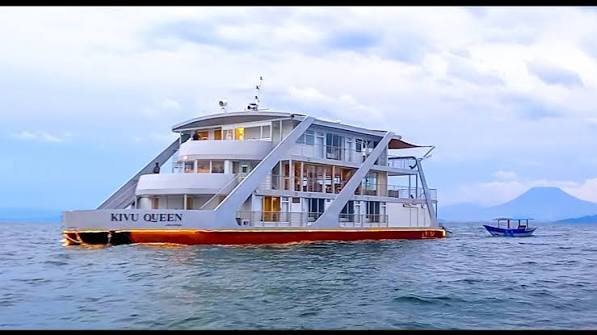
Boat experiences can be designed around sightseeing, sunset, photography or island exploration depending on the location and available operator. A gentle afternoon cruise can provide time to enjoy the scenery without demanding physical activity, while longer excursions can explore bays and islands farther from the main waterfront areas. The experience is particularly atmospheric late in the day when warm light begins to fall across the hills.
For couples and honeymooners, a private boat trip can become one of the most romantic elements of a Lake Kivu Safari. Families can also enjoy the activity because it provides adventure without requiring the physical fitness needed for trekking. When arranging a boat experience, Visit Rwanda Safaris can coordinate the timing with the wider itinerary so that it complements rather than competes with other activities.
Kayaking on Lake Kivu
Kayaking provides a more intimate way to explore the shoreline during a Lake Kivu Safari. Rather than moving quickly across the water by motorboat, paddlers travel slowly through bays and beside green hills, allowing them to notice birds, fishing activity, vegetation and small communities along the edge of the lake. Visit Rwanda specifically promotes kayaking as one of Lake Kivu’s signature adventure activities.

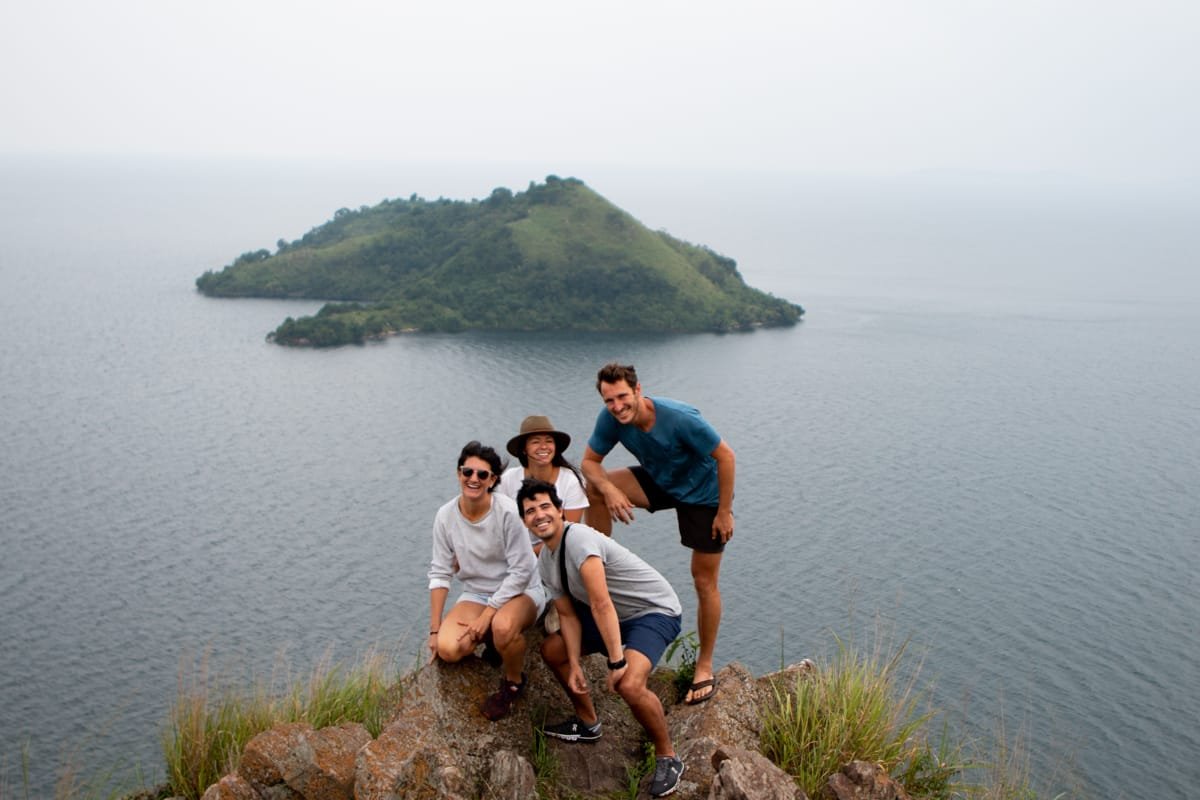
The lake’s irregular shoreline provides numerous coves and islands to explore, making kayaking interesting even for travellers who do not consider themselves serious paddlers. Visit Rwanda notes that dedicated excursions can range from a couple of hours to multi-day journeys and that previous kayaking experience is not necessarily required for introductory trips. The lake does not have the hippos and crocodiles associated with many East African waterways, which is one reason kayaking has developed so successfully here.
Sunset kayaking can be particularly memorable during a Lake Kivu Safari. At this time, local fishing boats begin moving across the lake, the hills soften into silhouettes and the water often reflects the changing evening light. For travellers who have spent several days trekking through Rwanda’s forests, a gentle kayaking experience provides adventure without the intensity of another demanding day on foot.
Rubavu During a Lake Kivu Safari
Rubavu is one of the most convenient places to include during a Lake Kivu Safari, particularly for travellers arriving from Volcanoes National Park. Located on the northern lakeshore, the town offers waterfront accommodation, beaches, restaurants and a relaxed atmosphere that feels very different from the gorilla trekking region only a relatively short drive away. Visit Rwanda describes Rubavu as approximately an hour from Volcanoes National Park.
The waterfront is ideal for travellers who want a straightforward lakeside break after gorilla trekking. Visitors can walk beside the lake, enjoy views over the water, organise kayaking or boat experiences and spend time relaxing at a hotel. Rubavu also has a more developed urban feel than some quieter Lake Kivu destinations, so travellers can combine natural scenery with restaurants and other town amenities.
Rubavu is also significant because it marks the northern beginning of the Congo Nile Trail. This makes it particularly useful for active travellers who want their Lake Kivu Safari to extend beyond relaxation. A journey can begin with a comfortable lakeside stay before continuing south through western Rwanda by vehicle, bicycle, hiking trail or a combination of different travel styles.
Karongi During a Lake Kivu Safari
Karongi is one of the most scenic destinations for a Lake Kivu Safari and works particularly well for travellers looking for a quieter atmosphere. Formerly widely known as Kibuye, the town sits among steep green hills, sheltered bays and small islands. Visit Rwanda describes it as a popular beach resort where pine- and eucalyptus-covered hills provide a backdrop to the lake.
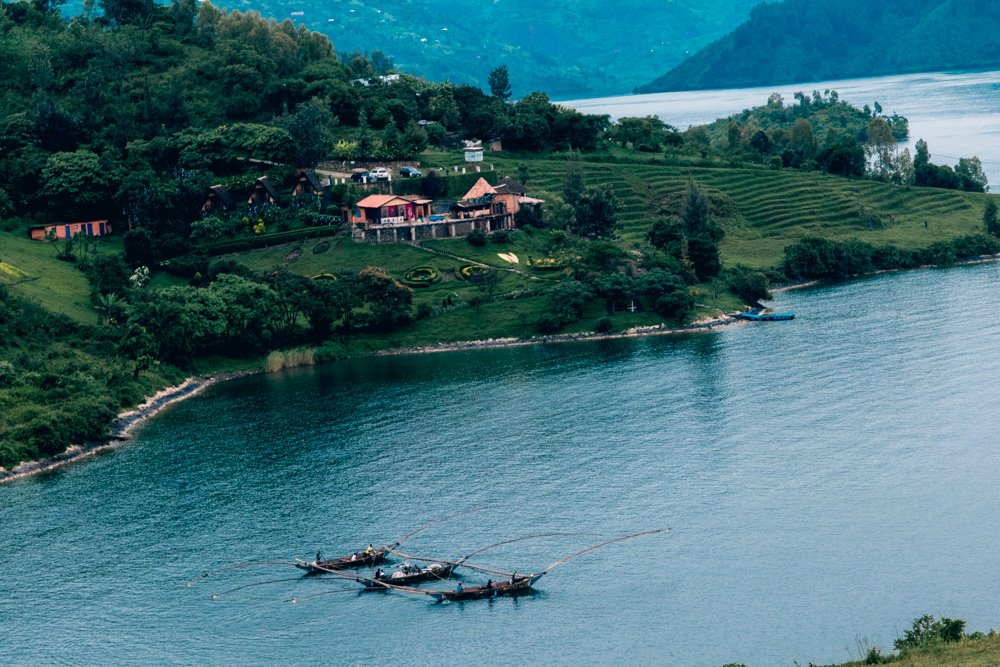
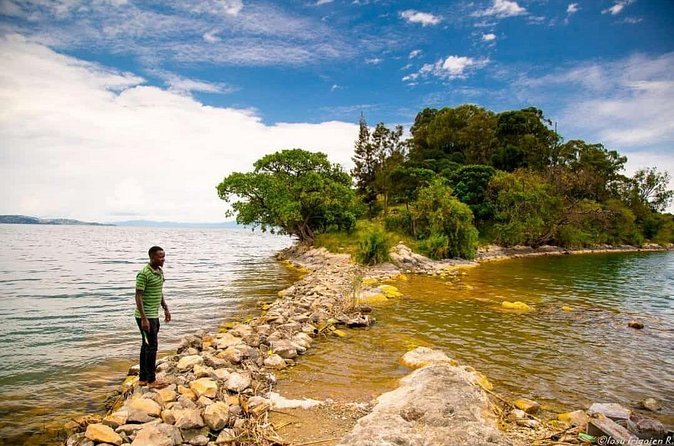
The surrounding islands make Karongi especially attractive for boat trips and kayaking. Travellers can leave the town behind and explore quieter sections of the lake while looking back toward Rwanda’s characteristic terraced hills. Sunrise and sunset can be especially beautiful, while the sound of fishing crews travelling across the water creates an experience that feels deeply connected to life around the lake.
For travellers who want their Lake Kivu Safari to focus on scenery, photography and peaceful relaxation, Karongi is an excellent choice. It also works well as a central stopping point along the western route between the northern gorilla region and Nyungwe farther south. Spending two nights rather than simply passing through allows time to experience the lake rather than viewing it only from the road.
Rusizi and Southern Lake Kivu
Rusizi provides another important gateway to a Lake Kivu Safari, especially for travellers combining the lake with Nyungwe National Park. Located near the southern end of Lake Kivu, the town places visitors within convenient reach of Rwanda’s rainforest region. Visit Rwanda identifies Rusizi as the closest major Lake Kivu town to Nyungwe, approximately an hour away depending on the specific route and destination.
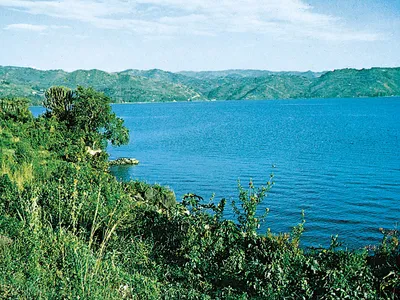
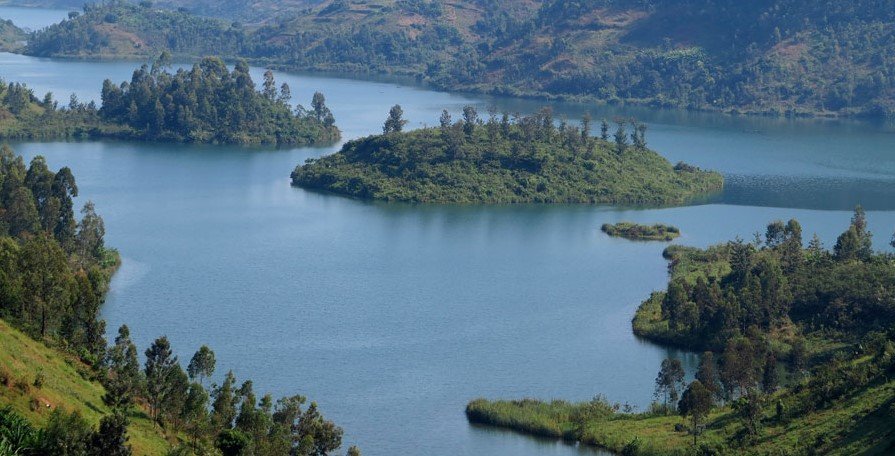
The southern section of the lake feels different from the more established resort atmosphere of Rubavu. Travellers may choose it primarily because of its geographical position within a larger Rwanda itinerary, but this does not mean the lake should be treated only as a transit point. Scenic waterfront views and surrounding highlands can provide an attractive transition between Nyungwe’s dense rainforest and other destinations.
A Lake Kivu Safari incorporating Rusizi works particularly well when travellers are moving north or south through western Rwanda. Nyungwe chimpanzee trekking can be followed by a relaxing lakeside period before travelling toward Karongi, while travellers arriving from northern Rwanda can use the lake corridor as a scenic approach to the forest.
Explore the Congo Nile Trail
The Congo Nile Trail is one of the strongest adventure additions to a Lake Kivu Safari. Running roughly parallel to Lake Kivu’s eastern shoreline, the route stretches approximately 227 kilometres from Rubavu toward Rusizi, passing hills, villages, plantations and exceptional lake viewpoints. It can be explored by bicycle or on foot, and travellers without enough time for the complete route can select individual sections instead.
Cyclists can experience a succession of climbs, descents and lakeside views while passing through communities that are rarely included in conventional vehicle-based itineraries. Visit Rwanda indicates that the cycling journey can be completed in roughly five days, although shorter stages are possible. Hiking the complete route takes longer and provides an even slower immersion in western Rwanda’s countryside.
Including even one section of the Congo Nile Trail transforms a Lake Kivu Safari from a passive beach stay into a more immersive adventure. Travellers can hike or cycle during the morning before returning to comfortable lakeside accommodation in the afternoon. This balance works particularly well for active couples and travellers who want authentic landscape exploration without committing to a long expedition.
Coffee, Tea and Local Experiences Around Lake Kivu
Agriculture plays an important role in the landscapes surrounding Lake Kivu, and coffee experiences can add cultural depth to a Lake Kivu Safari. Rwanda’s western hills provide favourable growing conditions, and sections of the Congo Nile Trail pass through areas containing coffee-washing stations and tea plantations. Visit Rwanda highlights these agricultural landscapes as part of the trail experience.
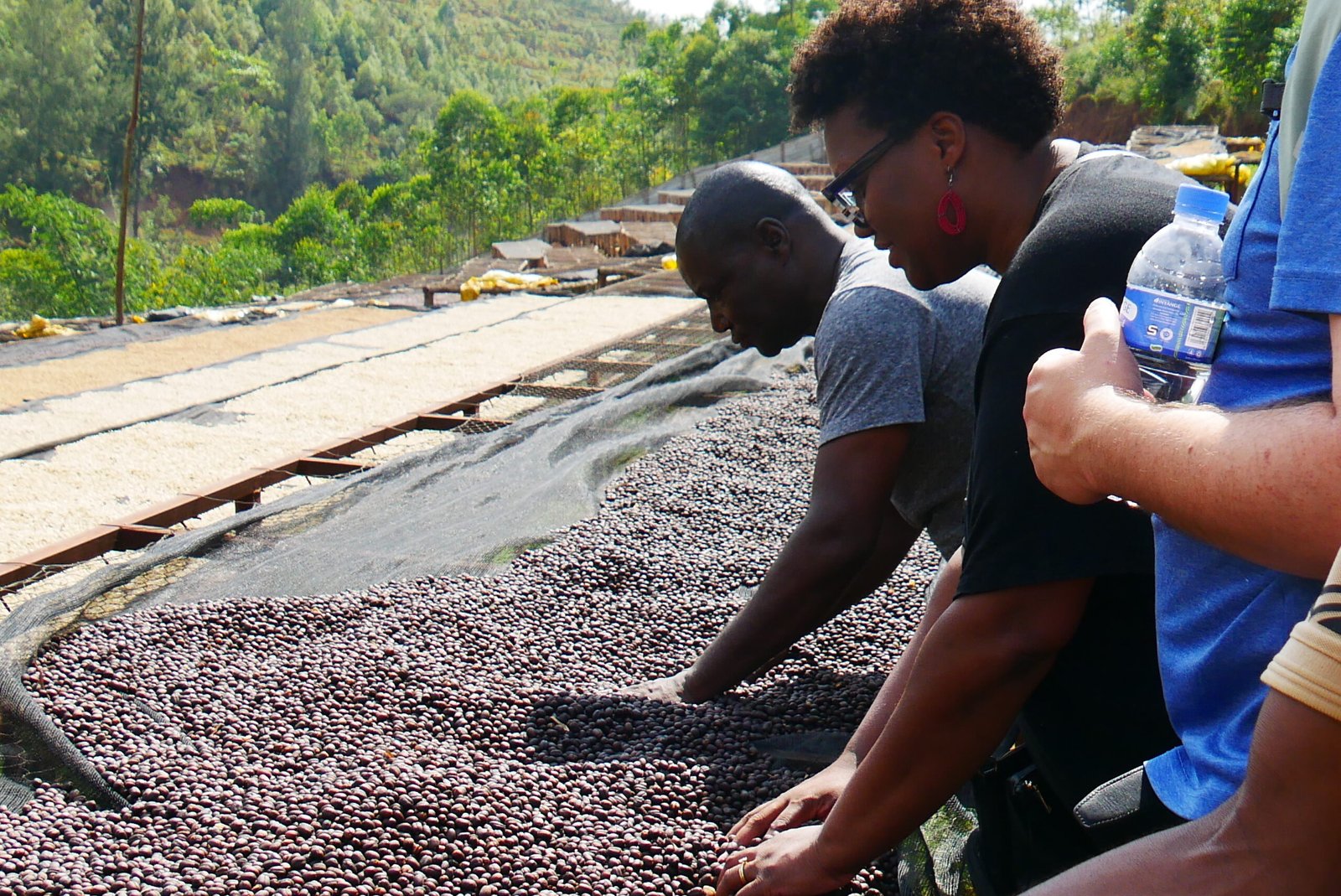

A guided coffee experience can help travellers understand the journey from coffee plant to finished cup while introducing the people and communities involved in cultivation and processing. Instead of simply ordering Rwandan coffee at a hotel, visitors can learn about harvesting, washing, drying and roasting. These activities work especially well when incorporated into an itinerary that already includes hiking, cycling or boat travel.
Adding community and agricultural experiences helps a Lake Kivu Safari feel connected to western Rwanda rather than existing solely inside a resort. The lake is surrounded by inhabited and cultivated landscapes, and appreciating those landscapes gives visitors a better understanding of the relationship between tourism, agriculture and everyday life in the region.
Lake Kivu Safari for Honeymoons and Couples
A Lake Kivu Safari is an excellent addition to a Rwanda honeymoon because it provides relaxation after more demanding wildlife experiences. Couples who have spent several mornings trekking for mountain gorillas or chimpanzees can slow the pace with waterfront accommodation, leisurely breakfasts, spa treatments, boat trips and quiet evenings beside the lake.
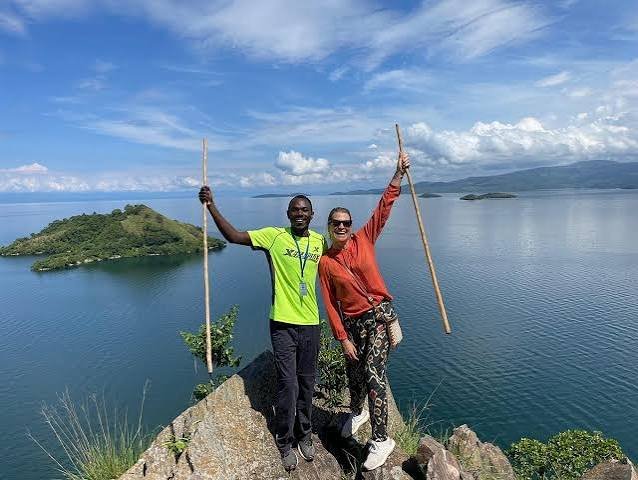
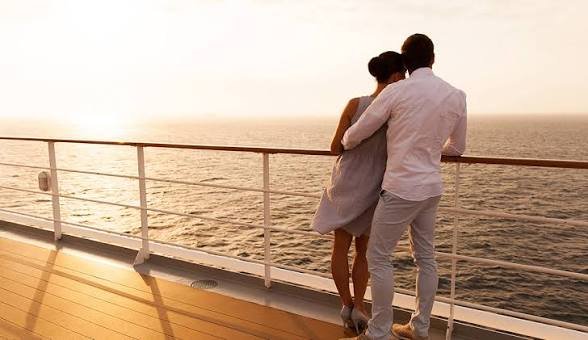
Sunset is particularly important to the romantic atmosphere of Lake Kivu. A private boat excursion or kayaking experience can be followed by dinner overlooking the water, while quieter accommodation around Karongi can create a strong sense of escape. Couples who prefer a livelier atmosphere may instead choose Rubavu, where the waterfront provides easier access to restaurants and resort facilities.
The strongest honeymoon itinerary often uses a Lake Kivu Safari as a bridge between two major wildlife experiences. Gorilla trekking in Volcanoes National Park can be followed by several nights on Lake Kivu before continuing toward Nyungwe for chimpanzees. This structure prevents the honeymoon from becoming physically exhausting while ensuring that each part of Rwanda feels different.
Lake Kivu Safari for Families
Families can also enjoy a Lake Kivu Safari because activities can be adapted to different ages and levels of energy. Unlike primate trekking, which can involve minimum age requirements and demanding terrain, many lakeside experiences can be enjoyed more casually. Boat trips, waterfront walks and suitable kayaking experiences provide opportunities for families to spend time together without spending entire days in a safari vehicle.
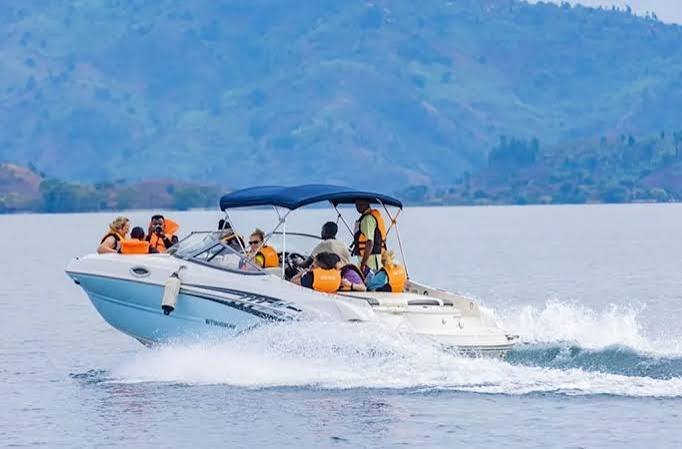
Selecting the right accommodation is particularly important for families. Properties offering family rooms, spacious grounds, swimming facilities and easy access to the waterfront can make the stay considerably more comfortable. A private itinerary also allows each day to remain flexible so that activities can be shortened or adjusted depending on children’s energy levels.
A family Lake Kivu Safari can be especially valuable between more structured parts of a Rwanda holiday. After game drives in Akagera or forest experiences in Volcanoes and Nyungwe, children and adults can enjoy a less formal schedule beside the lake. This change in pace helps create a balanced safari that does not feel like a constant sequence of early mornings and transfers.
Luxury Accommodation During a Lake Kivu Safari
Accommodation can transform a Lake Kivu Safari from a simple stopover into an important part of a Rwanda holiday. Rubavu, Karongi and other areas along the lake provide a range of options, from comfortable guesthouses to more refined waterfront hotels and boutique-style properties. The ideal choice depends on whether your priority is convenient access, privacy, family facilities, scenery or luxury.
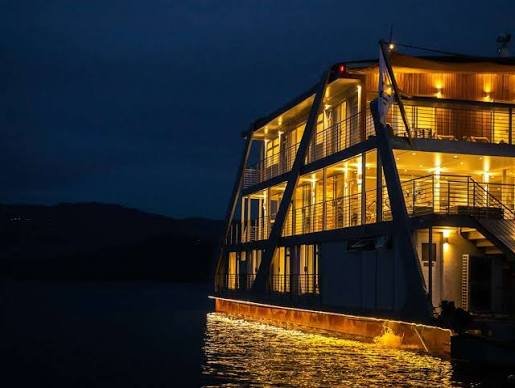
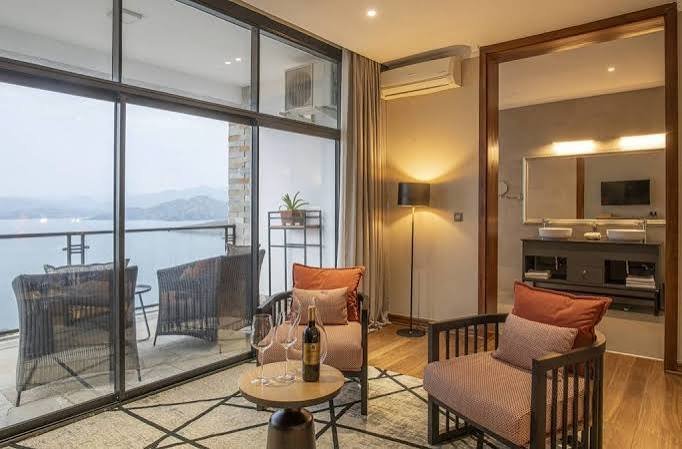
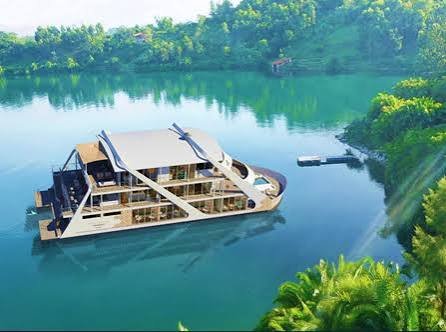
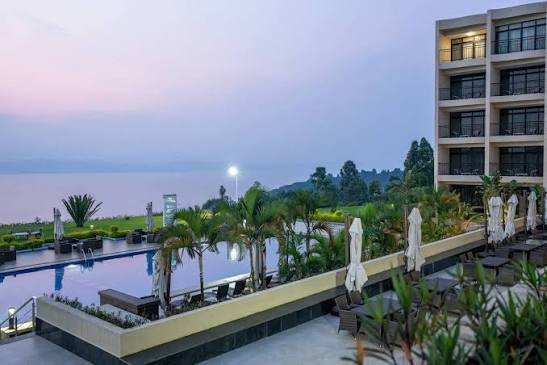
For a premium journey, accommodation should make full use of the lake itself. Rooms or terraces overlooking the water, comfortable outdoor areas, quality dining and easy access to boat activities allow travellers to enjoy Lake Kivu even when they are not on an organised excursion. A beautiful property can therefore become part of the experience rather than simply somewhere to spend the night.
Visit Rwanda Safaris can match accommodation to the wider character of the Lake Kivu Safari. Honeymooners may prioritise privacy and views, families may require larger rooms, and active travellers may value proximity to kayaking or the Congo Nile Trail. Selecting the correct part of the lake is often just as important as selecting the individual hotel.
Best Time for a Lake Kivu Safari
A Lake Kivu Safari can be enjoyed throughout the year, and the best period depends largely on the activities being planned. Rwanda’s relatively mild climate means the lake remains attractive across different seasons, although rainfall can influence hiking, cycling, kayaking and general visibility. Travellers planning outdoor adventures may naturally prefer relatively drier conditions.
Greener periods have their own appeal because the surrounding hills become especially lush and dramatic. Cloud formations, changing light and mist across the highlands can create excellent landscape photography, while quieter periods may also appeal to travellers who value atmosphere over perfectly clear skies. Short periods of rain do not necessarily prevent a rewarding lakeside holiday.
The best travel dates for a Lake Kivu Safari should therefore usually be chosen according to the wider Rwanda itinerary. If Lake Kivu is being combined with gorilla trekking, chimpanzee trekking or an Akagera safari, it is more useful to select dates that work comfortably across the complete journey rather than trying to optimise the weather for the lake alone.
How Many Days Are Best for a Lake Kivu Safari?
Travellers with limited time can experience a Lake Kivu Safari with a one- or two-night stop, particularly when staying in Rubavu after gorilla trekking. One night provides a brief opportunity to see the lake and relax, but two nights create enough time for a boat excursion, kayaking or a genuinely restful day before continuing the safari.
Three nights work particularly well for travellers who want Lake Kivu to become a real destination rather than merely a stopover. This allows time for a boat cruise, kayaking, coffee experiences, waterfront relaxation and perhaps a short section of the Congo Nile Trail. Couples and honeymooners often benefit from this slower pace after several active safari days.
Longer stays are worthwhile for travellers planning extensive hiking, cycling or multi-day kayaking. The full Congo Nile Trail alone can form the foundation of a specialised western Rwanda adventure. The ideal duration of your Lake Kivu Safari therefore depends on whether the lake is intended primarily for relaxation or as a destination for active exploration.
Combine Lake Kivu Safari With Gorilla Trekking
One of the easiest combinations is a Lake Kivu Safari with mountain gorilla trekking in Volcanoes National Park. Rubavu is approximately an hour from the Volcanoes region according to Visit Rwanda, allowing travellers to move from the Virunga Mountains to the lakeshore without spending an entire day in transit.

This combination works exceptionally well because the experiences are so different. Gorilla trekking involves an early start, forest terrain and intense anticipation, whereas Lake Kivu encourages relaxation and slow exploration. Spending one or two nights beside the water after trekking provides time to recover while still experiencing another beautiful part of Rwanda.
For travellers continuing south, the Lake Kivu Safari can become part of a longer route toward Nyungwe. Rather than returning directly to Kigali after gorilla trekking, visitors can travel along western Rwanda, stopping in Rubavu and Karongi before eventually reaching the rainforest region.
Combine Lake Kivu Safari With Nyungwe National Park
A Lake Kivu Safari also combines beautifully with chimpanzee trekking in Nyungwe National Park. The southern end of Lake Kivu lies within convenient reach of the Nyungwe region, allowing travellers to transition naturally between open lakeside scenery and one of Africa’s oldest mountain rainforests. Visit Rwanda specifically positions Rusizi as the Lake Kivu town closest to Nyungwe.
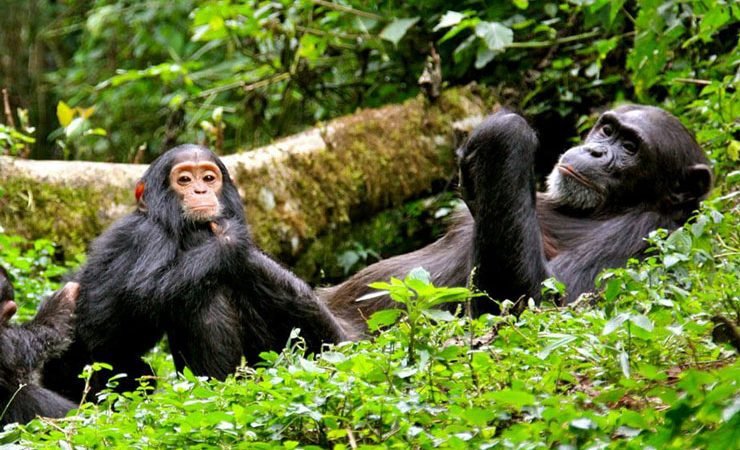
This pairing is especially suitable for travellers who want variety. One day may involve trekking through dense rainforest following chimpanzee calls, while the next can be spent sitting beside the water or enjoying a relaxing boat excursion. Lake Kivu therefore serves as a natural counterbalance to Nyungwe’s more physically active experiences.
Travellers with sufficient time can combine Volcanoes National Park, a Lake Kivu Safari, and Nyungwe into one western Rwanda journey. This route creates a logical progression from gorillas in the north through the lake region to chimpanzees in the south and avoids treating every destination as a separate return trip from Kigali.
Combine Lake Kivu With Rwanda’s Three National Parks
For travellers seeking the most complete experience, a Lake Kivu Safari can form part of a Rwanda circuit incorporating Akagera, Volcanoes and Nyungwe National Parks. Visit Rwanda itself promotes an itinerary combining Rwanda’s three national parks with Lake Kivu, demonstrating how naturally the lake fits into a broader wildlife journey.
Akagera contributes Big Five wildlife and savannah landscapes, Volcanoes National Park provides mountain gorilla trekking, and Nyungwe brings chimpanzees and rainforest biodiversity. Lake Kivu then introduces water, relaxation, kayaking, islands and western Rwanda’s cultivated hills. Each region has a distinct identity, helping the complete itinerary remain varied.
A well-paced itinerary should avoid rushing between these destinations. Adding a Lake Kivu Safari allows rest to become an intentional part of the journey rather than simply an empty day between treks. This can be particularly valuable on luxury holidays, honeymoons and longer private safaris.
Plan Your Lake Kivu Safari With Visit Rwanda Safaris
Planning a Lake Kivu Safari begins with deciding what role the lake should play in your Rwanda holiday. Some travellers want two nights of relaxation after gorilla trekking, while others want kayaking, islands, coffee experiences and sections of the Congo Nile Trail. Choosing between Rubavu, Karongi and the southern lake region should therefore be based on the experiences you want and the direction of your wider itinerary.
Visit Rwanda Safaris can organise private transportation, carefully selected accommodation and lakeside activities while connecting the experience with Rwanda’s national parks. Instead of treating Lake Kivu as a separate excursion, we can incorporate it naturally between Volcanoes and Nyungwe or add it as a relaxing extension after a demanding wildlife itinerary.
Whether you are planning a honeymoon, family holiday, luxury safari or adventurous journey through western Rwanda, your Lake Kivu Safari can be personalised around your travel dates, accommodation preference and interests. The objective is to give you enough time to enjoy the lake rather than simply arriving, taking a photograph and leaving again.
Frequently Asked Questions About Lake Kivu Safari
1. What is a Lake Kivu Safari?
A Lake Kivu Safari is a scenic Rwanda travel experience focused on exploring Lake Kivu through activities such as boat cruises, kayaking, island visits, waterfront relaxation, coffee experiences, hiking, and cultural encounters. It can be enjoyed as a stand-alone lakeside holiday or combined with Rwanda’s national parks.
2. Where is the best place for a Lake Kivu Safari?
The main destinations for a Lake Kivu Safari are Rubavu, Karongi, and Rusizi. Rubavu is convenient for travellers coming from Volcanoes National Park, Karongi is excellent for peaceful scenery and island experiences, while Rusizi works well for travellers combining Lake Kivu with Nyungwe National Park.
3. What activities can I enjoy during a Lake Kivu Safari?
A Lake Kivu Safari can include boat cruises, kayaking, sunset trips, island exploration, coffee tours, cycling, hiking, waterfront dining, photography, and sections of the Congo Nile Trail. The activities can be customised according to your interests and available time.
4. How many days are recommended for a Lake Kivu Safari?
Two to three nights are ideal for many travellers planning a Lake Kivu Safari. This provides enough time for a boat experience, kayaking, relaxation, and another activity such as a coffee visit or short section of the Congo Nile Trail without making the itinerary feel rushed.
5. Can I combine a Lake Kivu Safari with gorilla trekking?
Yes, a Lake Kivu Safari combines perfectly with gorilla trekking in Volcanoes National Park. Travellers can trek mountain gorillas before continuing to Rubavu or another lakeside destination for relaxation, boat cruises, and scenic exploration.
6. Can I combine a Lake Kivu Safari with chimpanzee trekking?
Yes, a Lake Kivu Safari can easily be combined with chimpanzee trekking in Nyungwe National Park. The southern and central parts of Lake Kivu fit naturally into a western Rwanda itinerary that links lakeside scenery with rainforest and primate experiences.
7. Is a Lake Kivu Safari suitable for honeymooners?
Yes, a Lake Kivu Safari is an excellent choice for honeymooners. Couples can enjoy private boat cruises, sunset views, romantic waterfront accommodation, kayaking, relaxed dining, and scenic stays between gorilla or chimpanzee trekking experiences.
8. Is Lake Kivu safe for swimming and kayaking?
Lake Kivu is widely used for recreational activities such as kayaking and swimming in suitable designated areas. Travellers should still follow local guidance, lodge advice, weather conditions, and operator instructions when enjoying water activities during a Lake Kivu Safari.
9. What is the best time for a Lake Kivu Safari?
A Lake Kivu Safari can be enjoyed throughout the year. Relatively drier periods are often preferred for kayaking, hiking, and cycling, while greener months provide lush landscapes, dramatic skies, and beautiful photography conditions around the lake.
10. How do I book a Lake Kivu Safari?
To book a Lake Kivu Safari, share your preferred travel dates, number of guests, accommodation level, and activities with Visit Rwanda Safaris. Your itinerary can be customised to include boat cruises, kayaking, gorilla trekking, chimpanzee trekking, the Congo Nile Trail, Akagera National Park, or other Rwanda experiences.
Book Your Lake Kivu Safari
A Lake Kivu Safari is the perfect opportunity to experience Rwanda at a slower and more peaceful pace while still enjoying adventure, scenery and meaningful local experiences. From sunset boat cruises and kayaking to hillside trails and lakeside relaxation, the region adds an entirely different character to a Rwanda safari.

Share your preferred travel dates, number of travellers, accommodation level and the other destinations you want to experience with Visit Rwanda Safaris. We can design your Lake Kivu stay around gorilla trekking, chimpanzee trekking, Akagera wildlife safaris or a complete private tour through Rwanda.
Book your Lake Kivu Safari with Visit Rwanda Safaris and discover a destination where mountain scenery, islands, waterfront towns and peaceful waters create one of the most memorable chapters of a Rwanda holiday.