
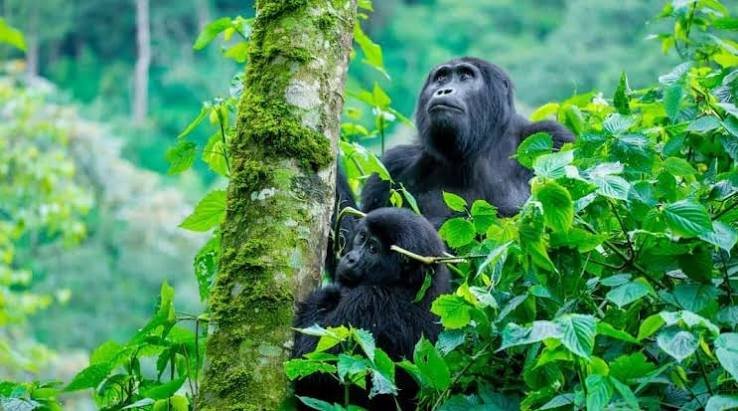
How Many Mountain Gorillas Are in Rwanda?
How Many Mountain Gorillas Are in Rwanda? The most accurate answer requires understanding that Rwanda’s mountain gorillas form part of a larger population that moves through the transboundary Virunga Massif rather than remaining permanently within political borders. The latest comprehensive census of the Virunga mountain gorilla population recorded a minimum of 604 individuals across the Virunga Massif, a connected mountain ecosystem extending through Rwanda’s Volcanoes National Park, Uganda’s Mgahinga Gorilla National Park and the Mikeno sector of Virunga National Park in the Democratic Republic of Congo. Therefore, it would be misleading to say that Rwanda alone has exactly 604 mountain gorillas. The 604 figure refers to the entire Virunga population shared among the three countries. When this population is considered together with the 459 mountain gorillas recorded in the Bwindi-Sarambwe ecosystem, the latest widely accepted global estimate reaches 1,063 mountain gorillas remaining in the wild.
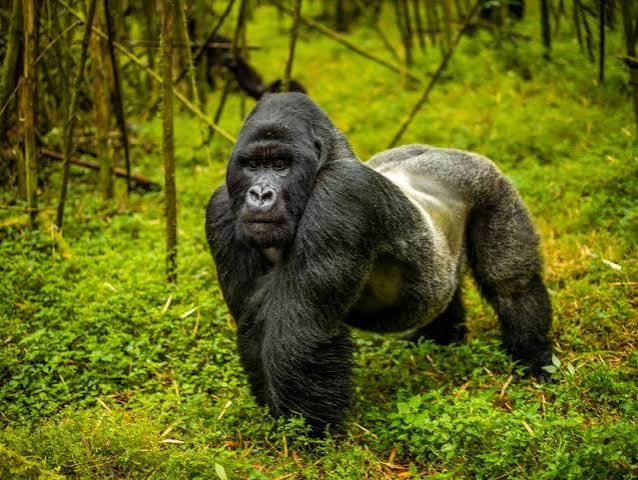
Rwanda nevertheless protects a critically important share of this surviving population through Volcanoes National Park in the northwestern part of the country. The park forms part of the Virunga volcanic landscape and contains some of the most intensively monitored mountain gorilla families anywhere in the world. Rwanda has become internationally associated with mountain gorilla conservation because of decades of scientific research, veterinary care, anti-poaching work, habitat protection, responsible tourism and cooperation with communities living around Volcanoes National Park. Visitors travelling to Rwanda can trek several habituated mountain gorilla families that are monitored regularly by trackers, researchers and park authorities, while other groups are maintained primarily for research rather than tourism. Visit Rwanda currently states that twelve gorilla families in Volcanoes National Park are fully habituated for tourist visits, alongside other groups used for scientific monitoring.
The number of mountain gorillas associated with Rwanda is therefore dynamic rather than permanently fixed. Gorilla families can change their home ranges, divide into new groups, merge, gain or lose members and sometimes move across the international boundaries that divide Rwanda, Uganda and the Democratic Republic of Congo. From the gorillas’ perspective, the forest is one ecological landscape rather than three countries. This is why conservation organisations generally report the Virunga Massif population collectively instead of assigning every individual permanently to one nation. The International Gorilla Conservation Programme has documented examples of mountain gorilla groups moving across national borders and emphasises that political boundaries do not represent ecological barriers to the animals.
Understanding this distinction is particularly important for travellers researching Rwanda because many websites simplify the statistics and describe the 604 Virunga gorillas as though they all belong to Volcanoes National Park. Although Rwanda protects a substantial and internationally important proportion of the Virunga population, the official census figure covers the entire massif. A reliable explanation should therefore state that Rwanda is one of the three countries protecting the 604 mountain gorillas recorded in the Virunga population, rather than presenting 604 as a precise Rwanda-only total. This gives travellers a more accurate understanding of both the mountain gorilla population and the extraordinary international conservation effort required to protect it.
What Is the Latest Mountain Gorilla Population?
The latest widely cited complete estimate places the global mountain gorilla population at 1,063 individuals. This figure combines the minimum count of 604 mountain gorillas from the Virunga Massif survey completed during 2015 and 2016 with the 459 mountain gorillas identified in the Bwindi-Sarambwe ecosystem during the later 2018–2019 survey. These two landscapes contain every surviving wild mountain gorilla known today. The Virunga population occupies forest spanning Rwanda, Uganda and the Democratic Republic of Congo, while the Bwindi-Sarambwe population occurs primarily within Uganda’s Bwindi Impenetrable National Park and the adjoining Sarambwe area of the Democratic Republic of Congo.
The figure of 1,063 should itself be understood as the best scientifically established population estimate from the most recent comprehensive census work rather than a real-time count of every mountain gorilla alive today. Gorilla births and deaths continue between census periods, and conservation teams monitor many habituated groups daily, meaning researchers often know when important changes occur within those families. However, a complete population figure cannot simply be updated every time a baby is born because some gorillas belong to unhabituated groups that are not observed at close range every day. Comprehensive censuses require extensive fieldwork, genetic sampling and careful analysis to avoid counting the same gorilla more than once.
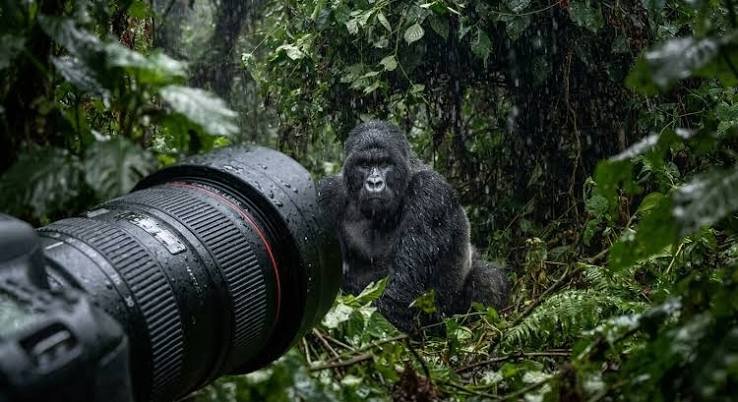
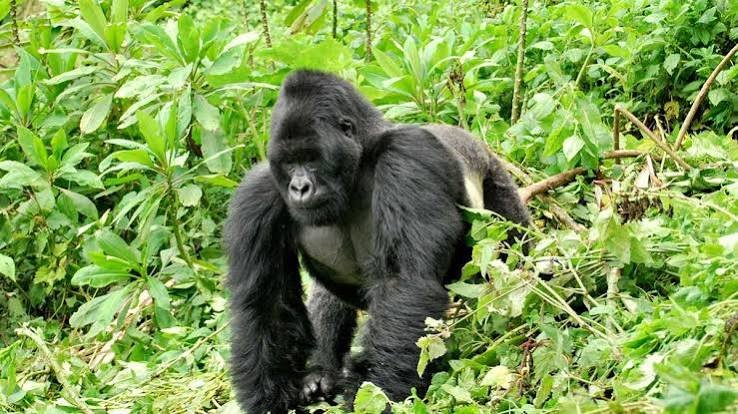
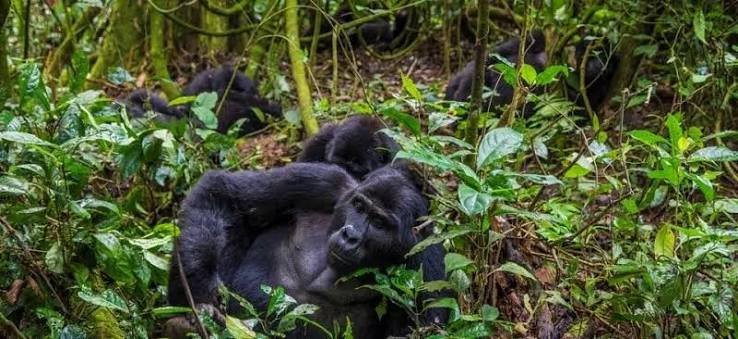
This is why different websites may quote figures such as approximately 1,000, just over 1,000 or 1,063. These descriptions usually refer to the same conservation picture rather than completely different populations. Visit Rwanda currently describes the global population as just over 1,000 mountain gorillas and continues to reference 604 individuals in the Virunga volcanic range. The International Gorilla Conservation Programme provides the more precise combined figure of 1,063 after the Bwindi-Sarambwe results increased the previously recognised global total.
For anyone asking How Many Mountain Gorillas Are in Rwanda?, the most responsible answer is therefore not to invent a precise national number. Rwanda protects part of the 604-member Virunga population in Volcanoes National Park, and those animals form part of a worldwide mountain gorilla population last comprehensively estimated at 1,063.
Where Do Mountain Gorillas Live in Rwanda?
All of Rwanda’s wild mountain gorillas occur in Volcanoes National Park, one of the country’s most famous protected areas. The park lies in northwestern Rwanda and forms the Rwandan section of the much larger Virunga Massif. This landscape is characterised by high volcanic peaks, bamboo forest, montane vegetation, open areas, swamps and other high-altitude ecosystems that provide mountain gorillas with the food and shelter required for survival. Volcanoes National Park includes the Rwandan slopes associated with mountains such as Karisimbi, Bisoke, Sabyinyo, Gahinga and Muhabura, creating one of Africa’s most dramatic wildlife landscapes.
The park covers approximately 160 square kilometres in its present form, making habitat protection extremely important because a growing gorilla population requires sufficient forest in which different families can feed, reproduce and establish home ranges. Rwanda has consequently begun a major programme to restore and expand Volcanoes National Park. Visit Rwanda states that the planned restoration will increase the park by approximately 37.4 square kilometres, representing an expansion of about 23 percent. The programme is intended to create additional habitat for mountain gorillas while also addressing community development and human-wildlife interactions around the park.
For travellers, Volcanoes National Park is also the centre of Rwanda’s gorilla trekking experience. Habituated families are monitored by trackers who follow their movements and help guides locate them for permitted visitors. The families do not live in enclosures, fenced tourism zones or controlled feeding areas. They remain wild animals moving naturally through the forest. Their locations can therefore change considerably from one day to another, which is one reason some gorilla treks are relatively short while others require several hours of hiking.
The natural mobility of mountain gorillas is central to understanding Rwanda’s population statistics. Volcanoes National Park joins protected habitat across international frontiers, and a gorilla family living primarily in Rwanda during one period may move toward neighbouring habitat under particular circumstances. Food availability, social interactions, competition between groups and changes in family structure can all influence movement. Mountain gorilla conservation consequently requires cooperation that extends well beyond Rwanda itself.
Why Is There No Exact Permanent Rwanda-Only Gorilla Number?
An exact Rwanda-only figure sounds straightforward, but biologically it is more complicated than counting animals inside an isolated national park. The Virunga Massif is a connected mountain ecosystem. Its forests continue across national boundaries that humans recognise but gorillas do not. Rwanda’s Volcanoes National Park borders the wider Virunga conservation landscape, allowing gorilla groups to occupy ranges that may shift over time.
The International Gorilla Conservation Programme has specifically documented transboundary mountain gorilla movement and explains that gorillas experience the Virunga Massif as one large habitat. A family group can therefore change where it spends most of its time, and movements across borders can make a fixed country allocation inaccurate.
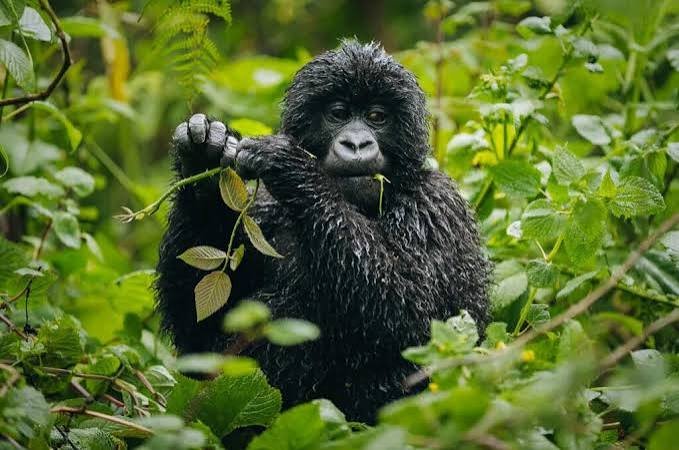
This does not mean conservation authorities have no knowledge of the gorillas in Rwanda. Quite the opposite. Habituated and research groups within Volcanoes National Park are monitored very closely, and researchers can recognise individual gorillas from physical characteristics, family relationships and long-term records. Rwanda’s annual Kwita Izina naming tradition also highlights the detailed monitoring of infants born into known groups. In September 2026, Rwanda held the 21st Kwita Izina ceremony, and Visit Rwanda reports that 460 mountain gorillas have been named through the ceremony since it began officially in 2005.
However, the number of gorillas ever named through Kwita Izina is not the same as the number currently alive in Rwanda. That total accumulates across many years and includes individuals from different generations. Some animals have died, others have changed groups, and new infants continue to be born. The naming total should therefore never be used as Rwanda’s present gorilla population.
For a traveller or researcher searching for a trustworthy number, the distinction matters greatly. The scientifically established regional figure is 604 for the Virunga Massif at the last comprehensive census, while 1,063 represents the latest widely accepted total across the mountain gorilla’s complete remaining range. Rwanda contributes substantially to protecting that population through Volcanoes National Park, but assigning every Virunga gorilla permanently to a single country would not accurately reflect how the species lives.
How Were the 604 Virunga Mountain Gorillas Counted?
Counting mountain gorillas is much more complicated than walking through a forest and visually recording every animal. Some groups are accustomed to researchers and tourists and can be monitored closely, while others remain unhabituated and avoid regular human contact. The terrain is steep, densely vegetated and spread across a transboundary mountain system, making direct visual counting alone unreliable.
The 2015–2016 Virunga survey therefore combined intensive fieldwork with genetic analysis. Survey teams searched the massif systematically for signs of gorillas and located nesting sites. Gorillas generally build nests in which they sleep, and biological material collected from those locations can provide genetic information. Researchers used genetic analysis to identify individual gorillas and reduce the risk of recording the same animal more than once. The final survey reported a minimum of 604 mountain gorillas in 41 groups together with 14 solitary males.
The word “minimum” is important because wildlife censuses aim to establish an evidence-based number supported by the data collected rather than exaggerating the population. Scientists must distinguish individuals carefully and account for animals that may have moved while survey teams were covering different areas.
This scientific approach explains why official population updates do not occur every few weeks. A mountain gorilla census is an enormous undertaking involving park authorities, conservation organisations, trackers, genetic laboratories and teams working across difficult terrain. The resulting population figure is therefore much more meaningful than informal estimates based only on the number of visible tourism groups.
How Has the Virunga Gorilla Population Changed Over Time?
The growth of the Virunga population is one of the most important conservation stories associated with Rwanda. In 2003, a census estimated approximately 380 mountain gorillas in the Virunga Massif. By the 2010 census, that number had risen to 480. The 2015–2016 census then produced a minimum count of 604 individuals, demonstrating a substantial increase over little more than a decade.
These numbers become particularly remarkable when placed within the longer history of mountain gorilla conservation. The species once appeared dangerously close to disappearing from parts of its remaining habitat, and researchers were deeply concerned about whether such a small population could survive long term. Intensive protection changed that trajectory.
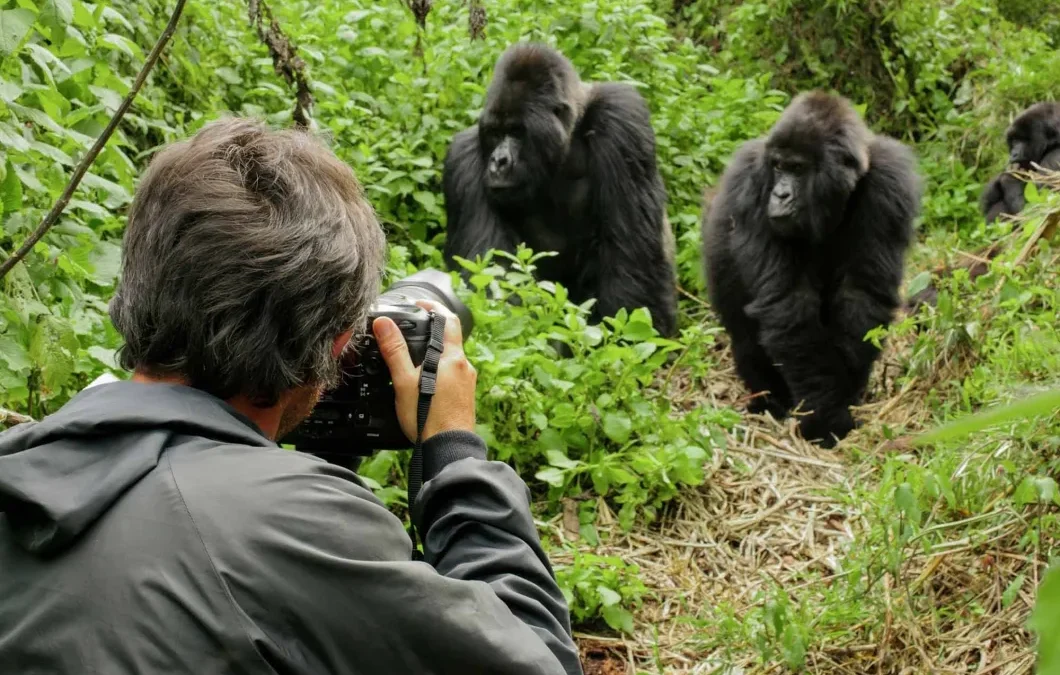
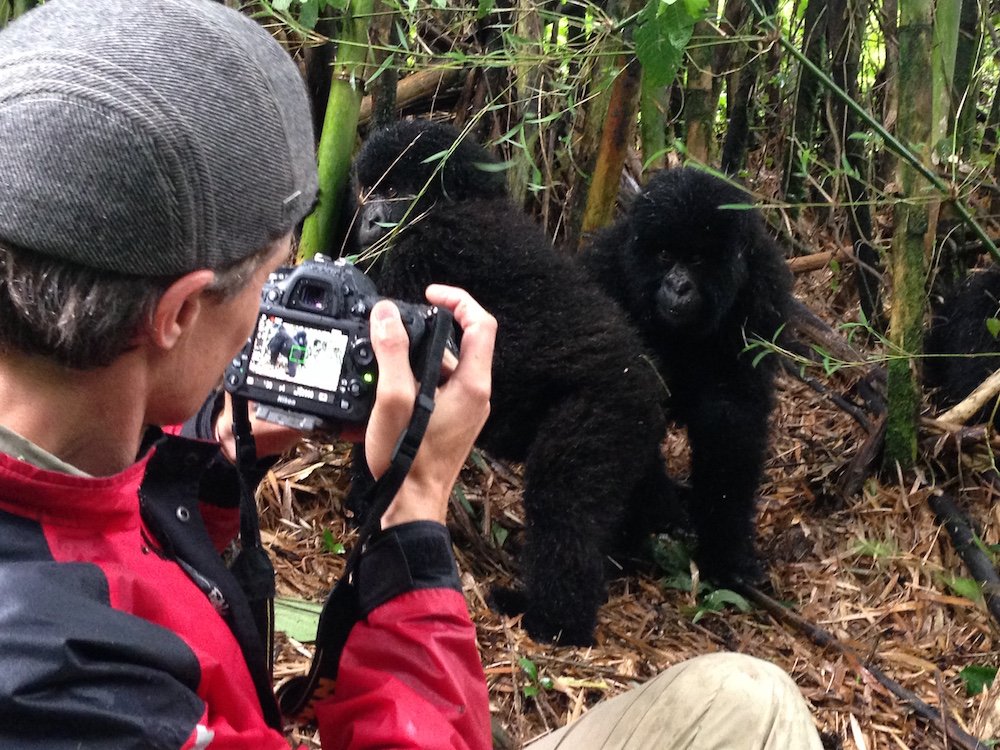
The increase did not happen because mountain gorillas suddenly became safe. It resulted from persistent intervention. Rangers patrol protected areas, snares are removed, veterinary teams respond when intervention is necessary, researchers monitor health and reproduction, tourism generates conservation revenue, and local communities participate in programmes designed to make gorilla protection economically and socially sustainable.
The recovery eventually contributed to a change in the mountain gorilla’s conservation classification. In 2018, the IUCN reported that the mountain gorilla had moved from Critically Endangered to Endangered following population growth associated with intensive conservation action. The improvement was important, but IUCN also stressed that the species remains threatened and that continued conservation is essential.
This distinction is important when discussing how many mountain gorillas are in Rwanda because population growth can easily create the impression that the conservation challenge has been solved. A global population of just over one thousand animals remains extremely small. Every significant disease outbreak, habitat disturbance or breakdown in conservation could have serious consequences.
Why Are Mountain Gorillas Still Endangered?
Mountain gorillas remain endangered because their entire global population is concentrated within a very small geographic area. Unlike widespread wildlife species that can occupy protected areas across multiple regions or continents, mountain gorillas survive only in the Virunga Massif and the Bwindi-Sarambwe ecosystem. A threat affecting either landscape can therefore influence a significant proportion of the entire subspecies.
Habitat availability is one of the most important long-term concerns. Volcanoes National Park is surrounded by densely settled and productive agricultural landscapes, leaving little room for uncontrolled expansion of wildlife habitat. The growing gorilla population needs adequate feeding areas, space for new groups to form and sufficient separation to reduce excessive competition between families. Rwanda’s plan to expand Volcanoes National Park reflects recognition that successful conservation eventually creates a new challenge: more gorillas require more protected habitat.
Disease is another serious concern. Gorillas and humans are genetically close enough for some infectious diseases to move between species. This makes responsible tourism rules more than simple visitor etiquette. Restrictions on proximity, visitor numbers and health are part of a conservation strategy designed to reduce the possibility of people transmitting respiratory or other illnesses to gorillas.
Poaching also remains relevant, even when gorillas themselves are not always the intended target. Snares placed for other wildlife can injure gorillas. Ranger patrols and monitoring therefore remain essential throughout the habitat.
Climate change may create additional long-term pressure by influencing vegetation, rainfall, temperature and the distribution of food resources. Because the gorillas already occupy a limited high-altitude ecosystem, significant environmental changes could affect where suitable habitat exists.
The mountain gorilla recovery is therefore encouraging, but it should not lead visitors to believe the species is secure without continuing protection.
How Many Gorilla Families Live in Rwanda?
Rwanda’s mountain gorillas live in social family groups as well as, occasionally, solitary males. The number of groups can change as gorillas mature, families split, dominant males compete and individuals transfer between groups.
Visit Rwanda currently states that twelve gorilla families in Volcanoes National Park are fully habituated for tourism, with additional gorillas habituated for scientific research. This does not mean Rwanda has only twelve gorilla families altogether, nor does it mean every habituated family has exactly the same number of members.
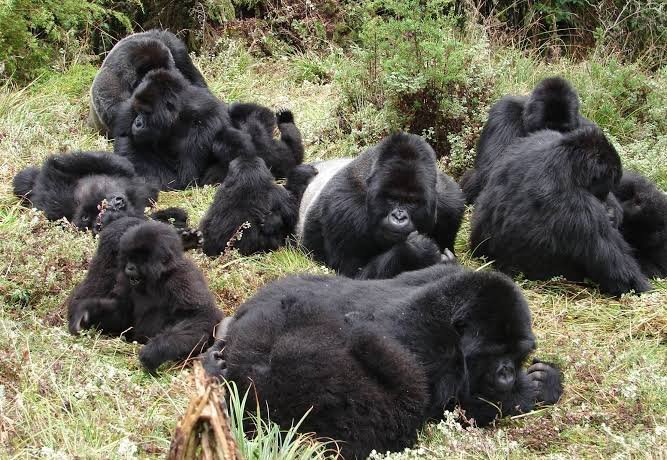
A mountain gorilla family can contain a dominant silverback, other adult males, adult females, juveniles and infants. Some groups may be relatively small, while others can contain several dozen individuals. Family composition changes continuously as babies are born, young males mature, adults transfer between groups and new social units form.
The habituation process itself is gradual. Researchers and trackers carefully introduce selected wild gorilla groups to the controlled presence of humans over an extended period. The aim is not to domesticate them. Habituated mountain gorillas remain entirely wild, but they become sufficiently accustomed to carefully managed human observation for research or tourism.
For visitors asking how many gorillas they will see during a trek, the number therefore depends on the particular family allocated that morning and which members are visible when the group is located. Seeing a family of twelve does not mean Rwanda has only twelve gorillas, just as seeing a family of thirty does not mean every Rwanda gorilla group is that large.
Why Do Gorilla Family Numbers Keep Changing?
Mountain gorilla societies are dynamic. A family may gain new infants through successful births, lose elderly members, experience transfers of females, undergo leadership challenges or divide into separate groups when social relationships change.
Silverbacks play an especially important role in group stability. A dominant male generally protects the family and influences its movements. Other mature males may remain within the group under a hierarchy or eventually leave to become solitary before attempting to attract females and form a family of their own.
Occasionally, a group can split after competition between adult males. When that happens, a single previously recognised family can become two different groups that are subsequently monitored separately.
The opposite can also occur when individuals join existing groups. Females commonly transfer during their lives, which contributes to genetic exchange between families.
Births are particularly important because infant survival determines whether the population can continue growing. Rwanda’s Kwita Izina ceremony has become an internationally recognised way of celebrating new gorillas and drawing attention to the conservation work required to give those infants the best possible chance of reaching adulthood.
Because all these biological processes continue year after year, any webpage claiming an exact permanent number for every gorilla family will eventually become outdated.
What Is Kwita Izina and Why Does It Matter to Gorilla Numbers?
Kwita Izina is Rwanda’s annual mountain gorilla naming ceremony, inspired by the Rwandan tradition of naming children within the community. Rwanda formally established the modern ceremony in 2005, although researchers and park staff had been naming monitored gorillas long before the public event developed into a major conservation celebration.
The ceremony helps individual gorillas become recognisable ambassadors for their species. A named infant is easier for the public to follow than an anonymous population statistic, and stories about mothers, silverbacks and young gorillas help communicate the importance of conservation to both Rwandans and international visitors.
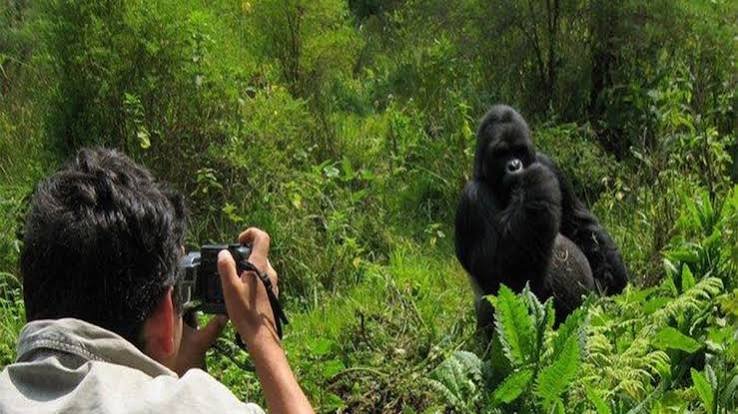
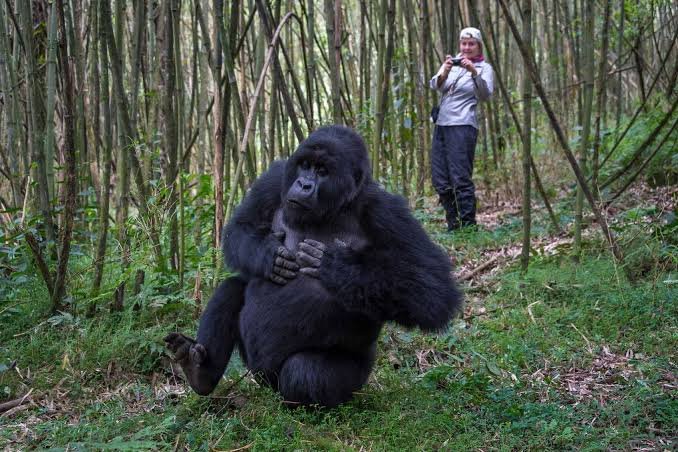
Visit Rwanda reports that the 21st edition of Kwita Izina was held on 4 September 2026 and that 460 mountain gorillas have been named through the ceremony over its history.
Again, the 460 figure must not be confused with the number of gorillas currently living in Rwanda. It represents the cumulative number named through the ceremony across many years. The current living population associated with Rwanda is monitored through conservation programmes, while the broader scientifically recognised population statistics continue to be reported at the Virunga Massif level.
Kwita Izina nevertheless demonstrates how closely Rwanda follows individual gorilla histories. Researchers can often identify mothers, offspring, dominant males and family relationships, creating detailed long-term records that are extremely valuable for conservation science.
How Important Is Rwanda to the Global Mountain Gorilla Population?
Rwanda is exceptionally important because Volcanoes National Park protects a major section of the Virunga Massif and has supported some of the longest-running mountain gorilla research in history.
The region became internationally famous through the work of primatologist Dian Fossey, who established the Karisoke Research Center in the Virunga mountains in 1967. Long-term research created an unusually detailed understanding of mountain gorilla social behaviour, reproduction, family relationships and threats.
Modern conservation in Rwanda has expanded far beyond the work of any individual researcher. Rwanda Development Board, park rangers, local communities, Gorilla Doctors, the Dian Fossey Gorilla Fund, the International Gorilla Conservation Programme and other organisations all contribute to protection.
The country’s tourism model has also made mountain gorillas economically important to national tourism and communities surrounding Volcanoes National Park. This creates a strong incentive to preserve the forest and maintain healthy gorilla populations.
Rwanda is therefore not important merely because of how many gorillas may be inside its borders on a particular day. Its importance comes from the habitat it protects, the research conducted there, the financial contribution of gorilla tourism, the professional monitoring of families and the international conservation partnerships built around the Virunga landscape.
Why Has Rwanda’s Mountain Gorilla Population Increased?
There is no single reason for mountain gorilla recovery. The increase is the result of decades of intensive conservation in which multiple forms of protection operate simultaneously.
Continuous monitoring means conservation teams can detect changes in family structure, health and movement relatively quickly. Anti-poaching patrols reduce illegal activity and remove dangerous snares. Veterinary teams can intervene in carefully defined circumstances when a human-caused injury or serious health issue threatens an individual. Scientific research improves understanding of the species and allows conservation practices to be adapted as new evidence becomes available.
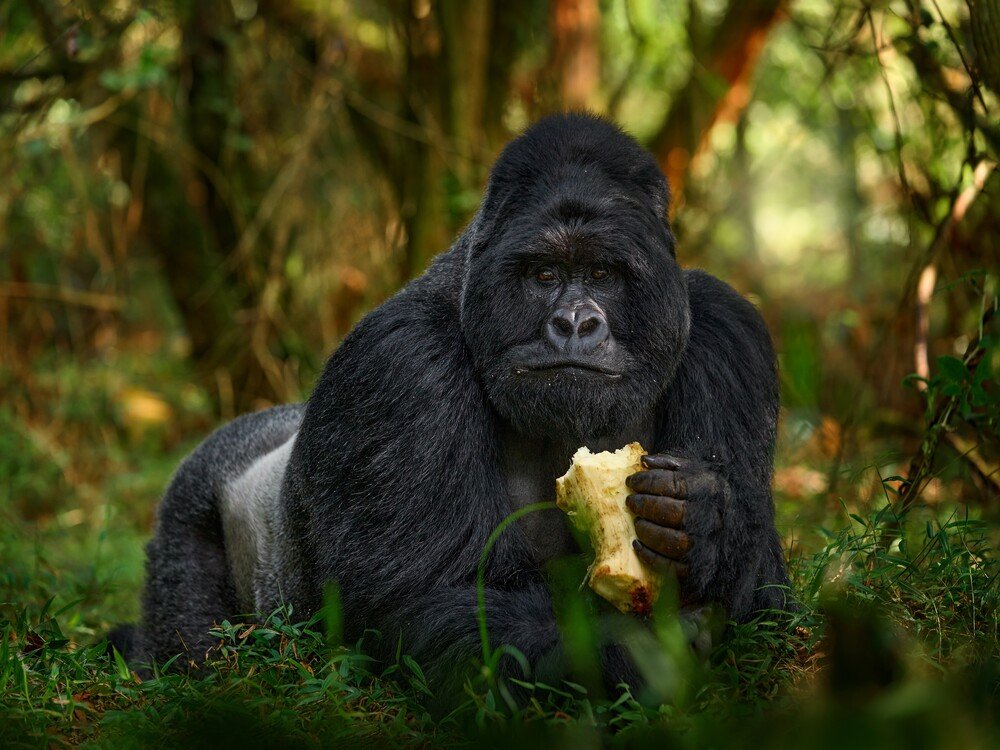
Community involvement is equally important. Volcanoes National Park is surrounded by human settlements where land and economic opportunities matter enormously. Conservation cannot succeed sustainably if neighbouring communities experience only the restrictions associated with protected areas without receiving meaningful benefits.
Tourism contributes to this broader system by creating employment and generating revenue associated with keeping gorillas alive in their natural habitat. Visit Rwanda states that gorilla tourism revenue supports both conservation and communities around the park.
Habitat restoration now represents another stage of the conservation strategy. Rwanda’s planned Volcanoes National Park expansion aims to add more forest and reduce pressure created by a limited habitat supporting a growing gorilla population.
The increase from 480 Virunga gorillas in 2010 to 604 in the 2015–2016 survey therefore reflects a conservation system rather than one isolated programme.
Are There More Mountain Gorillas in Rwanda Today Than in the Past?
The broader evidence indicates strong long-term growth within the Virunga population to which Rwanda’s gorillas belong. During the early years of intensive conservation, researchers feared that mountain gorillas could disappear entirely. Historical estimates were dramatically lower than the population levels recognised today.
The Virunga Massif census recorded 380 gorillas in 2003, 480 in 2010 and 604 in the 2015–2016 survey. Those figures represent one of the clearest signs that intensive conservation can reverse the decline of a highly threatened great ape.
Current monitoring also continues to record new births in Rwanda. The annual naming of young gorillas through Kwita Izina keeps public attention focused on reproduction and infant survival.
However, it would be scientifically inappropriate simply to add every recently announced baby to 604 and describe the resulting figure as the latest Virunga census. During the same period, deaths, movements, unidentified unhabituated animals and other changes occur. A new comprehensive population survey must reconcile all of these changes.
Therefore, the safest wording for a current webpage is that the latest comprehensive Virunga census recorded 604 mountain gorillas and the latest globally accepted estimate stands at 1,063 across the full mountain gorilla range.
Are Mountain Gorillas Found Anywhere Else in Rwanda?
Wild mountain gorillas in Rwanda are associated with Volcanoes National Park. They are not naturally distributed through Nyungwe National Park, Akagera National Park, Kigali or the other major tourism destinations in the country.
Nyungwe is an exceptional primate destination but is better known for chimpanzees and various monkey species rather than mountain gorillas. Akagera protects a very different savannah ecosystem containing large mammals such as elephants, buffalo and major predators.
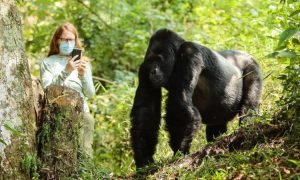
This geographic restriction helps explain why Volcanoes National Park is so valuable. Rwanda cannot simply relocate its natural mountain gorilla tourism to another forest if this habitat is degraded. The Virunga ecosystem provides the specialised high-altitude conditions in which these gorillas evolved.
Protecting Volcanoes National Park is consequently not merely about maintaining one tourist attraction. It is about preserving an irreplaceable portion of the only landscape on Earth where the Virunga mountain gorilla population naturally exists.
What Is the Difference Between Mountain Gorillas and Other Gorillas?
Mountain gorillas are one subspecies of the eastern gorilla and should not be confused with all gorillas living across Africa. Other gorilla populations occur in central and western African forests, but mountain gorillas have a much more restricted distribution.
Their thick fur helps them survive the cooler temperatures of high-altitude mountain forests. Adult males develop the characteristic silver colouring across the back that gives mature males the name silverbacks.
Mountain gorillas are predominantly terrestrial, although younger gorillas may climb vegetation and trees. Their diet relies heavily on plant material available in their forest habitat.
Their social lives are complex, with strong relationships developing within groups. Long-term research in Rwanda has revealed individual personalities, maternal relationships, male hierarchies, friendships and patterns of group formation that have transformed scientific understanding of gorilla behaviour.
The fact that only just over one thousand mountain gorillas remain worldwide makes every surviving population exceptionally important.
How Does Gorilla Trekking Help Protect Rwanda’s Mountain Gorillas?
Gorilla trekking creates direct economic value from protecting living gorillas and intact habitat. Rwanda follows a controlled tourism model in which visitor numbers are deliberately restricted.
Visit Rwanda notes that a habituated gorilla family receives a limited tourist visit and that a trekking group can contain a maximum of eight people. This reduces the intensity of tourism compared with unrestricted wildlife viewing.
Permit revenue contributes to conservation, while the industry creates employment for guides, trackers, rangers, porters, drivers, lodge employees and others involved in the tourism economy.
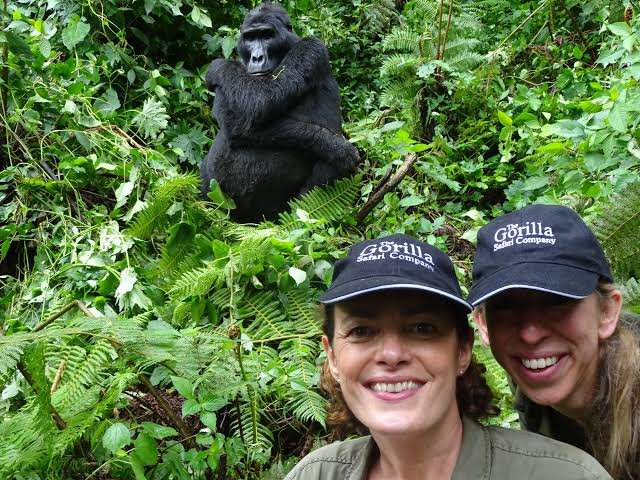
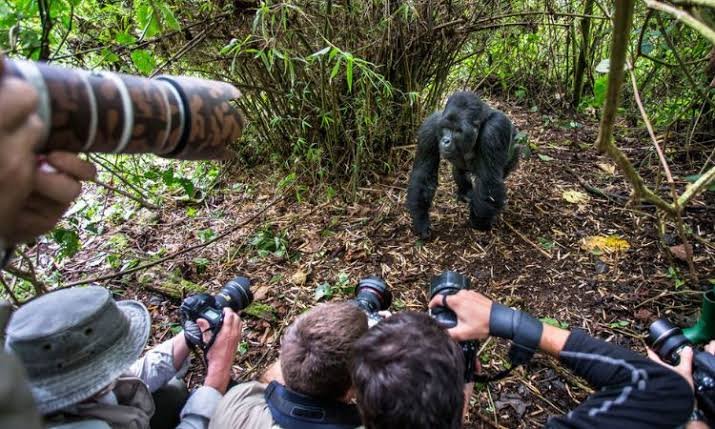
The value extends beyond direct jobs. International interest in gorilla tourism strengthens the economic argument for maintaining Volcanoes National Park as protected forest rather than allowing competing land uses to consume the remaining habitat.
Responsible tourism is therefore connected to the survival of the gorillas, although tourism must always be managed carefully because human visitors can also create risks through disease transmission and excessive disturbance.
That balance explains why Rwanda controls visitor numbers, limits encounter time and applies behaviour rules during trekking.
Can Tourists See All the Mountain Gorillas Living in Rwanda?
No. Tourism does not involve every mountain gorilla associated with Volcanoes National Park.
Visitors trek selected habituated families that have gradually become accustomed to carefully controlled human presence. Other gorillas may be monitored primarily for scientific research, while unhabituated animals are not regular tourist groups.
The distinction protects wild behaviour and prevents tourism from requiring every family in the ecosystem to accept daily visitors.
Even within a habituated family, a tourist will not necessarily see every individual clearly. Dense vegetation, family movement and natural behaviour determine what happens during the encounter.
This is an essential part of authentic gorilla trekking. The animals are not positioned for visitors, trained to appear at particular locations or kept inside viewing areas. Trackers locate them in a natural mountain forest where their daily priorities remain feeding, resting, travelling, caring for infants and maintaining social relationships.
What Could Increase Rwanda’s Gorilla Population in the Future?
Habitat expansion may become one of the most important factors influencing future growth. Volcanoes National Park’s relatively small area creates limits on how many gorilla families can occupy the landscape without increasing competition and pressure.
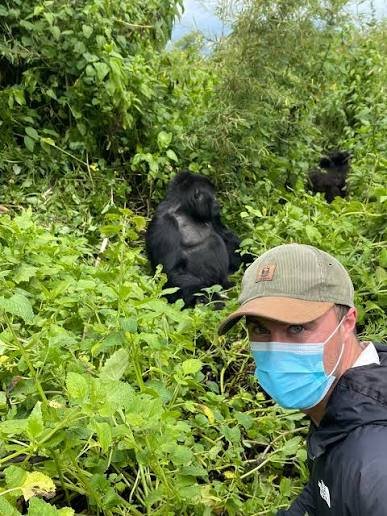
Rwanda’s restoration plan proposes expanding the park by about 23 percent, adding roughly 37.4 square kilometres of habitat. Visit Rwanda says the project is intended to support future gorilla population growth while reducing some forms of human-wildlife conflict and strengthening community development.
The success of such a programme will depend not simply on planting trees but on creating functioning habitat that can eventually provide food, shelter and movement space.
Continued veterinary support, anti-poaching patrols, disease prevention, genetic diversity and regional cooperation will remain equally important.
A larger habitat will not remove every threat, but it could give future gorilla families more room to establish themselves without putting excessive pressure on the existing forest.
Could the Number of Mountain Gorillas Decline Again?
Yes. Conservation success should never be interpreted as permanent security.
A population of around one thousand animals remains vulnerable to unusual events. Infectious disease could spread through closely related social groups. Political instability in portions of the broader habitat could disrupt conservation. Habitat loss or degradation could reduce carrying capacity. Poaching and snares remain potential threats. Climate change may influence mountain vegetation and food availability.
A small population also has less biological room to absorb severe losses than a species numbering in the hundreds of thousands.
This is why the IUCN continues to classify the mountain gorilla as Endangered even after its improvement from Critically Endangered status.
The increase to 1,063 demonstrates that protection works, but it also demonstrates why abandoning that protection would be dangerous.
What Does the Mountain Gorilla Population Mean for Rwanda Tourism?
Mountain gorillas have become one of Rwanda’s defining wildlife attractions and a central part of the country’s international tourism identity.
Travellers cross the world specifically to trek through Volcanoes National Park and encounter a habituated gorilla family for a limited period. The rarity of the species makes the experience fundamentally different from wildlife viewing involving animals with much larger global populations.
The fact that mountain gorillas remain endangered also creates responsibility. Tourism must contribute to protection rather than simply consume the experience.
Rwanda’s emphasis on relatively low visitor volume reflects this principle. A mountain gorilla family cannot sustainably receive unlimited groups throughout the day simply because demand is high.
The small global population therefore helps explain both the exclusivity and regulation of Rwanda gorilla trekking.
How Many Mountain Gorillas Could a Traveller See on One Rwanda Trek?
There is no fixed number because visitors trek a family rather than a predetermined quantity of individual gorillas.
A family may contain a silverback, adult females, juveniles, infants and sometimes several mature males. Depending on vegetation and activity, some individuals may be immediately visible while others move through denser forest.
One trek could therefore involve watching several gorillas sitting closely together, while another may require observers to follow subtle movements through vegetation as family members feed in different positions.
The experience should not be measured simply by counting visible gorillas. Watching social interactions often provides more insight than seeing a larger number briefly.
A mother caring for an infant, juveniles playing, a silverback resting nearby or individuals grooming one another can make the encounter extraordinary regardless of the precise size of the family.
Why Accurate Gorilla Numbers Matter
Population statistics are not simply tourism facts. They are measurements used to evaluate whether conservation strategies are working.
An increasing population can indicate that habitat protection, veterinary support, law enforcement and community programmes are collectively producing positive results. Changes in infant survival, group formation or mortality can reveal new challenges that require intervention.
Accurate numbers also help authorities plan habitat requirements. If gorilla numbers continue to increase while available forest remains unchanged, competition between groups can intensify.
Reliable population data additionally helps governments and conservation organisations communicate the urgency of protection to the international community.
For tourism businesses, accuracy is equally important. Claiming that Rwanda has exactly 604 mountain gorillas when that number actually represents the transboundary Virunga Massif may sound impressive, but it misunderstands the underlying science.
A better explanation builds trust by showing travellers how the population is really measured.
How Many Mountain Gorillas Are Left in the World?
The latest widely recognised comprehensive figure is 1,063 mountain gorillas across the species’ remaining natural range. This comes from 604 counted in the Virunga Massif and 459 in the Bwindi-Sarambwe ecosystem.
Those two populations represent every wild mountain gorilla population currently known.
The number is encouraging compared with historical estimates, but it remains tiny when viewed globally. A large stadium could accommodate the entire known mountain gorilla population with thousands of seats remaining empty.
That perspective shows why each birth matters and why conservationists closely monitor individual animals.
It also explains the international attention received by Rwanda’s Kwita Izina celebrations. A few dozen successful births can represent a meaningful development for a subspecies whose total global population is only slightly above one thousand.
So, How Many Mountain Gorillas Are in Rwanda Today?
How Many Mountain Gorillas Are in Rwanda? The best current answer is that Rwanda protects a significant portion of the Virunga Massif mountain gorilla population within Volcanoes National Park, but there is no scientifically appropriate permanent Rwanda-only figure that should replace the regional census number. The latest comprehensive Virunga census established a minimum population of 604 mountain gorillas across Rwanda, Uganda and the Democratic Republic of Congo. The latest widely accepted global estimate is 1,063 mountain gorillas when the Virunga population is combined with the 459 individuals recorded in the Bwindi-Sarambwe ecosystem.
For travellers, the most important point is that Rwanda protects one of only two landscapes on Earth where mountain gorillas survive. Volcanoes National Park contains habituated families available for carefully controlled trekking as well as gorillas monitored for research, and the population continues to receive intensive protection from rangers, trackers, researchers, veterinarians and conservation organisations.
The recovery from much smaller historical populations is one of the strongest examples of successful great ape conservation. The Virunga population rose from 380 in 2003 to 480 in 2010 and then to at least 604 during the 2015–2016 census. When combined with the later Bwindi-Sarambwe results, the global population reached the currently recognised 1,063.
Those numbers should inspire optimism without creating complacency. Mountain gorillas remain Endangered, their habitat remains extremely restricted and continued conservation is essential. Rwanda’s planned expansion of Volcanoes National Park, continued scientific monitoring, responsible gorilla tourism and cooperation with Uganda and the Democratic Republic of Congo will all influence how many mountain gorillas future generations inherit.
The clearest way to describe the situation is therefore not to say that Rwanda alone has 604 mountain gorillas. Instead, Rwanda’s Volcanoes National Park forms part of the Virunga Massif, where the latest comprehensive census recorded 604 mountain gorillas across the transboundary landscape. Together with the Bwindi-Sarambwe population, these animals form a global mountain gorilla population last comprehensively estimated at 1,063 individuals. Rwanda remains one of the most important places in the world for their survival, and every gorilla protected within its mountain forests contributes to one of modern conservation’s most remarkable recovery stories.