
Ultimate Best Gorilla Lodges for Photographers in Rwanda – Exceptional Bases for Gorilla and Wildlife Photography
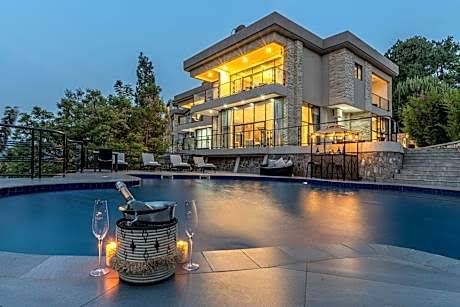
The Best Gorilla Lodges for Photographers provide much more than luxurious accommodation near Rwanda’s mountain gorillas. For a serious photographer, the lodge becomes an operational base where camera equipment can be prepared before an early trek, wet clothing and footwear can be cleaned after the forest, batteries can be recharged, images can be reviewed, and the surrounding volcanic landscape can continue providing photographic opportunities long after the gorilla encounter has ended. Rwanda’s leading lodges around Volcanoes National Park are especially appealing because several combine close access to the trekking area with extraordinary views of the Virunga volcanoes, forests, gardens and changing mountain weather.
The photographic appeal of Rwanda is also much broader than close portraits of mountain gorillas. Mist can move across the volcanoes within minutes, sunrise may illuminate cultivated hills beneath dark mountain silhouettes, and afternoon clouds can create dramatic shafts of light across the landscape. Around the lodges themselves, photographers can work with architecture, indigenous vegetation, birds, local craftsmanship, food, conservation projects and environmental portraits. Selecting accommodation with interesting surroundings therefore increases the number of potential images available during a relatively short stay.
Among the strongest properties to consider are Singita Kwitonda, Wilderness Bisate, One&Only Gorilla’s Nest, Wilderness Sabyinyo and Virunga Lodge. Each provides a different photographic environment, from close volcanic landscapes and architecturally striking interiors to eucalyptus forest, panoramic ridgelines and views across Rwanda’s twin lakes.
Why Lodge Choice Matters for Gorilla Photographers
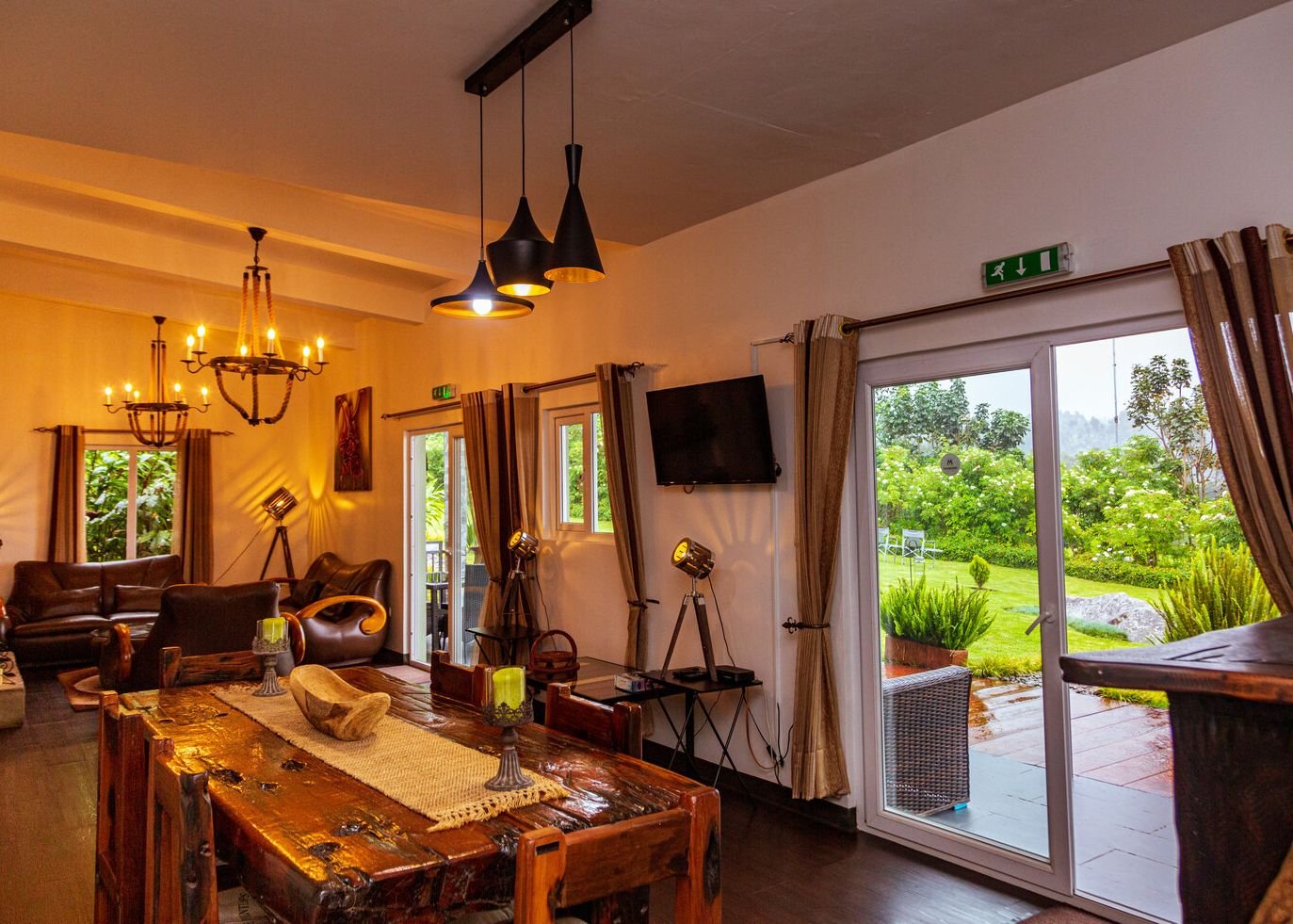
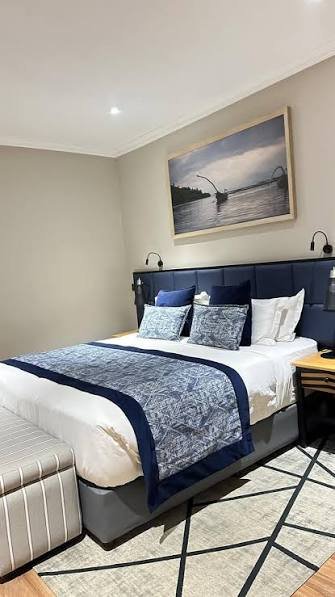
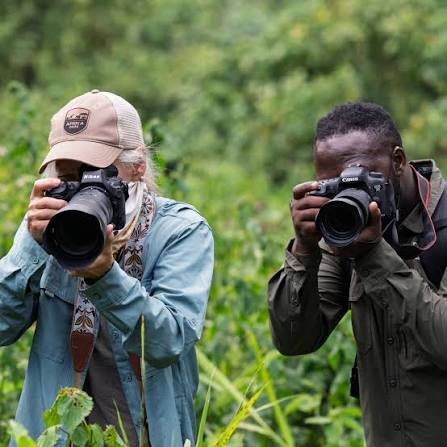
Gorilla photography is very different from photographing wildlife from a safari vehicle. A photographer must physically carry equipment through a mountain environment where rain, mud, humidity, dense vegetation and changing light are normal. The photographic encounter itself is also limited, meaning camera preparation before entering the forest becomes particularly important.
A well-positioned lodge reduces unnecessary pressure on trekking morning. Instead of spending a long period driving before the park briefing, photographers can have breakfast, perform final checks on batteries and memory cards and travel relatively quickly to the trekking arrangements. This becomes even more important for anyone carrying professional bodies and lenses because forgotten equipment cannot simply be retrieved once the trek is underway.
The Best Gorilla Lodges for Photographers also provide opportunities when the cameras are not pointed at gorillas. Strong landscapes from a private terrace can be photographed at sunrise or sunset, while forest environments provide detail images, birdlife and atmospheric compositions. Distinctive architecture creates possibilities for travel and editorial photography, and conservation activities can help photographers document the broader story surrounding mountain gorilla protection.
A photographer should therefore think about accommodation as part of the assignment rather than simply the place where the night is spent.
Understanding Gorilla Photography Rules Before Choosing Your Lodge
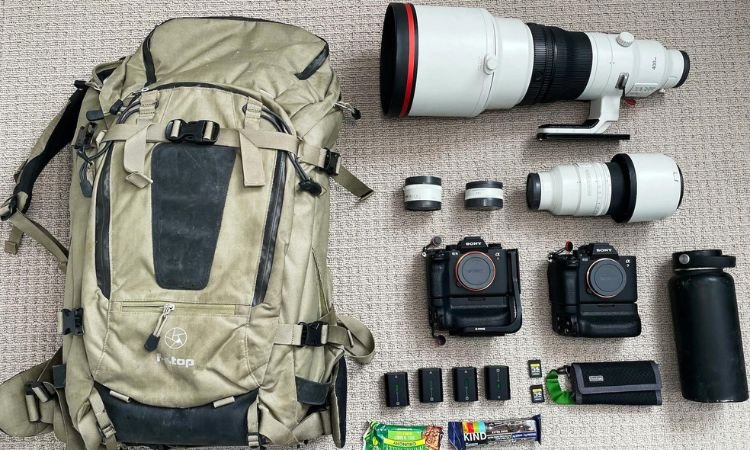
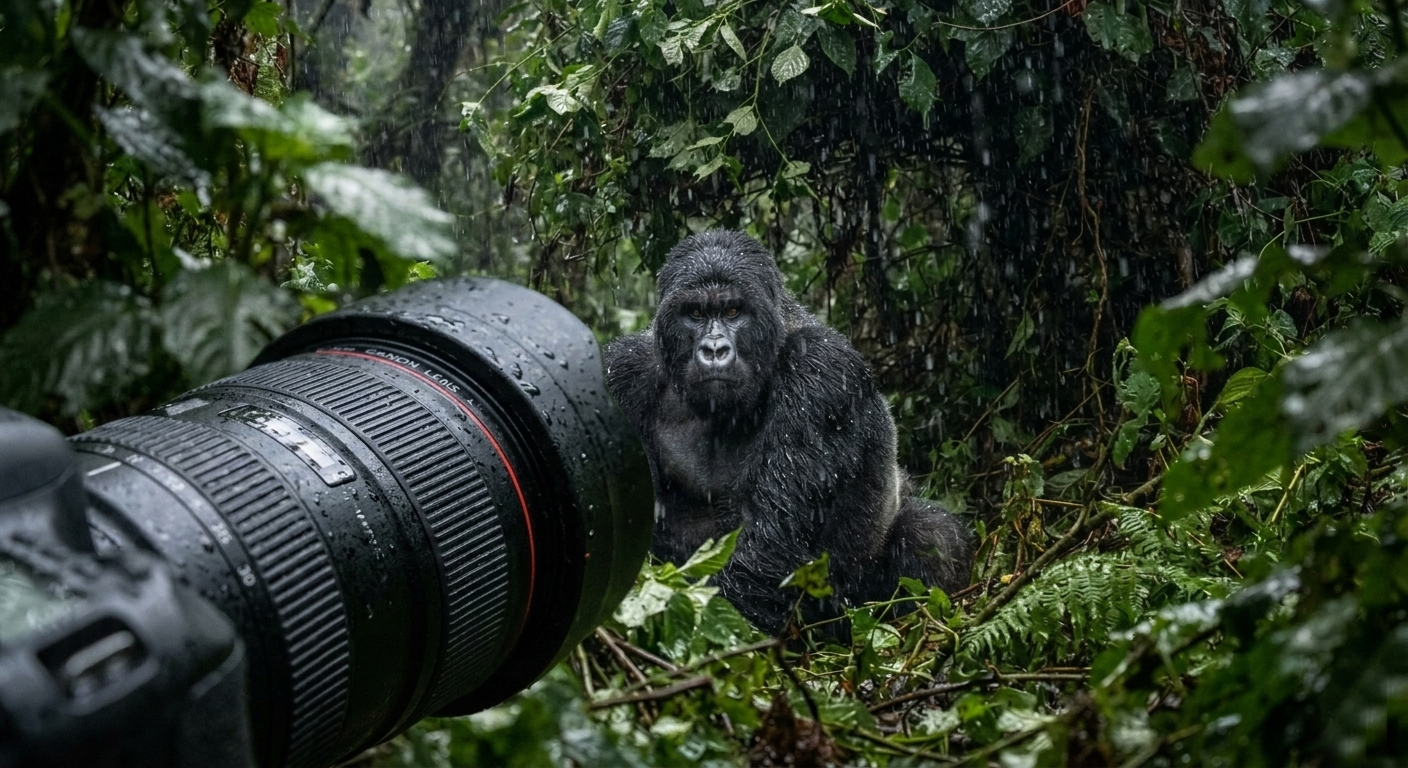
Photography is permitted during mountain gorilla trekking, but the animals and ranger instructions always take priority over obtaining a photograph. Current trekking guidance prohibits flash photography and asks visitors to maintain the required distance from the gorillas while moving slowly and carefully. Singita’s current trekking overview similarly states that no flashes are permitted when photographing the gorillas and that only cameras are taken into the immediate viewing area while other belongings are kept away from the gorilla family.
This rule has important technical consequences. The forest can be dark even during daytime, particularly beneath dense vegetation or cloudy mountain skies. Photographers therefore need to be comfortable increasing ISO, using wide apertures and maintaining sufficiently fast shutter speeds to avoid movement blur.
The challenge can actually produce beautiful photography. Soft forest light can create gentle highlights on black gorilla fur, while mist and foliage can add depth to environmental portraits. The goal is not necessarily to eliminate every shadow but to expose carefully enough to retain detail in very dark fur without destroying brighter areas in the surrounding vegetation.
Preparation at the lodge the evening before is therefore valuable. Camera settings can be checked, flash functions disabled, batteries charged and lens choices made before the trek begins.
Singita Kwitonda for Serious Gorilla Photographers
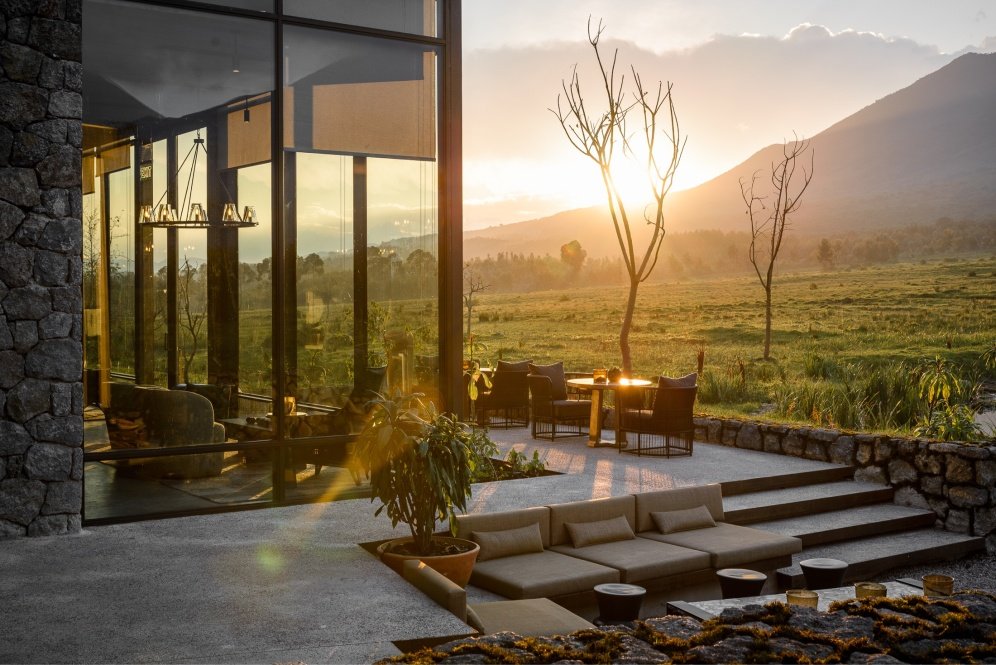
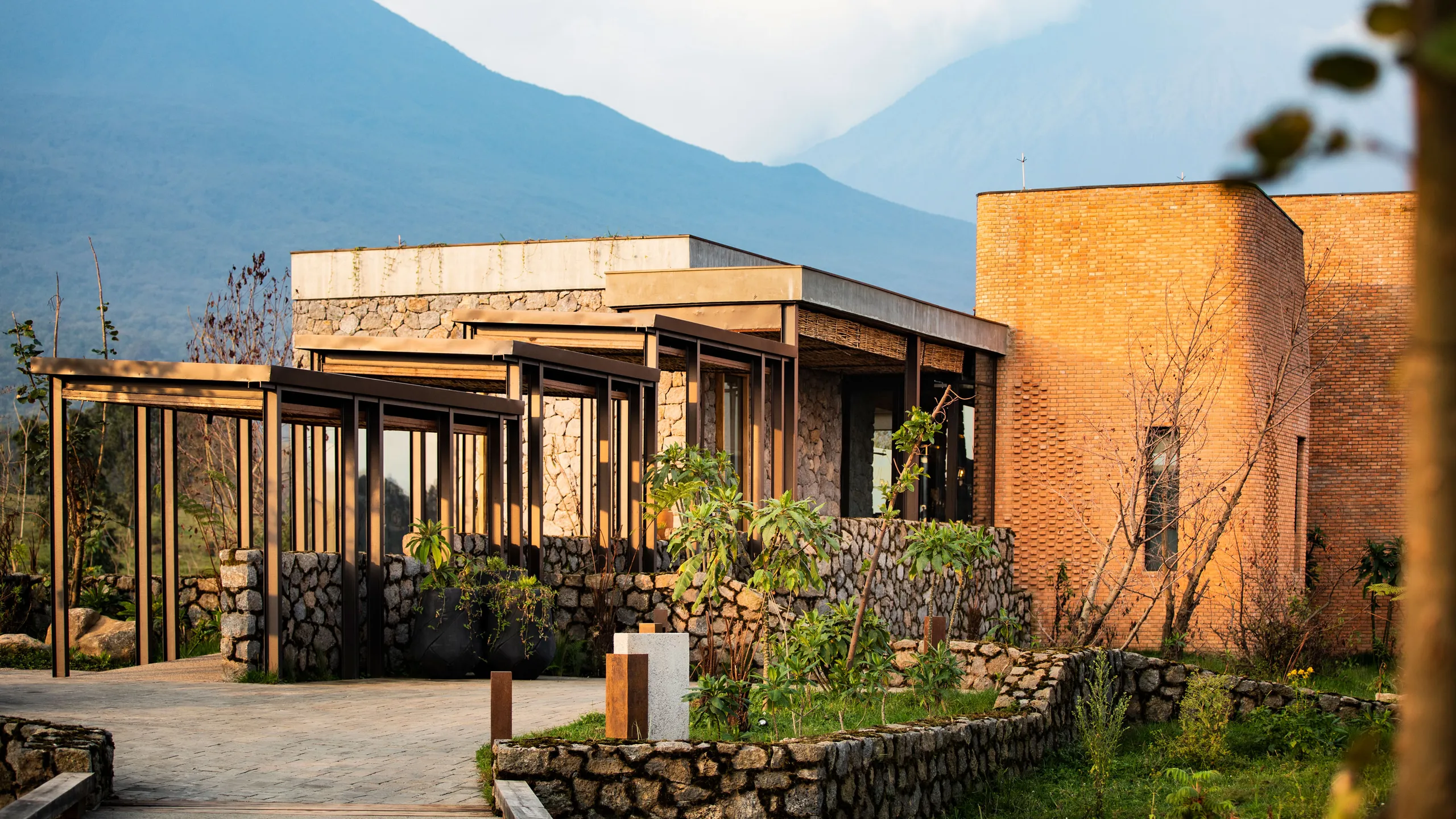
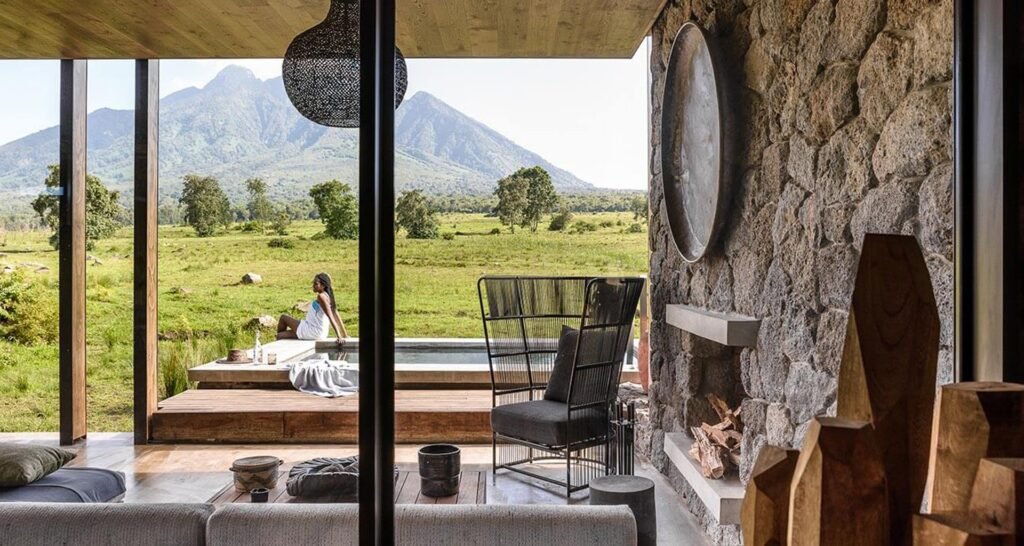
Singita Kwitonda is particularly compelling for photographers because it sits directly against the Volcanoes National Park landscape and combines photographic scenery with practical trekking preparation. Singita states that Kwitonda and Kataza House share a 1.2-kilometre boundary with the park, creating an unusually strong connection between the lodge and the mountain environment.
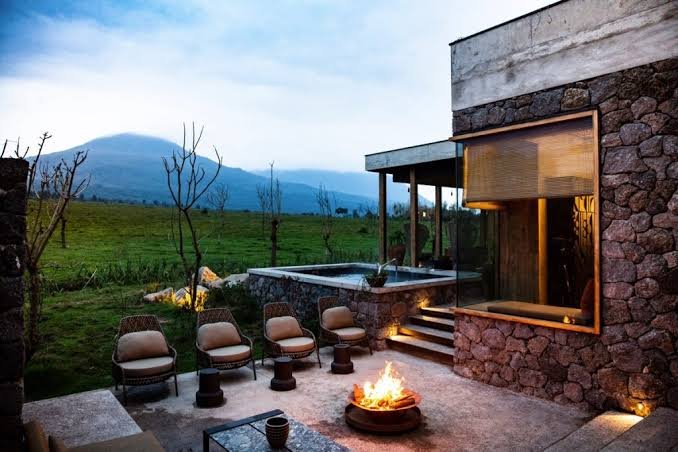
For a landscape photographer, Kwitonda provides opportunities before the trek even begins. Wide windows and outdoor spaces look towards an intensely green landscape beneath the Virunga Mountains, while volcanic stone, vegetation, fire and contemporary architecture create excellent opportunities for environmental and architectural compositions. Singita describes the lodge as a place where the weather and light visibly change throughout the day, something photographers can use to produce very different images from the same viewpoint.
Another major strength is the photographic history incorporated into the property. Kwitonda’s Conservation Room contains a private collection of the photographic equipment of Robert Ian Martin Campbell, the wildlife photographer and filmmaker known for documenting Dian Fossey and mountain gorillas. The room is also used for the evening-before-trekking briefing, during which guests receive information about the following day’s route, weather, trekking conditions, guides and equipment
For photographers, this makes Kwitonda more than a beautiful hotel. The lodge’s design and conservation spaces reinforce the photographic and historical relationship between Rwanda’s mountain gorillas, Dian Fossey’s research legacy and visual storytelling.
Why Kwitonda’s Gear Room Is Useful for Photographers
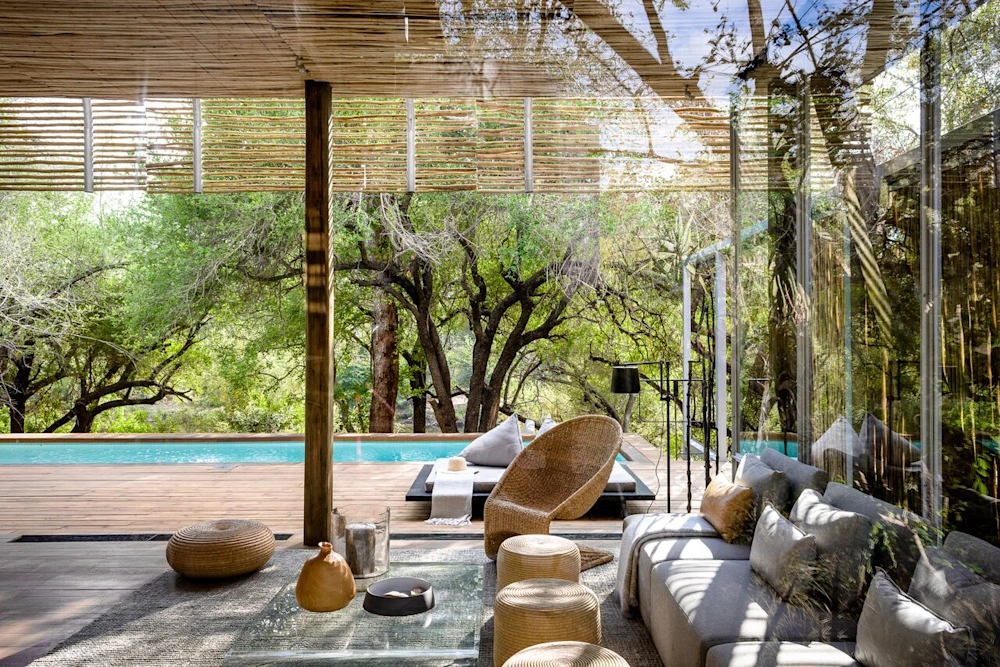
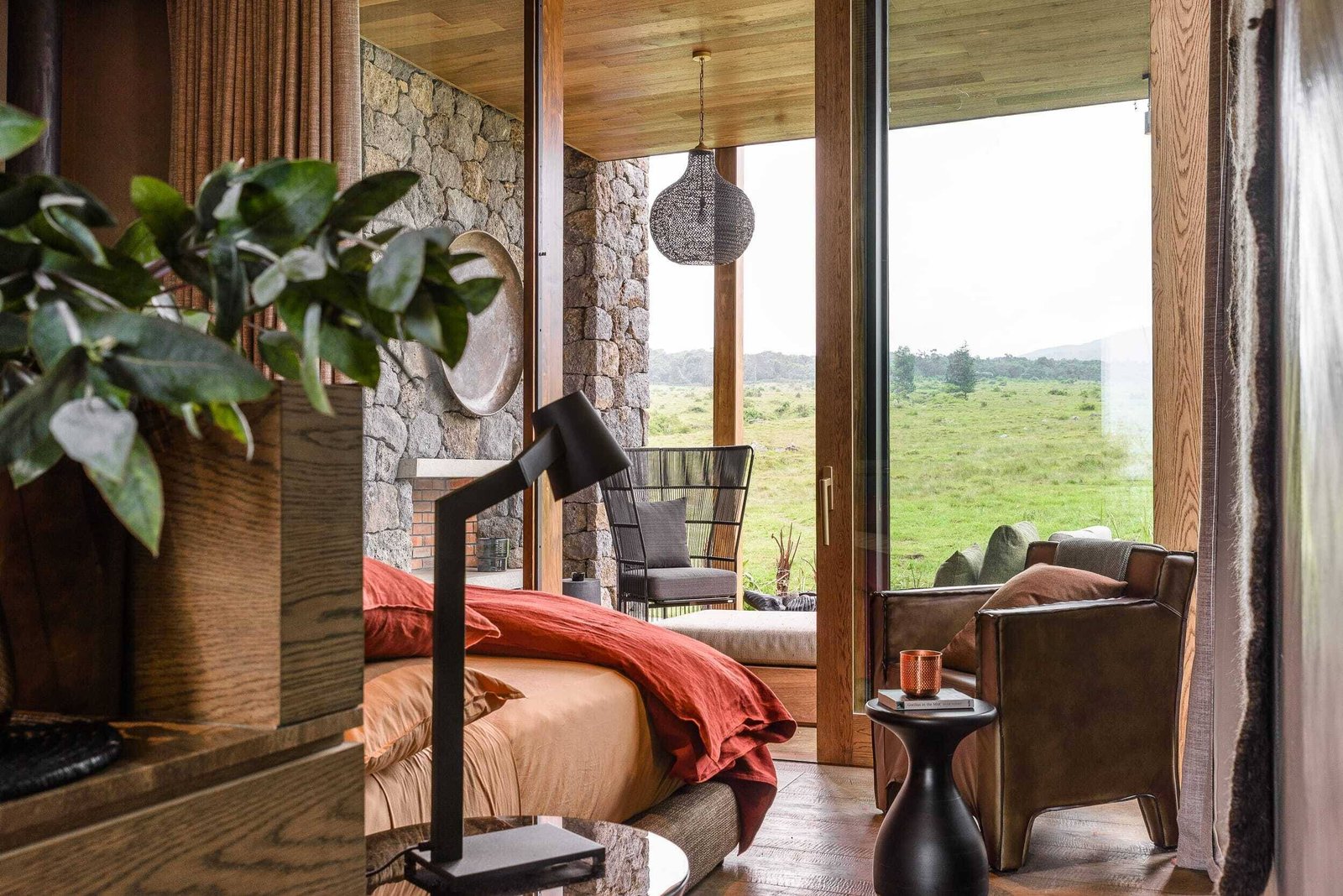
A photographer travelling internationally already has enough specialist equipment to carry. Camera bodies, lenses, chargers, storage devices and protective accessories can quickly consume airline baggage allowances. It therefore helps when the lodge supplies part of the non-photographic trekking kit.
Singita’s Gear Room provides trekking equipment including gaiters, rainwear and trekking poles, while guests also receive backpacks containing water and provisions. Singita specifically recommends that photographers pack their camera equipment and a spare memory card.
This makes it easier to concentrate limited luggage space on the equipment that cannot be borrowed locally. A photographer can prioritise a second camera body, additional batteries, memory cards and an appropriate telephoto rather than carrying bulky trekking accessories across several international flights.
Wet-weather preparation is particularly important. Even during generally drier periods, the Virunga environment can produce sudden showers, and vegetation can remain wet after overnight rain. Camera equipment should therefore travel in its own rain-protected system even when the photographer is wearing good waterproof clothing.
The best time to discover that a rain cover does not fit a camera bag is certainly not halfway through a mountain forest.
Bisate Architecture as a Photography Subject
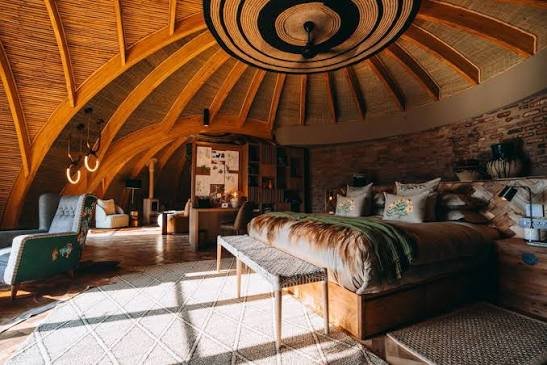
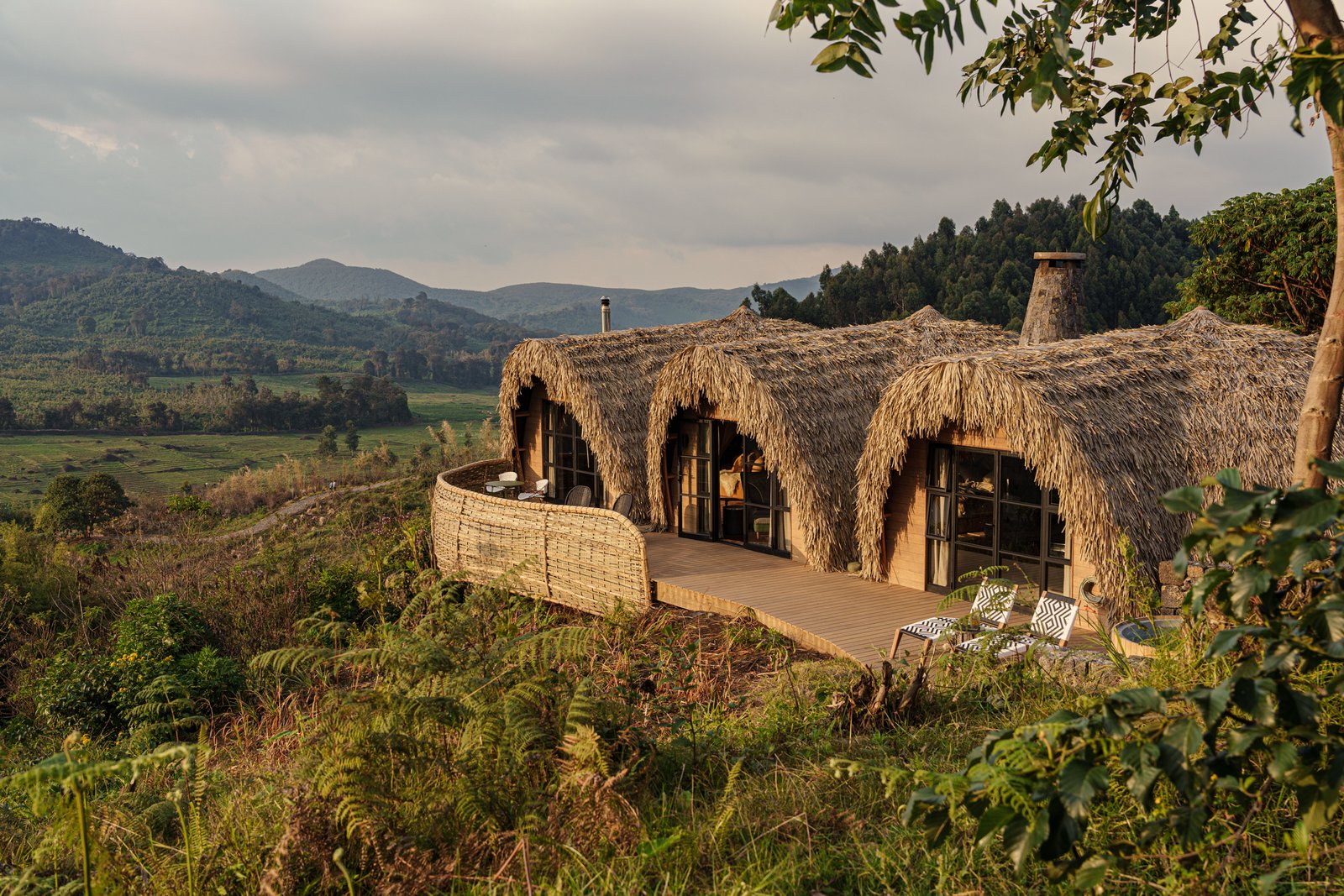
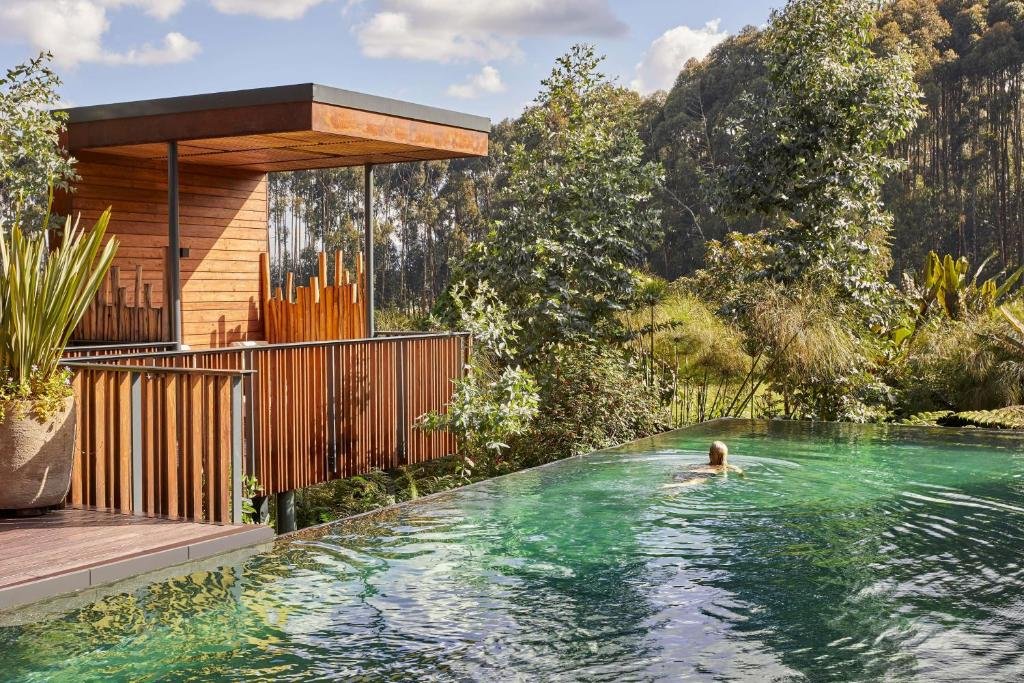
Bisate is also visually interesting when the volcanoes disappear behind cloud. Its distinctive architecture draws inspiration from Rwandan traditions and creates rounded forms, textures, timber, thatch and interiors that photograph particularly well against the surrounding vegetation.
This is important because mountain weather cannot be controlled. A photographer may imagine sweeping volcano panoramas but wake to dense mist. A photographically interesting lodge provides an alternative subject rather than turning cloudy conditions into a wasted morning.
Detail photography can focus on basketry, natural textures, fireplaces, local art and the relationship between architecture and vegetation. Wider compositions can place the villas within the surrounding landscape, helping communicate a sense of destination rather than producing images that could have been made in any luxury hotel.
Bisate’s conservation programme provides another layer of photographic storytelling. Wilderness has undertaken significant indigenous reforestation around the lodge, and wildlife including birds and smaller mammals has returned to the restored landscape.
Photographers interested in conservation can therefore document not only gorillas but the habitat-restoration story that surrounds the tourism experience.
One&Only Gorilla’s Nest – Forest Photography and Textural Images
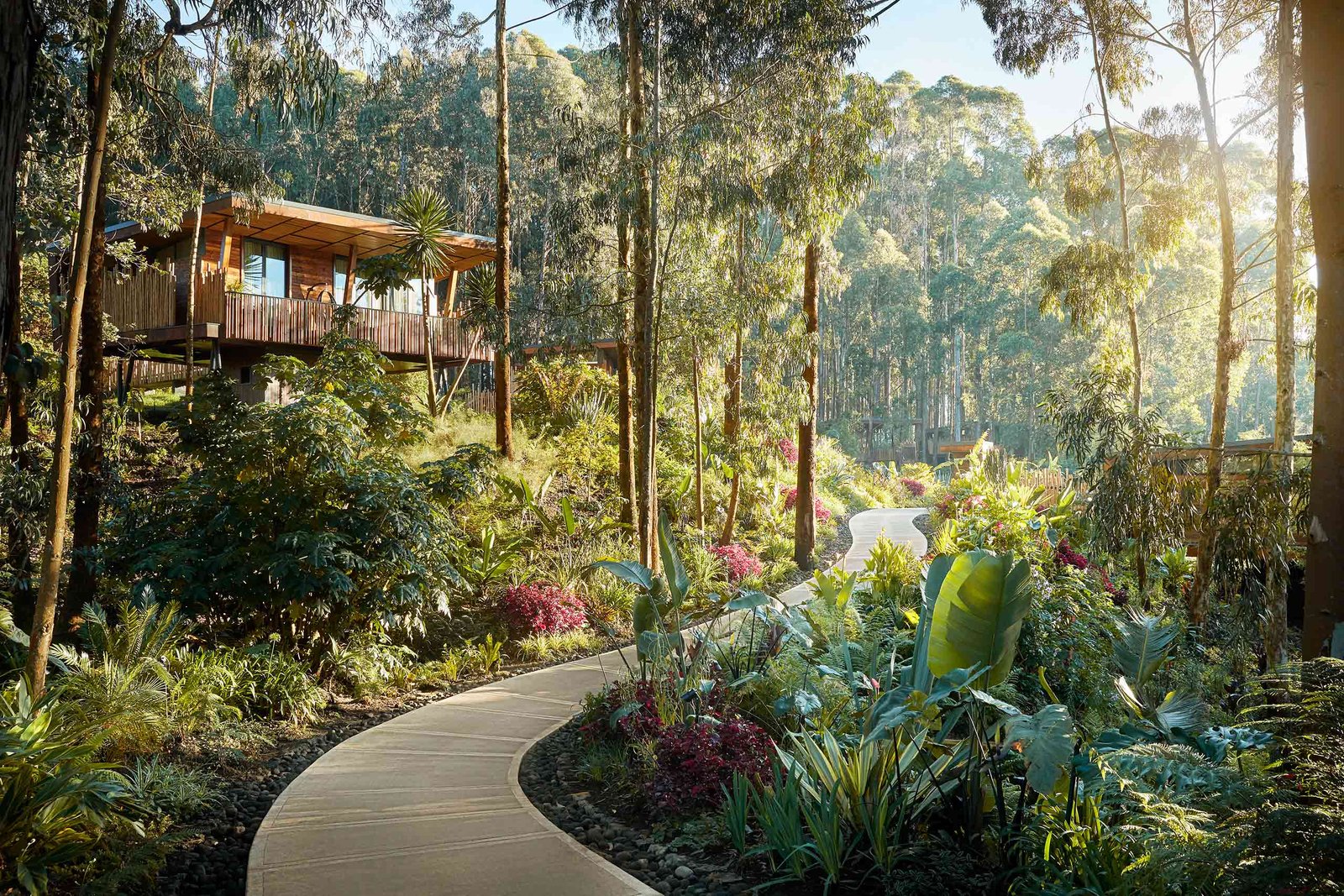

One&Only Gorilla’s Nest offers another photographic character entirely. The resort is immersed among eucalyptus trees and gardens, creating a much more enclosed forest environment than the open volcanic landscapes around some neighbouring properties. Its freestanding retreats are positioned within this greenery and include private decks and forest views.
This setting lends itself beautifully to atmospheric travel photography. Instead of always photographing large distant landscapes, photographers can work with layers of foliage, paths disappearing through vegetation, shafts of light, mist and architectural details partly concealed by trees.
Telephoto lenses can become surprisingly useful around a lodge like this. A longer focal length can compress foliage and architecture, isolate textures or create abstract compositions from the interaction between natural and constructed elements.
The forest setting also encourages photographers to notice smaller subjects. Leaves covered in morning moisture, colourful garden details, birds and repeating lines created by the eucalyptus trees can help diversify a Rwanda image collection.
For photographers whose style is more intimate and editorial than purely landscape-driven, Gorilla’s Nest can therefore provide a particularly strong visual environment.
Equipment Cleaning and Laundry at One&Only Gorilla’s Nest


One&Only currently includes trekking equipment such as ponchos, gaiters and backpacks with relevant stays and provides shoe cleaning and laundry for nature experiences.
These services are more important for photographers than they initially appear. Gorilla trekking can leave boots, trousers and equipment covers covered in mud. If the photographer is trekking again the following morning, having the non-camera gear cleaned and dried removes one significant task from the evening routine.
The photographer can then concentrate on equipment maintenance. Camera bodies should be inspected for moisture, lenses cleaned carefully, batteries recharged and files backed up.
A two-camera setup can be particularly useful because repeatedly changing lenses in damp forest conditions increases the chance of moisture, dust or debris reaching the sensor. Keeping one wider lens on one body and a moderate telephoto on another can make the actual gorilla encounter much smoother.
The Best Gorilla Lodges for Photographers Who Want Landscape Images
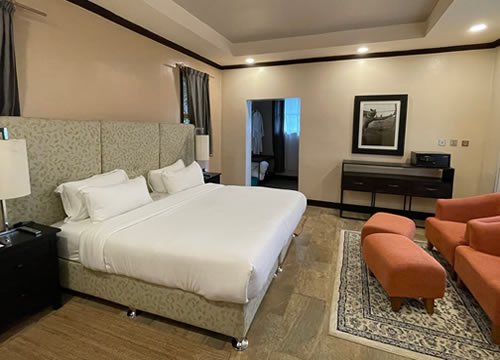
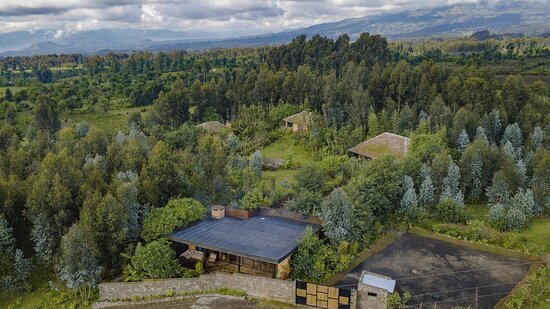
Photographers primarily interested in mountain landscapes should pay particular attention to Bisate, Bisate Reserve, Sabyinyo and Virunga Lodge. Each provides a different relationship with the Virunga massif.
Bisate places the photographer within an intimate volcanic amphitheatre. Bisate Reserve expands the scene into an elevated panorama across multiple peaks. Sabyinyo provides direct views of the surrounding volcanoes from a classic lodge setting, while Virunga Lodge places the broader landscape into context by including both the volcanic chain and the twin lakes.
Singita Kwitonda remains highly compelling because of its proximity to the park and its open relationship with the volcanic environment, particularly for photographers who want to balance landscapes with a highly organised gorilla-trekking operation.
The important consideration is not which property has the single greatest view on one perfect-weather morning. It is which type of view matches the photographer’s style.
Some photographers want dramatic telephoto mountain layers. Others want intimate forest scenes. Others want architecture against volcanic scenery. The accommodation should support the images the photographer actually wants to make.
Photographing Gorillas in Low Forest Light
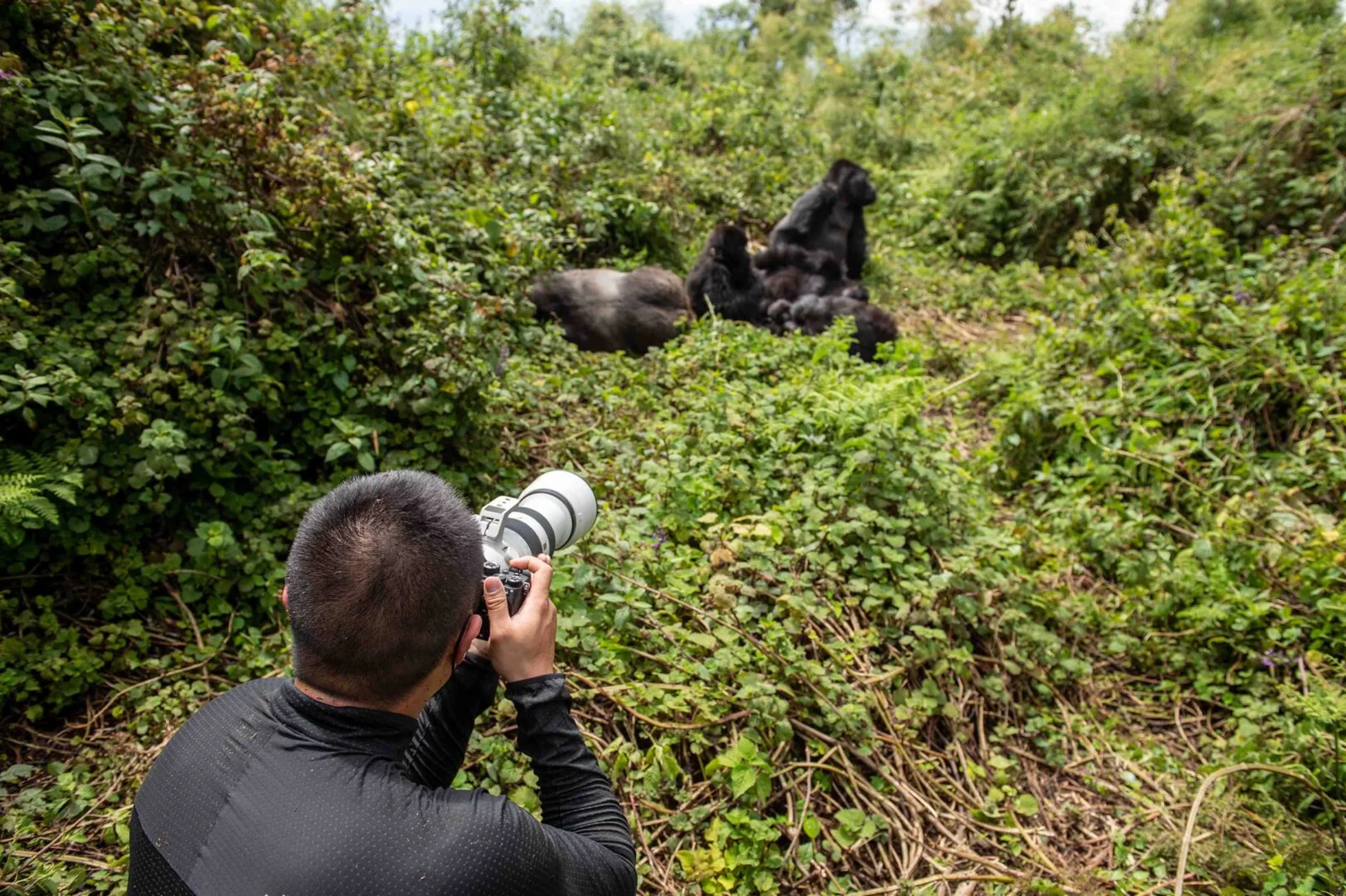
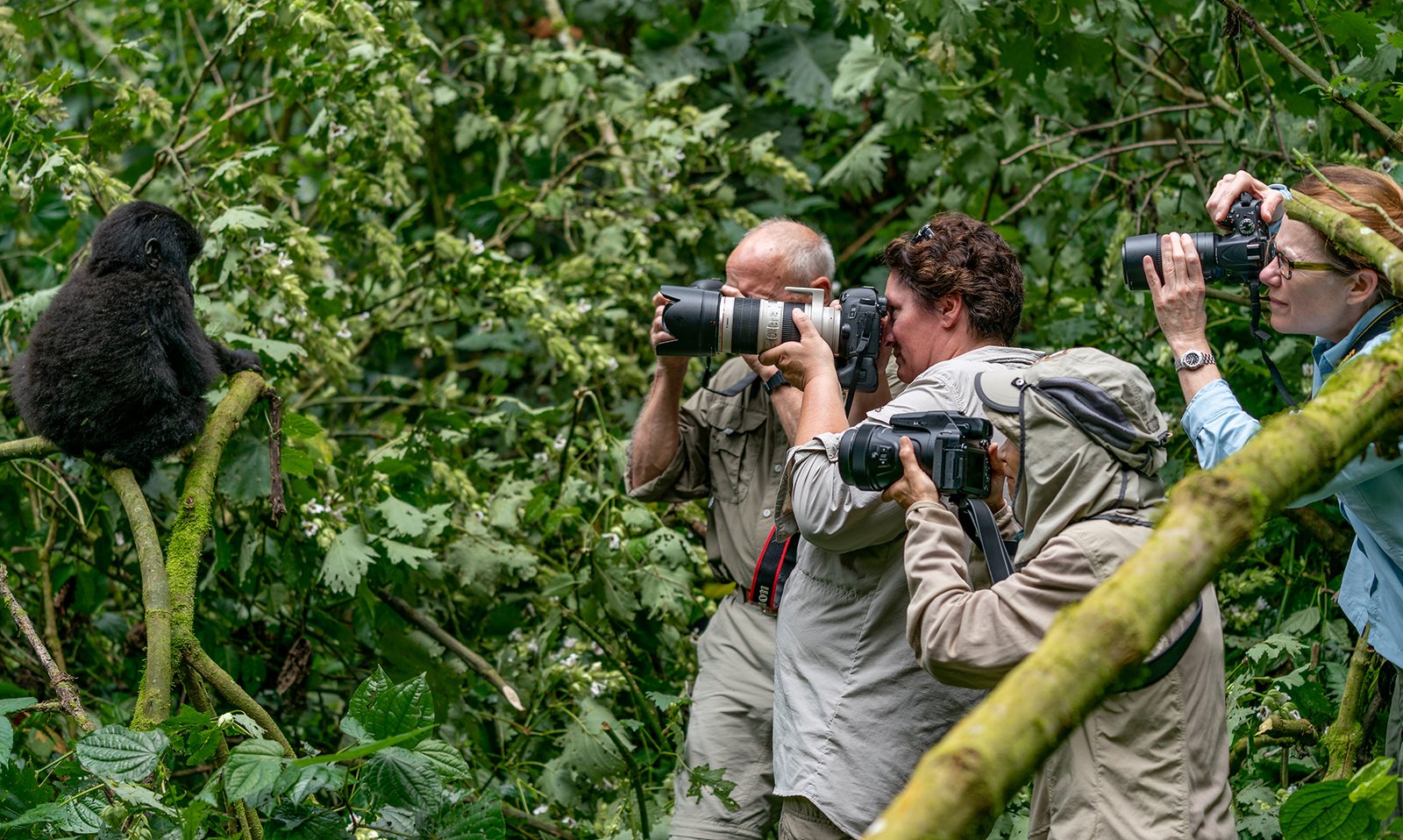
Gorilla photography presents a classic technical problem: extremely dark subjects moving within comparatively brighter vegetation.
A camera’s automatic exposure can sometimes be confused by this combination. If the frame contains a large amount of bright foliage, the gorilla’s face may become too dark. If exposure is increased excessively for the fur, bright leaves or sky openings may lose detail.
Photographers should therefore understand their camera’s exposure compensation or manual exposure controls before entering the forest. This is not the place to discover a new camera menu.
Shutter speed also deserves careful attention. Adult gorillas may appear to be sitting quietly, but facial expressions, hand movements and juveniles can change extremely quickly. A shutter speed suitable for a completely stationary landscape may produce frustrating motion blur when an animal suddenly moves.
Modern cameras perform impressively at higher ISO values, and a slightly noisier sharp photograph is usually far more valuable than a perfectly clean image ruined by motion.
Protecting Cameras From Rwanda’s Mountain Weather
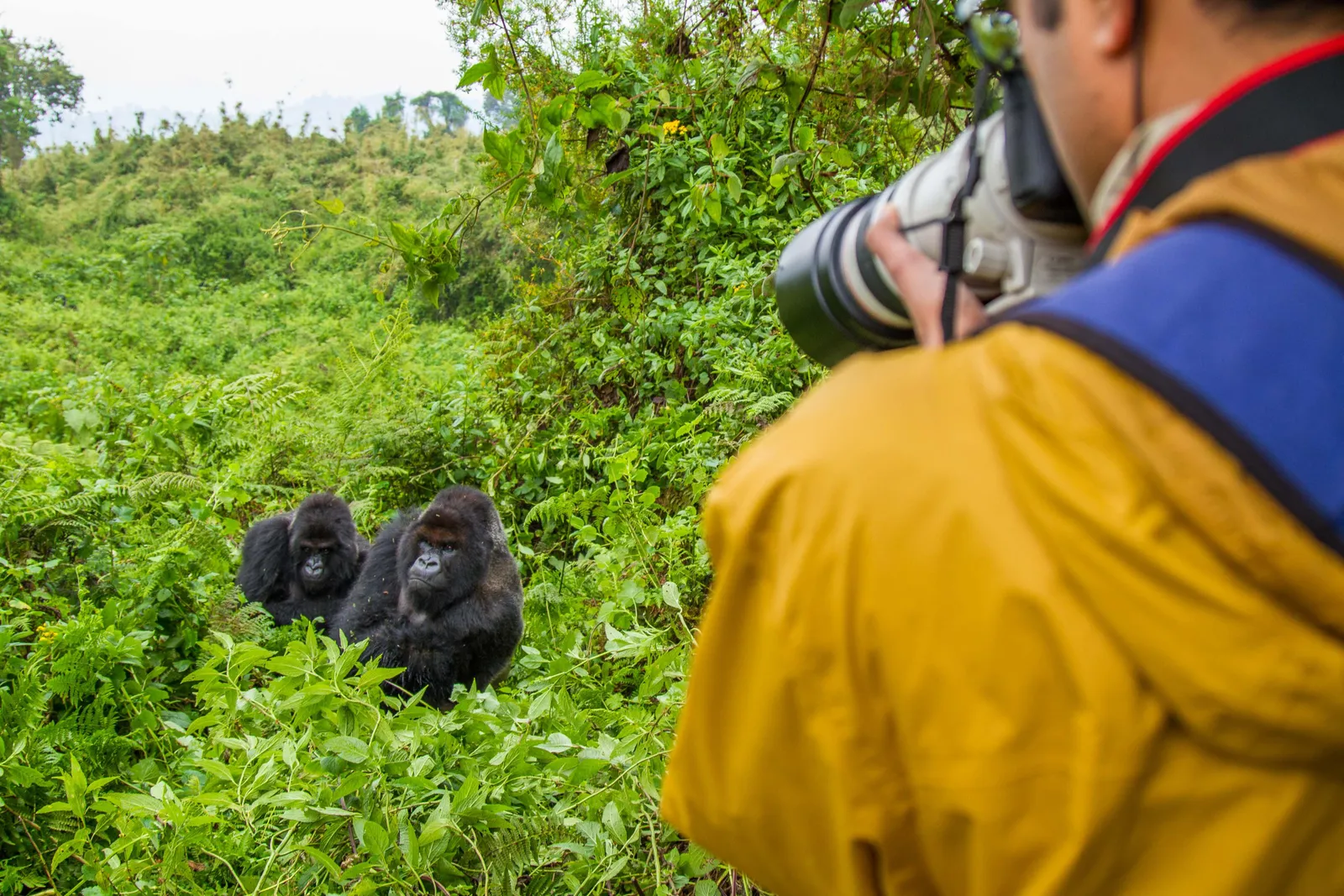
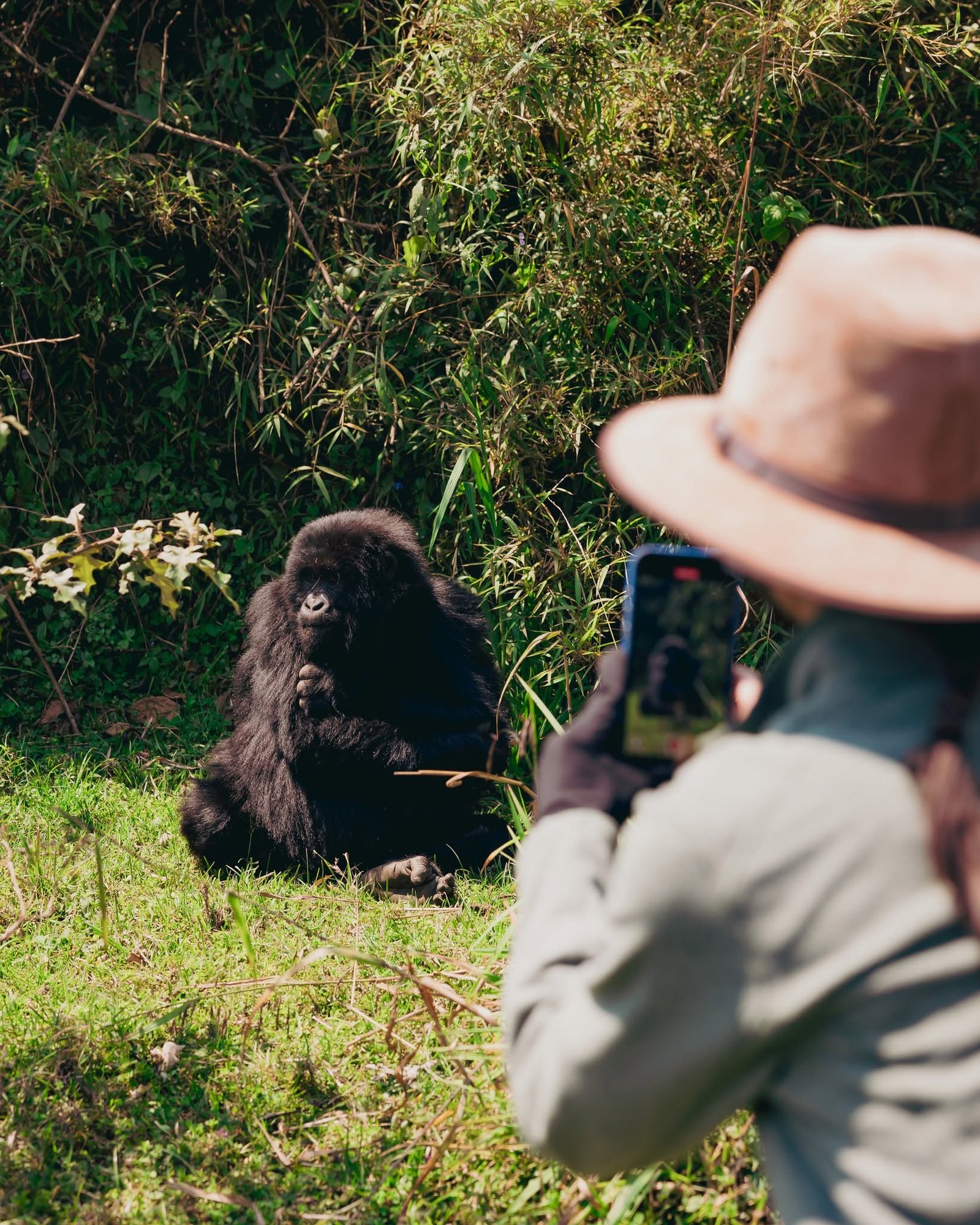
Weather protection should be part of the photographic workflow regardless of travel season.
The Virunga Mountains create their own rapidly changing conditions. Sunshine at breakfast does not guarantee that the forest will remain dry several hours later. Even when rain does not fall during the trek, wet vegetation can transfer significant moisture to clothing and equipment.
Camera rain covers should therefore be immediately accessible rather than buried beneath clothing inside the main backpack.
A simple protective cloth can also be helpful for wiping moisture from the outside of a camera before returning it to a bag. The photographer should avoid repeatedly rubbing optical glass with a wet or dirty cloth because this can simply move moisture and grit across the surface.
Back at the lodge, equipment should be allowed to stabilise and dry in a controlled environment before everything is sealed away for the night.
Drones and Gorilla Photography in Rwanda
Photographers who normally travel with drones should investigate Rwanda’s current aviation and import requirements before packing them rather than assuming they can be used around a lodge or national park.
Singita’s current guest information specifically advises that drones are prohibited and warns guests against bringing them into Rwanda.
Even without aerial photography, the volcanic region provides enormous creative potential at ground level. Elevated lodges, ridges and mountain viewpoints already produce natural high perspectives without the logistical and regulatory complications associated with drone operations.
For most gorilla-focused photographers, luggage space is better allocated to camera bodies, lenses, storage and weather protection.
Photographing the Lodge as Part of the Rwanda Story
One mistake wildlife photographers sometimes make is putting the main camera away as soon as the trek is finished.
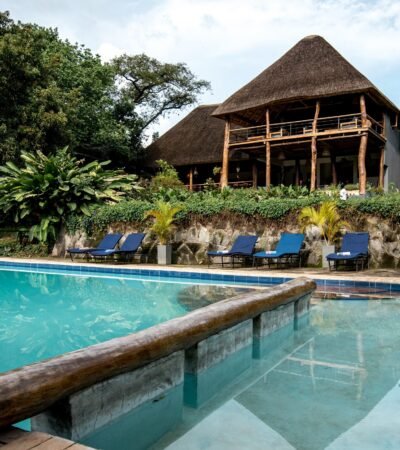
The lodge itself can provide some of the strongest contextual images of the journey. A fireplace glowing during a cool evening, trekking boots drying after rain, volcanic stone architecture, a private terrace facing mist-covered peaks or a cup of Rwandan coffee beside a camera can all become useful storytelling frames.
These images provide transitions within a gallery or photo book. Without them, the final collection may jump abruptly from Kigali to gorillas to another destination without showing what the journey actually felt like.
Photographers creating travel editorial content should therefore intentionally photograph accommodation, food, landscape, details and people in addition to wildlife.
The final story becomes much richer when viewers can understand the environment surrounding the headline experience.
Best Time for Photography Around Rwanda’s Gorilla Lodges
Gorilla trekking operates throughout the year, and every season has photographic advantages.
The drier periods generally make trekking and camera management easier, while clearer skies can improve opportunities for photographing the volcanoes. Wilderness’s reports from the 2026 dry season, for example, describe clear skies, strong sunrise conditions and golden evening light around Bisate
Wetter conditions should not automatically be considered poor photography weather. Mist, rain-darkened vegetation and low cloud can create the classic atmospheric look associated with Rwanda’s mountain environment.
The forest also becomes extraordinarily saturated in wet conditions, creating intense greens around the gorillas.
A photographer choosing between seasons should therefore think about image style as well as walking conditions. Clean panoramic volcano photographs may be easier during clearer weather, while photographers who love mood and atmosphere may find misty conditions visually rewarding.
Golden Monkey Photography From a Gorilla Lodge
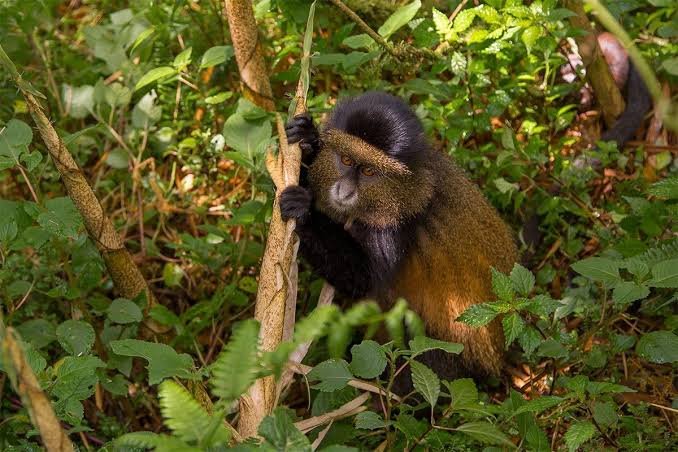
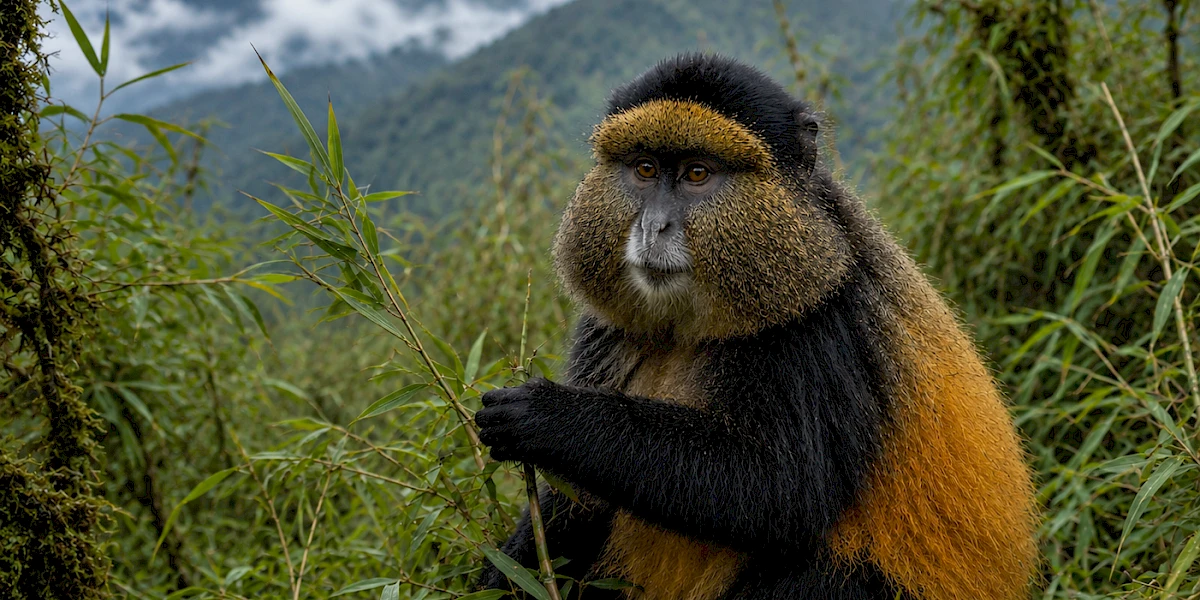
Photographers staying several nights around Volcanoes National Park can also consider golden monkey trekking.
Golden monkeys create a dramatically different photographic challenge. They are smaller, faster and often considerably more energetic than gorillas. Their orange and black colouring also interacts with forest light very differently from the almost completely dark fur of mountain gorillas.
Including both experiences gives a primate photography portfolio much greater variety.
It also allows the photographer to use different technical approaches. Gorilla photography often rewards patience and careful observation, while golden monkey photography may require faster reactions and higher shutter speeds.
A lodge close to the park makes it easier to include both without turning the itinerary into a sequence of long road transfers.
Bird Photography Around the Lodges
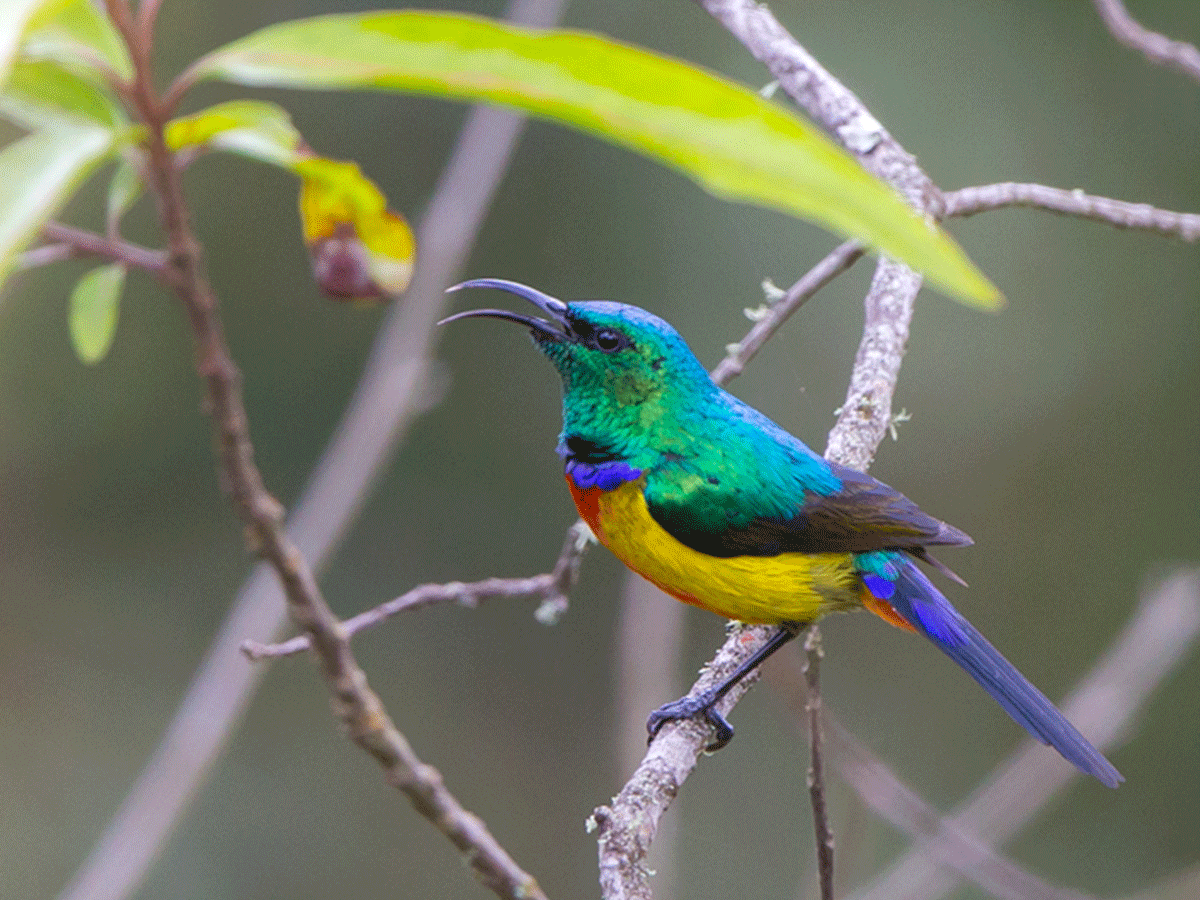
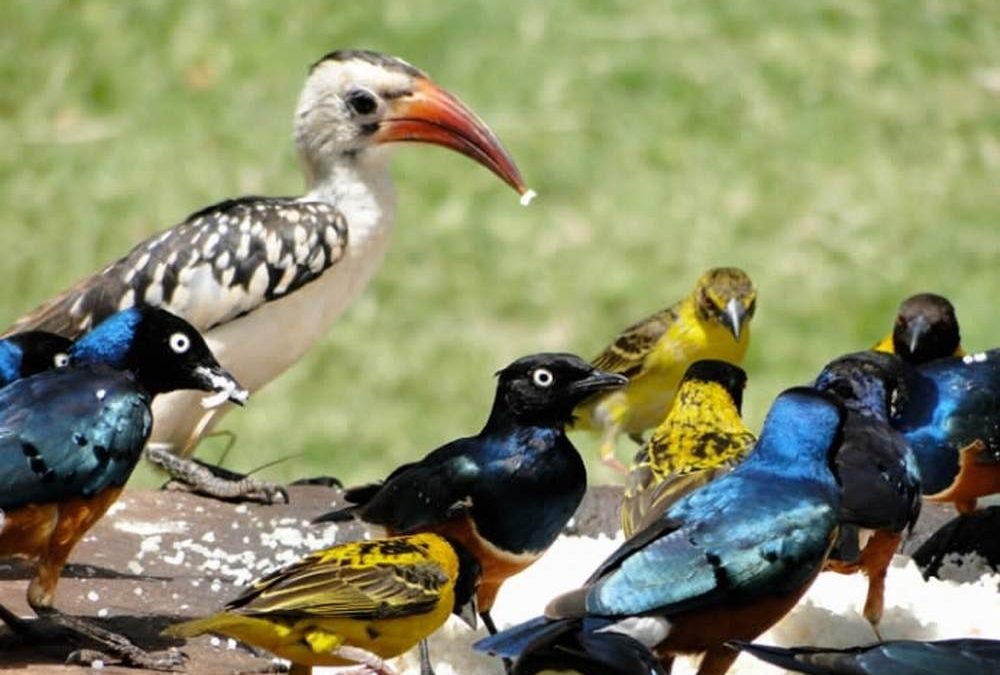
Rwanda’s volcanic region also provides opportunities for bird photography, particularly for travellers who keep their cameras ready around lodge gardens and restored forest areas.
Bisate’s reforestation project has encouraged biodiversity around the property, while Sabyinyo’s grounds and One&Only’s wooded environment provide additional habitat for smaller wildlife and birds
Bird photography around the lodge can be valuable during the quieter hours when dramatic mountain light is absent.
It also provides a reason to carry a longer lens even after the gorilla trek is complete.
Photographers interested in birds should tell their guide or lodge team because staff often know which species are currently active around particular sections of the property.
Landscape Photography at Sunrise and Sunset
Serious photographers should avoid assuming that the gorilla trek will automatically produce the only important photographs of the trip.
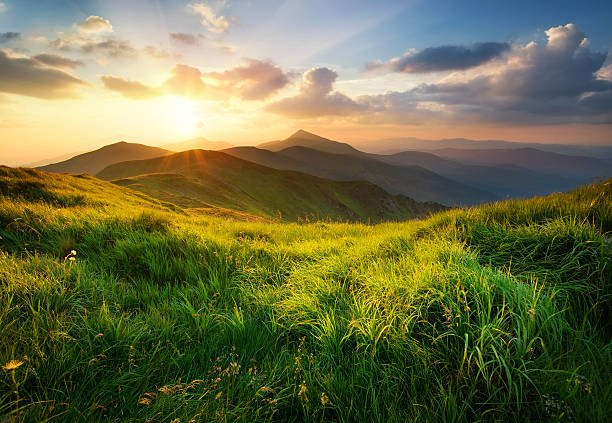
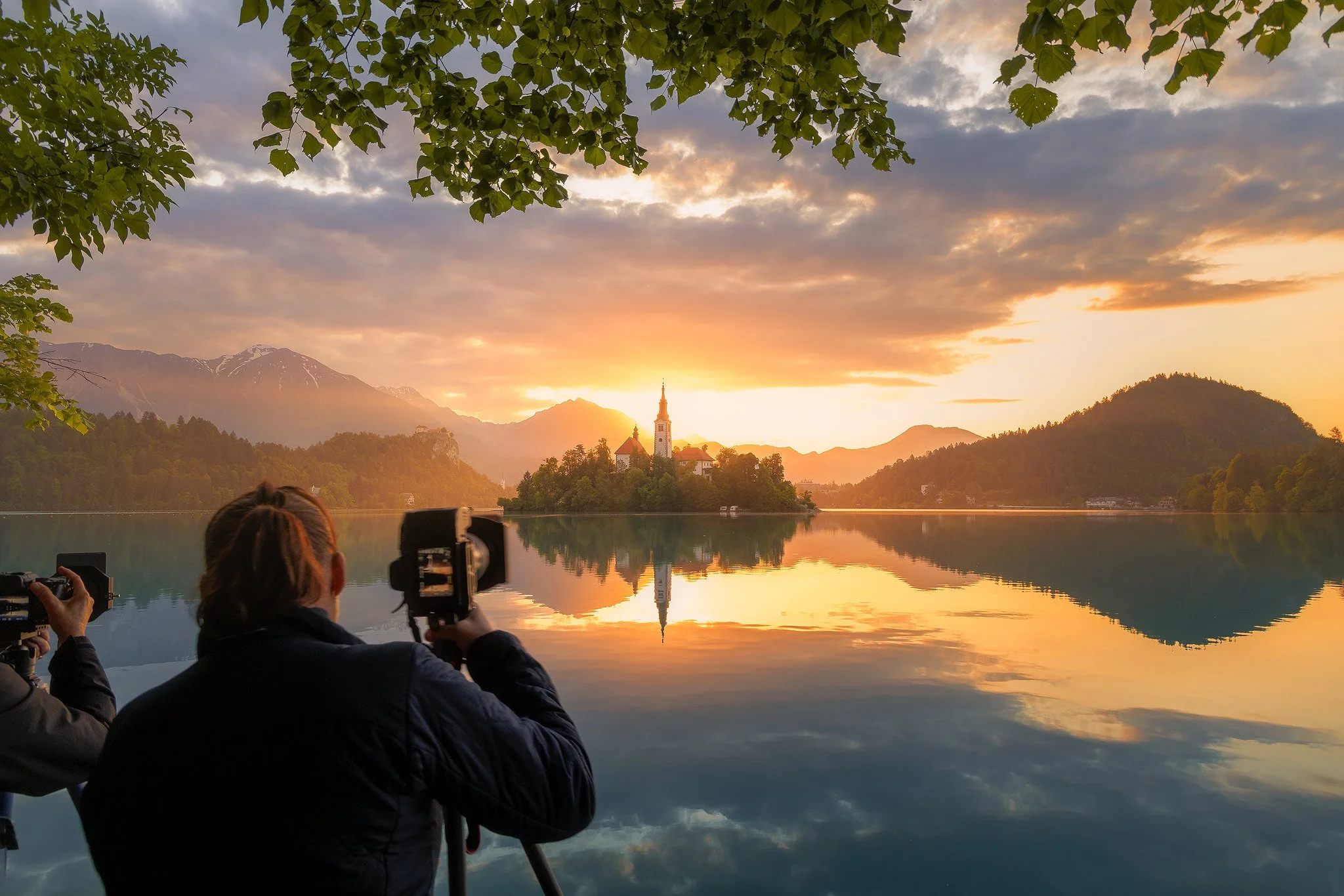
The Virunga Mountains can be spectacular around sunrise. Early light may gradually reveal peaks that were completely invisible minutes earlier, while fog can drift through valleys below the lodge.
Sunset produces different opportunities. Warm light can touch the upper mountain slopes while the foreground remains cool, and clouds can create rapidly changing compositions.
Bisate and Sabyinyo offer strong volcano viewpoints, while Virunga Lodge is particularly compelling for wider landscapes involving the twin lakes. Kwitonda can provide more intimate compositions integrating lodge architecture, vegetation and volcanoes.
A three-night stay provides multiple sunrise and sunset opportunities rather than depending on one evening of favourable weather.
FAQs About the Best Gorilla Lodges for Photographers
1. What are the Best Gorilla Lodges for Photographers in Rwanda?
The Best Gorilla Lodges for Photographers in Rwanda include Singita Kwitonda, Wilderness Bisate, Bisate Reserve, One&Only Gorilla’s Nest, Wilderness Sabyinyo and Virunga Lodge. These properties offer strong access to Volcanoes National Park together with scenic volcano views, forest environments, distinctive architecture and comfortable spaces where photographers can prepare, charge and organise camera equipment.
2. Which of the Best Gorilla Lodges for Photographers has the best volcano views?
Wilderness Bisate, Bisate Reserve, Wilderness Sabyinyo and Virunga Lodge are particularly strong for photographers interested in the Virunga Mountains. Bisate Reserve offers especially broad volcanic panoramas, while Virunga Lodge adds dramatic views across the twin lakes and surrounding hills. The best choice depends on whether you prefer wide landscapes, layered mountain compositions or intimate views from private terraces.
3. Can photographers use flash during gorilla trekking in Rwanda?
No. Flash photography is not permitted during mountain gorilla trekking because it can disturb the animals. Photographers should instead prepare for naturally low forest light by using wider apertures, higher ISO settings and suitable shutter speeds. Testing these settings before the trek can make it easier to react quickly once the gorillas are encountered.
4. How many gorilla treks should photographers book in Rwanda?
Photographers should strongly consider two gorilla treks if their schedule and budget allow. Lighting, vegetation, weather and gorilla behaviour can vary significantly from one day to another, so a second trek provides another opportunity to capture different portraits, family interactions and environmental images. Staying three or four nights near Volcanoes National Park also provides more time for landscape and lodge photography.
5. What camera equipment should I bring when staying at the Best Gorilla Lodges for Photographers?
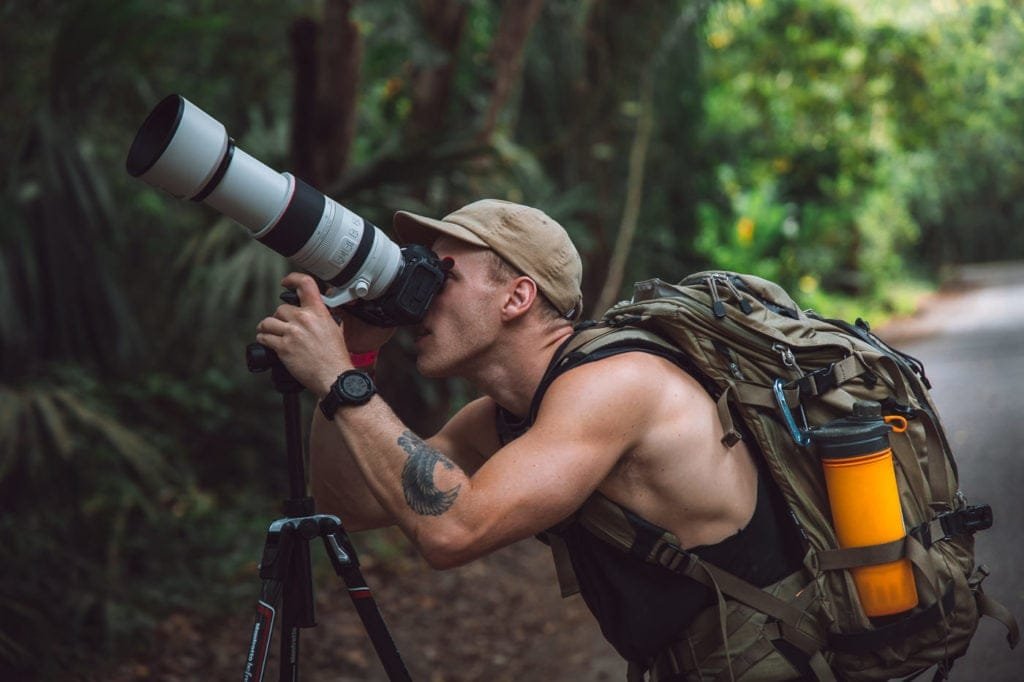
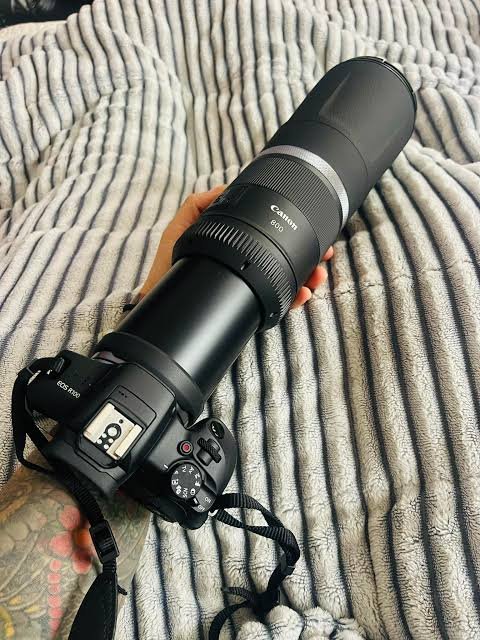
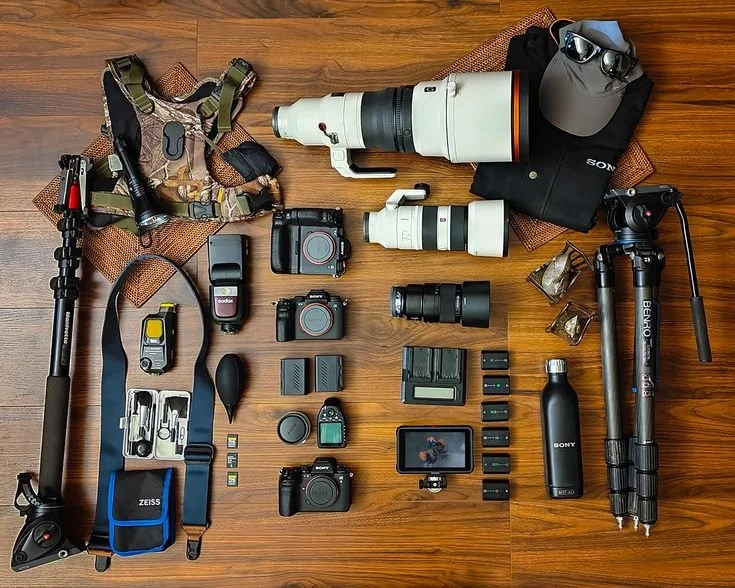
A flexible camera setup usually works better than carrying extremely heavy equipment. Many photographers prefer one or two camera bodies, a moderate telephoto zoom, a wider lens for environmental images, spare batteries, additional memory cards and reliable rain protection. A lightweight tripod can also be useful for sunrise, sunset and lodge photography, although it is generally more useful around the lodge than during the actual gorilla encounter.
Book the Best Gorilla Lodges for Photographers
Booking the Best Gorilla Lodges for Photographers should begin with the type of photography you want to prioritise. A photographer focused primarily on mountain gorillas may value proximity to the park, excellent trekking preparation and enough nights for two gorilla encounters, while a landscape photographer may prioritise open volcano views, sunrise locations and private terraces. Share your preferred travel dates, number of photographers, desired lodge style and whether you plan one or two gorilla treks, and the itinerary can be structured around both photographic opportunities and comfortable travel.
We can also design the journey around the practical requirements of travelling with professional camera equipment, including private 4×4 transportation, sufficient luggage space, carefully paced transfers and accommodation that allows time for charging batteries, reviewing photographs and preparing equipment before the next activity. Additional experiences can include golden monkey trekking, birding, Kigali, Lake Kivu, Nyungwe National Park or Akagera National Park, allowing photographers to create a much broader Rwanda portfolio than gorilla images alone.
For the strongest photography-focused safari, it is worth spending enough time in Volcanoes National Park to work with changing weather rather than relying on a single trekking morning. A carefully planned stay can combine mountain gorilla photography with volcanic landscapes, conservation stories and beautiful lodge environments while leaving enough time to protect equipment, back up images and simply experience the destination beyond the viewfinder.