What Camera Equipment Is Best for Rwanda Gorilla Trekking? Ultimate Guide
What Camera Equipment Is Best for Rwanda Gorilla Trekking? The ideal setup is a camera that performs well in low light, paired with a versatile medium telephoto lens, reliable autofocus, spare batteries, sufficient memory cards and effective rain protection. Rwanda’s mountain gorillas live in the dense bamboo and montane forests of Volcanoes National Park, where available light can change dramatically within seconds. A silverback may be sitting in deep shade beneath vegetation while a juvenile suddenly moves through a brighter opening nearby, so equipment that lets you react quickly is considerably more useful than an oversized collection of lenses. For most travellers, a modern mirrorless or DSLR camera with a zoom covering roughly 70–200mm or a similar range provides an excellent combination of image quality, flexibility and manageable weight.
Photography conditions during gorilla trekking in Rwanda are very different from those on a conventional savannah safari. You are walking rather than sitting inside a vehicle, your equipment may need to be carried for several hours, rainfall is possible, and once your assigned gorilla family is found, the normal viewing period is limited to one hour. Rwanda Development Board confirms that cameras are welcome but flash photography is prohibited, while visitors are asked to remain approximately seven metres from the gorillas whenever possible and follow their guide’s instructions throughout the encounter. This means your equipment must work effectively with natural light rather than relying on a flash unit.
The best equipment is therefore not necessarily the most expensive or technically sophisticated kit available. It is equipment you can carry comfortably, operate instinctively and protect from rain while concentrating on the gorillas rather than camera menus. A photographer carrying two compact camera bodies and one or two practical lenses may return with better images than someone struggling through the forest with an enormous professional setup. Whether you are planning one Rwanda gorilla trekking tour or designing a dedicated wildlife photography journey that also includes golden monkey trekking, Akagera and Nyungwe, careful equipment selection can make the entire safari easier and considerably more rewarding.
What Camera Equipment Is Best for Rwanda Gorilla Trekking? Choosing the Right Camera Body
A modern mirrorless camera is arguably the most convenient all-round choice for serious gorilla photography because current systems combine strong high-ISO image quality, responsive autofocus, useful subject-detection technology and relatively compact bodies. Those features are valuable inside Volcanoes National Park because mountain gorillas have exceptionally dark fur and frequently occupy shaded areas of the forest. What Camera Equipment Is Best for Rwanda Gorilla Trekking?, High-ISO performance allows a photographer to maintain a sufficiently fast shutter speed without flash, while accurate autofocus helps when a gorilla’s face appears between leaves or a juvenile suddenly moves through the bamboo. A weather-resistant body is particularly useful because Visit Rwanda specifically advises trekkers to carry waterproof protection due to the possibility of rain in the mountain environment.
DSLR cameras remain excellent choices as well, particularly when the photographer already owns suitable lenses and knows the system intimately. There is little value in changing from a familiar DSLR to an unfamiliar mirrorless camera a few days before the trek simply because newer technology appears more impressive. Gorilla photography often demands quick adjustments, and knowing exactly where your exposure-compensation dial, autofocus controls and ISO settings are located can matter more than having the newest body. Travellers planning a luxury gorilla trekking safari should practise photographing dark animals, pets or moving subjects in shaded woodland before departure so that changing conditions in Rwanda feel familiar rather than overwhelming.
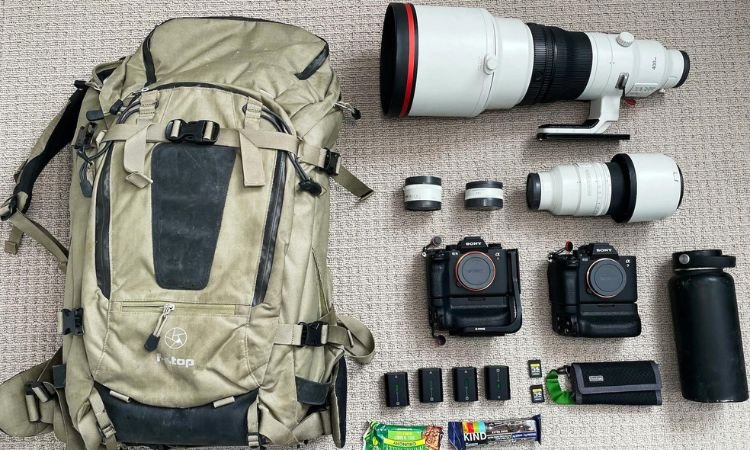
Professional photographers sometimes travel with two camera bodies, and this can be useful when photography is the primary purpose of the safari. One body can carry a medium telephoto zoom while the second holds a wider lens, eliminating the need to change lenses repeatedly in humid or rainy conditions. For most travellers, however, a single reliable camera body is sufficient. What Camera Equipment Is Best for Rwanda Gorilla Trekking? Carrying a second body adds weight to a trek that may last anywhere from around 90 minutes to much of the morning before the gorillas are located. Visit Rwanda confirms that tracking duration varies according to the assigned family and where it is moving that day. The best camera body is therefore one that delivers strong low-light performance without making the journey unnecessarily difficult.
The Best Lens for Rwanda Gorilla Trekking Photography
Lens selection can have an even greater impact than the camera body. For most photographers, a zoom covering approximately 70–200mm on a full-frame camera is one of the strongest choices for gorilla trekking in Volcanoes National Park. It provides enough reach for detailed portraits while remaining flexible enough to photograph a mother and infant together or include more of the surrounding forest.What Camera Equipment Is Best for Rwanda Gorilla Trekking? A lens with a relatively wide maximum aperture can be particularly useful because the rainforest frequently provides limited natural light, and flash cannot be used. The ability to open the lens wider helps maintain a useful shutter speed while also creating attractive background separation around the gorilla’s face.
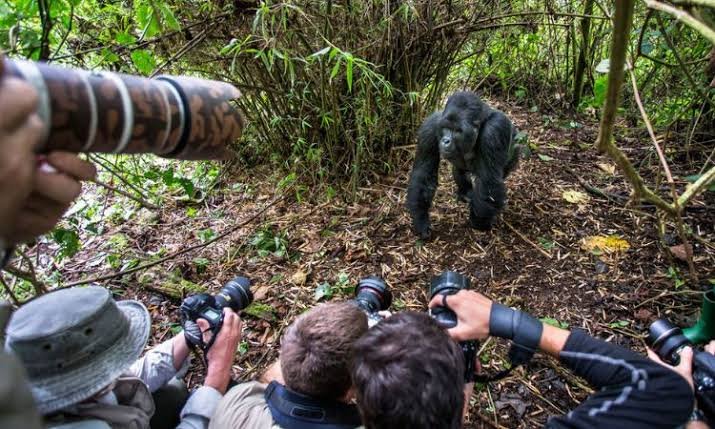
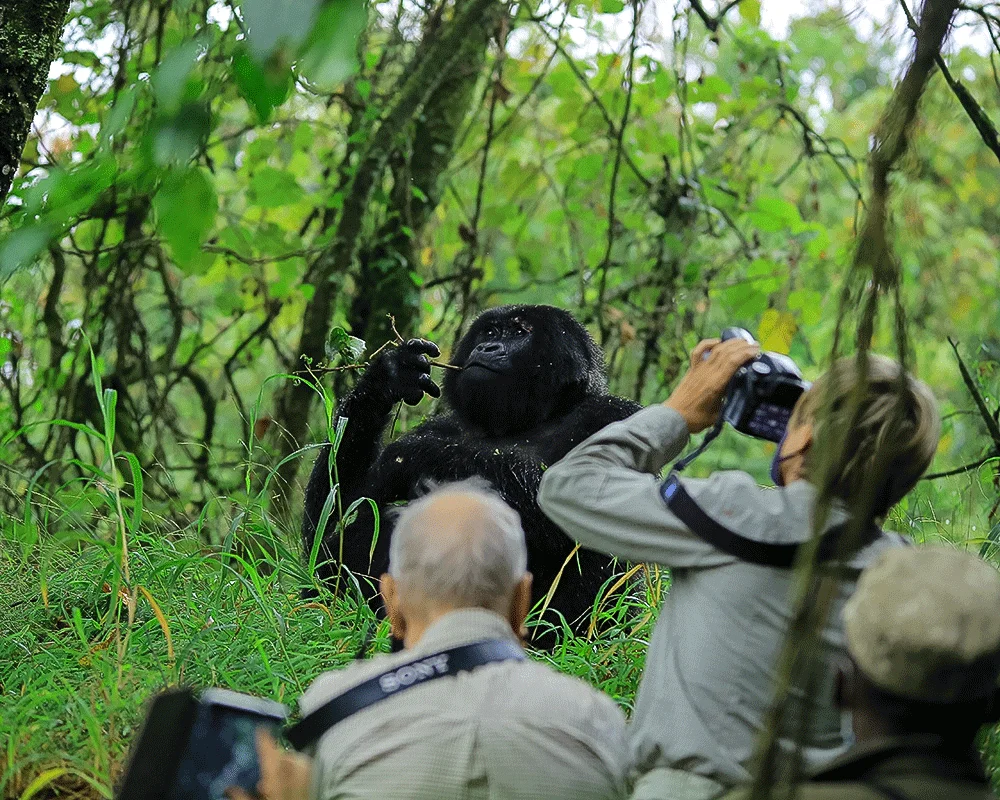
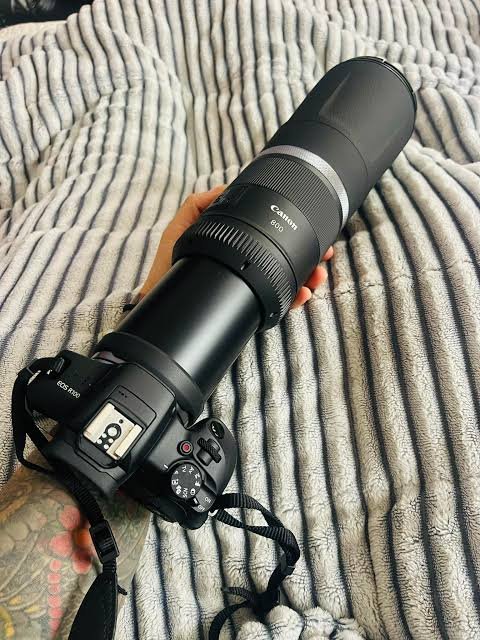
A longer zoom in the region of 100–400mm can be valuable for serious wildlife photographers, especially when gorillas remain farther away or when detailed facial portraits are important. However, extra focal length comes with additional weight, and extremely long lenses are not always necessary because visitors may already have excellent viewing opportunities within the regulated trekking distance. What Camera Equipment Is Best for Rwanda Gorilla Trekking? Rwanda asks visitors to remain approximately seven metres away where practical, but the animals themselves sometimes move within the broader area while guides manage visitor positioning. A massive 500mm or 600mm wildlife lens that is wonderful in Akagera National Park can therefore become unnecessarily restrictive during a forest gorilla encounter, particularly if the animal appears relatively close.
A wider zoom such as a 24–70mm is an excellent secondary option for environmental photographs. What Camera Equipment Is Best for Rwanda Gorilla Trekking? Tight gorilla portraits are understandably popular, but some of the strongest photographs show a silverback surrounded by bamboo, a family moving through dense vegetation or mist hanging across the Virunga forest. These wider scenes tell the story of where the gorillas live rather than isolating the animal completely from its habitat. Photographers carrying two bodies can keep a medium telephoto on one and a wider zoom on the other. Travellers using one body may prefer a versatile zoom rather than changing lenses repeatedly in damp forest conditions. What Camera Equipment Is Best for Rwanda Gorilla Trekking? The objective is not to carry every possible focal length but to select equipment that allows you to react quickly during your precious one-hour viewing period.
Camera Settings for Dark Forest, Moving Gorillas and Changing Light
Low light is the defining technical challenge of gorilla photography. Mountain gorillas have dark fur and frequently sit beneath dense vegetation, so cameras can struggle both with exposure and autofocus. Because flash photography is prohibited, photographers must work entirely with natural light. What Camera Equipment Is Best for Rwanda Gorilla Trekking? A good starting strategy is to prioritise a sufficiently fast shutter speed, use a relatively wide aperture and allow ISO to rise automatically within a sensible range. Modern cameras can produce highly usable images at ISO settings that photographers might once have avoided, and a sharp image containing some digital noise is almost always preferable to a beautifully clean photograph ruined by subject movement.
Shutter speed needs to change according to behaviour. A large silverback resting quietly may allow a slower speed, while a juvenile climbing, running or wrestling with another gorilla requires a much faster exposure. Image stabilisation helps control movement generated by the photographer, but it cannot freeze a moving animal. When activity increases, raising shutter speed and ISO is normally the safer choice. Continuous autofocus can also be useful for moving subjects, while animal-eye detection on modern cameras may work well when the gorilla’s face is reasonably clear. Thick foliage can confuse autofocus systems, however, so photographers should know how to quickly move their focus point manually if the camera begins locking onto leaves instead of the gorilla.
Exposure compensation can be extremely useful because a camera’s meter may interpret a frame dominated by dark gorilla fur incorrectly. Watch the highlights on the face and fur rather than relying entirely on automatic exposure. What Camera Equipment Is Best for Rwanda Gorilla Trekking? Shooting RAW files gives greater flexibility for recovering detail from shadows and adjusting white balance later, especially when forest light shifts between cool shade and warmer openings. Burst mode can help capture fast expressions or juvenile behaviour, but there is little reason to fire continuously throughout the encounter. A carefully timed sequence of photographs usually creates a stronger collection than thousands of nearly identical frames that later need to be sorted after your Rwanda gorilla safari.
Essential Accessories: Rain Protection, Batteries, Memory Cards and Camera Bags
A good camera and lens combination is only part of the answer to What Camera Equipment Is Best for Rwanda Gorilla Trekking? The forest environment makes several inexpensive accessories almost as important as the camera itself.What Camera Equipment Is Best for Rwanda Gorilla Trekking? A dedicated rain cover should be carried even when the forecast looks favourable because high-altitude forest weather can change quickly. Visit Rwanda recommends a lightweight waterproof jacket for trekkers and describes sturdy clothing, walking footwear and protection from vegetation as essential preparation. Your camera needs similar protection. A fitted rain sleeve allows you to continue photographing during showers without repeatedly packing the camera away, while a small waterproof liner inside the camera bag provides valuable protection during heavier rain.
Carry at least one fully charged spare battery, and serious photographers may prefer two. Continuous autofocus, image stabilisation, image review and electronic viewfinders can consume power quickly, particularly on mirrorless bodies. What Camera Equipment Is Best for Rwanda Gorilla Trekking? Batteries should be stored in a waterproof pouch rather than loosely inside a backpack. Memory cards deserve the same preparation. Begin the day with sufficient free capacity that you will not need to delete files while standing near the gorillas, and carry a spare card in case of failure. Back up photographs each evening when possible, especially when your itinerary includes two gorilla treks or continues toward golden monkey trekking, Lake Kivu or another photography destination.
Should You Bring a Tripod, Monopod, Filters or Flash?
A full-size tripod is usually unnecessary for a standard gorilla trek. Photography positions can change as the gorillas move, forest vegetation limits space, and your one-hour encounter benefits from being mobile rather than continuously extending and collapsing tripod legs. What Camera Equipment Is Best for Rwanda Gorilla Trekking? Modern image stabilisation and high-ISO performance make handheld shooting practical for most situations. What Camera Equipment Is Best for Rwanda Gorilla Trekking? A compact monopod may suit some photographers, particularly those using a heavier lens, but it should remain easy to carry and should never interfere with guide instructions or other members of the trekking group. For most visitors using a 70–200mm-style lens, handheld photography is considerably simpler.
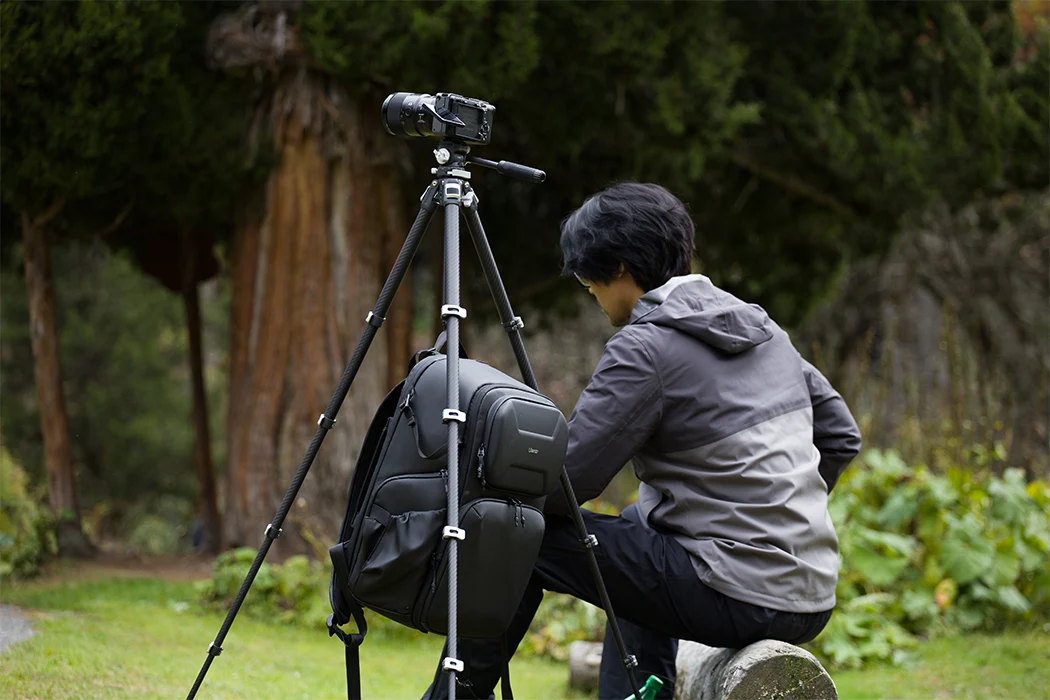
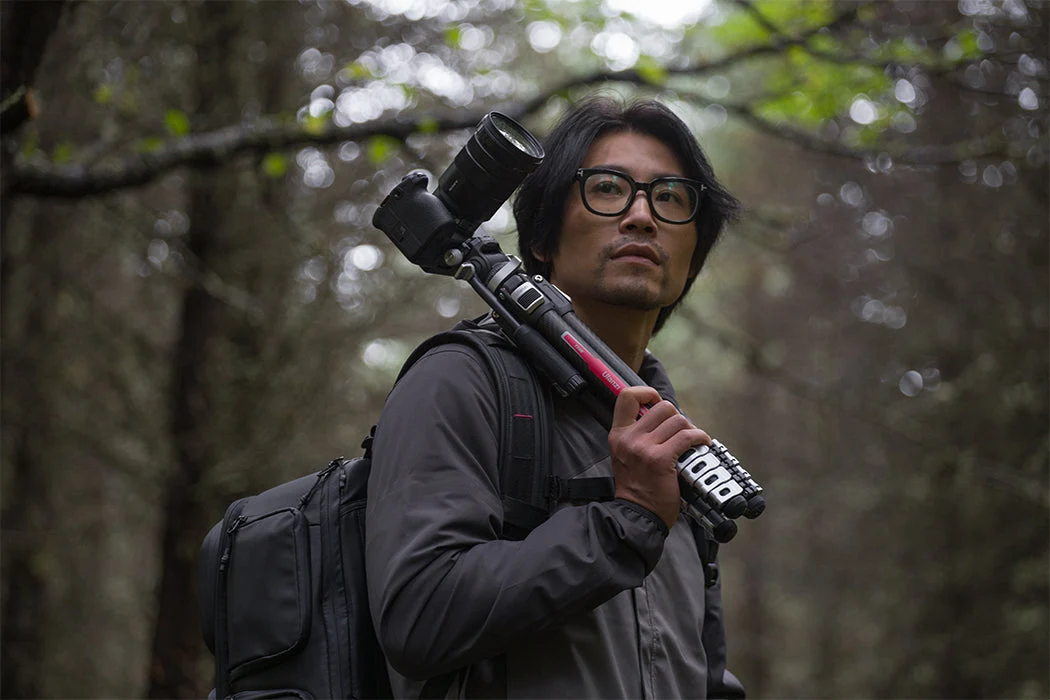
A flash should not be packed with the intention of using it around the gorillas because flash photography is explicitly prohibited by Rwanda Development Board. Removing the flash from the kit also reduces unnecessary weight. What Camera Equipment Is Best for Rwanda Gorilla Trekking? Circular polarising filters can occasionally help control reflections from wet vegetation, but they reduce the amount of light reaching the sensor, which can be a disadvantage in an already dark forest. For most gorilla photography, keeping the lens relatively unobstructed and prioritising available light is the more practical approach. What Camera Equipment Is Best for Rwanda Gorilla Trekking? A simple protective filter is a matter of personal preference, but carrying a clean lens hood is useful both for physical protection and for reducing stray light.
Small accessories often provide more value than complicated photographic equipment. Bring several microfibre cloths because moisture can quickly settle on the front element of a lens. A compact lens blower, a few sealed cleaning tissues and a waterproof pouch for batteries and memory cards require almost no space. What Camera Equipment Is Best for Rwanda Gorilla Trekking? Silica-gel packets can also help manage moisture inside the camera bag after the trek, although equipment should still be allowed to dry gradually when you return to your lodge. If your broader Rwanda itinerary includes a Lake Kivu adventure or wildlife photography in Akagera, you can carry additional equipment in your main luggage while taking only the essential kit into the gorilla forest.
Smartphones, Compact Cameras and the Best Lightweight Setup
A smartphone can be entirely sufficient for travellers whose main priority is experiencing the gorillas rather than creating large professional files. Modern phones perform remarkably well in favourable light, automatically manage exposure and allow quick switching between still photographs and video. They are also extremely light, which is valuable when the trek becomes physically demanding. What Camera Equipment Is Best for Rwanda Gorilla Trekking? The main limitation is that digital zoom can quickly reduce image quality, while very low light can produce noise and motion blur. Travellers using smartphones should therefore avoid trying to enlarge a distant gorilla excessively and should instead concentrate on moments when the subject is clearly visible.
For travellers wanting excellent quality without carrying a large kit, a small mirrorless body with one versatile zoom can be the ideal compromise. A lightweight camera paired with a lens covering approximately 70–200mm equivalent gives far greater optical flexibility than a phone while remaining easy to handle during the trek. What Camera Equipment Is Best for Rwanda Gorilla Trekking? Keep a smartphone in a secure pocket for occasional wider photographs or short videos rather than carrying multiple large lenses. This minimalist approach is particularly attractive for couples, senior travellers and anyone combining gorillas with an active Dian Fossey hike or Mount Bisoke hiking experience.
How Much Camera Equipment Should You Actually Carry?
Overpacking is one of the most common mistakes serious photographers make when preparing for gorilla trekking. It is tempting to carry every lens because the experience may happen only once, but the physical reality of the trek should influence the decision. What Camera Equipment Is Best for Rwanda Gorilla Trekking? Mountain gorillas live at altitude and reaching them may require climbing steep, wet trails for several hours. RDB specifically notes that altitude can create difficulties for some visitors and advises people to walk slowly and stay hydrated. The camera kit that feels perfectly manageable inside an airport can become extremely heavy halfway up a muddy forest slope.
For most enthusiastic photographers, one camera body, one medium telephoto zoom, a spare battery, extra memory card, rain cover, lens cloth and lightweight camera backpack are enough. A second wider lens can be added if environmental photography is important, although changing lenses in wet conditions should be minimised. Serious professionals may prefer two bodies to avoid lens changes, but in that case hiring a porter becomes particularly sensible. What Camera Equipment Is Best for Rwanda Gorilla Trekking? The goal is to arrive at the gorilla family feeling alert and physically comfortable rather than exhausted from transporting equipment that remains inside the bag.
Think about what happens after the trek as well. If your journey continues to Akagera National Park, a longer telephoto lens can be worthwhile because lions, rhinos, elephants and other wildlife may be photographed from a safari vehicle at considerably greater distances. That lens can remain in your main luggage during the gorilla trek and rejoin your kit once you reach the savannah. What Camera Equipment Is Best for Rwanda Gorilla Trekking? Travellers continuing to Nyungwe Forest National Park for chimpanzee trekking in Rwanda may again prefer a mobile setup because chimpanzees can move quickly through dense forest.
Responsible Gorilla Photography, Permits and the One-Hour Experience
Equipment decisions must always sit within Rwanda’s gorilla trekking regulations. Rwanda Development Board currently lists the standard international gorilla permit at USD 1,500 per person, with a minimum trekking age of 15 years.What Camera Equipment Is Best for Rwanda Gorilla Trekking? Visitors report at the park registration centre at 7:00 a.m., groups contain a maximum of eight trekkers, and once the gorillas are found, viewing is limited to one hour. RDB also asks visitors to maintain a seven-metre distance, remain quiet, avoid rapid movements and refrain from trekking when suffering from contagious illness. Visit Rwanda currently describes 12 tourism-habituated gorilla families, meaning a maximum of 96 visitor permits are available each day.
Responsible photographers should also know when to lower the camera. If a gorilla changes direction and approaches, guide instructions take priority over capturing the moment. If a fellow visitor has not yet had a clear view, allowing space is considerate. If the animal appears behind vegetation, do not move closer independently simply to remove a branch from the photograph. The Gorilla Friendly Pledge promoted by IGCP exists specifically to encourage visitors to observe tourism rules that protect mountain gorillas and support responsible encounters. Excellent wildlife photography begins with respect for the wildlife being photographed.
One Gorilla Trek or Two for Serious Photographers?
A single gorilla trek can produce outstanding photographs, but serious photographers should consider booking two trekking days when budget and permit availability allow. Forest photography contains too many uncontrollable variables for one hour to guarantee every desired image. What Camera Equipment Is Best for Rwanda Gorilla Trekking? Your first gorilla family might spend much of the encounter beneath thick vegetation, the weather may be unusually dark or your most active subjects may remain partially obscured. A second trek creates another completely independent opportunity with different behaviour, terrain, light and potentially another gorilla family.
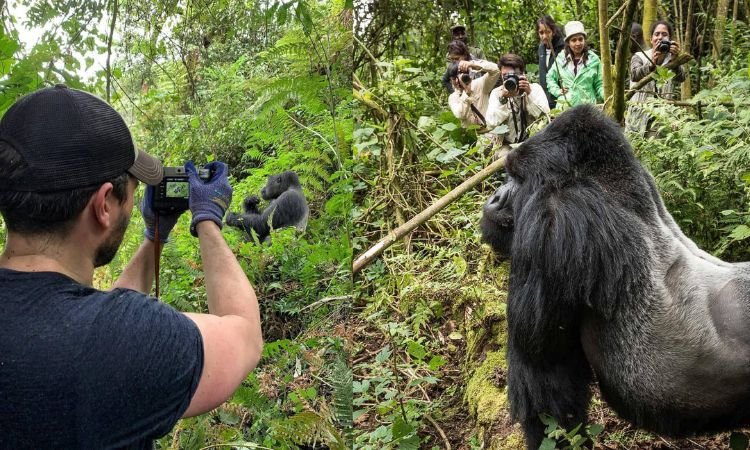
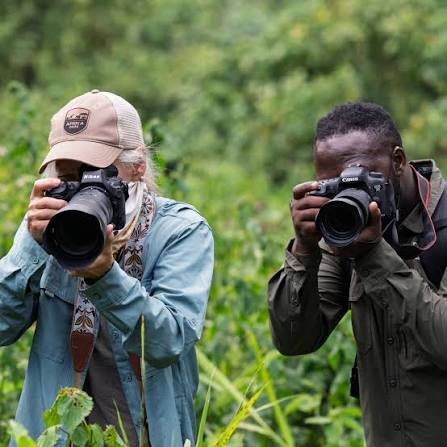
The second trek also allows you to improve technically. After your first day, return to your lodge and review your photographs carefully. You may discover that the shutter speed should have been faster, your longest lens was unnecessary or that you concentrated so heavily on close portraits that you failed to capture environmental scenes. By the second morning, the trekking process is familiar and camera decisions become more instinctive. Photographers can therefore concentrate more fully on behaviour instead of simultaneously learning how the encounter unfolds.
Travellers who want multiple primate photography experiences can combine two gorilla treks with golden monkey trekking or choose a 3-Day Rwanda Gorilla and Golden Monkey Trekking Safari when time is shorter. Those with additional days can include Lake Kivu, where boats, fishermen, hills and sunsets create a slower form of photography after several physically demanding mornings in the forest. A carefully paced itinerary delivers better images than continually rushing from one demanding activity to another.
Building a Complete Rwanda Photography Safari Around Your Camera Kit
Rwanda is especially rewarding for photographers because the ideal gorilla equipment can form the foundation of a much broader wildlife kit. After Volcanoes National Park, travel east to Akagera National Park, where game drives introduce lions, rhinoceroses, elephants, buffaloes, giraffes, wetlands and extensive birdlife. Here, a longer telephoto lens becomes more useful because wildlife may be considerably farther from the vehicle. What Camera Equipment Is Best for Rwanda Gorilla Trekking? A photographer who used a 70–200mm lens for gorillas might add a 100–400mm or similar longer zoom in Akagera, allowing one journey to produce both intimate forest portraits and classic African savannah wildlife images.
Nyungwe adds another photographic challenge. Chimpanzee trekking in Rwanda involves faster animals that may move through the canopy or dense vegetation, so responsive autofocus and higher shutter speeds become even more important. Visit Rwanda notes that chimp tracking can take from an hour to several hours before visitors locate the animals, with a maximum one-hour viewing period once they are found. Nyungwe Forest National Park also offers colobus monkeys, forest scenery and exceptional birdlife, while specialist photographers can add Rwanda birding safaris for a much broader collection.
Finish the journey beside Lake Kivu or use the lake as a scenic transition between Volcanoes and Nyungwe. Landscape photography requires less extreme telephoto reach and gives photographers time to work slowly with changing skies, water reflections and human activity around the shoreline.What Camera Equipment Is Best for Rwanda Gorilla Trekking? A complete Rwanda camera kit can therefore remain relatively simple: one strong general-purpose body, a mid-range telephoto for primates, a wider zoom for landscapes and a longer lens reserved primarily for Akagera and birding. Thoughtful equipment selection produces more flexibility than transporting a suitcase full of specialised lenses that rarely leave the bag.
Frequently Asked Questions About What Camera Equipment Is Best for Rwanda Gorilla Trekking?
1. What Camera Equipment Is Best for Rwanda Gorilla Trekking?
What Camera Equipment Is Best for Rwanda Gorilla Trekking? For most travellers, the ideal setup is a modern mirrorless or DSLR camera with strong low-light performance, a versatile medium telephoto zoom such as a 70–200mm-style lens, spare batteries, extra memory cards and reliable rain protection. The equipment should be light enough to carry comfortably through Volcanoes National Park while still allowing you to photograph gorillas clearly in shaded forest conditions.
2. What Camera Equipment Is Best for Rwanda Gorilla Trekking for beginners?
For beginners asking What Camera Equipment Is Best for Rwanda Gorilla Trekking?, simplicity is usually best. A lightweight mirrorless camera with one versatile zoom lens can produce excellent results without requiring several heavy lenses or complicated accessories. Learn how to adjust ISO, shutter speed, autofocus and exposure before your gorilla trekking in Rwanda experience so you are not learning the camera during your limited time with the gorillas.
3. What Camera Equipment Is Best for Rwanda Gorilla Trekking in low light?
When considering What Camera Equipment Is Best for Rwanda Gorilla Trekking?, low-light performance should be one of your priorities because gorillas often remain beneath thick forest vegetation. A camera that performs well at higher ISO values combined with a relatively fast telephoto lens can help maintain useful shutter speeds without flash. Image stabilisation is valuable, but photographers should also remember that a faster shutter speed is necessary when young gorillas begin moving or playing.
4. What lens should I use for Rwanda gorilla trekking photography?
A 70–200mm-style zoom is one of the most versatile answers to What Camera Equipment Is Best for Rwanda Gorilla Trekking? It gives photographers sufficient reach for detailed portraits while remaining flexible enough for gorilla family interactions and wider scenes. A 100–400mm zoom can also work well for photographers wanting greater reach, while a wider lens is useful for showing gorillas within the dramatic forest environment of Volcanoes National Park.
5. Do I need an expensive professional camera for Rwanda gorilla trekking?
No. What Camera Equipment Is Best for Rwanda Gorilla Trekking? does not automatically mean the most expensive camera available. A familiar mid-range DSLR or mirrorless camera can deliver excellent photographs when the photographer understands its controls. Even a recent smartphone can produce memorable images in favourable light. Knowing your equipment, preparing for low-light conditions and following guide instructions are more important than carrying an extremely expensive camera system.
6. Should I bring a 400mm or 600mm lens for Rwanda gorilla trekking?
A 400mm lens can be useful, but a 500mm or 600mm lens is usually unnecessary for most visitors. When answering What Camera Equipment Is Best for Rwanda Gorilla Trekking?, portability should be considered alongside focal length because photographers may need to carry their equipment through steep and muddy forest trails. Very long lenses are generally more useful later in the safari for wildlife photography in Akagera National Park.
7. What Camera Equipment Is Best for Rwanda Gorilla Trekking during rainy weather?
For wet conditions, What Camera Equipment Is Best for Rwanda Gorilla Trekking? should include a weather-resistant camera body where possible, a fitted rain cover, a waterproof camera backpack or liner, several microfibre cloths and waterproof storage for batteries and memory cards. Rwanda’s mountain forests can receive rain throughout the year, so protecting your equipment should be part of your preparation rather than something considered only after bad weather begins.
8. Can I use a smartphone instead of a DSLR or mirrorless camera?
Yes. For travellers who want a lightweight answer to What Camera Equipment Is Best for Rwanda Gorilla Trekking?, a recent smartphone can be perfectly adequate for personal photography. It is easier to carry and allows quick switching between photographs and video. Keep the flash switched off, avoid excessive digital zoom and never move closer to a gorilla simply to improve the photograph. Travellers can combine smartphone gorilla photography with golden monkey trekking for even more primate photography opportunities.
9. Should I carry a tripod or monopod during Rwanda gorilla trekking?
A full-size tripod is normally unnecessary when deciding What Camera Equipment Is Best for Rwanda Gorilla Trekking? because the gorillas may move and photographers often need to reposition under the guide’s direction. Handheld photography provides greater flexibility, especially with modern image stabilisation. A compact monopod may help photographers using heavier lenses, but keeping the equipment mobile and unobtrusive is usually more important.
10. Should I hire a porter for my camera equipment?
Yes, especially if your answer to What Camera Equipment Is Best for Rwanda Gorilla Trekking? includes multiple camera bodies or heavy lenses. A porter can carry your camera backpack during the more demanding sections of the trek, helping you conserve energy for photography once the gorillas are located. This can be particularly valuable for travellers combining the gorilla experience with a Dian Fossey hike or Mount Bisoke hiking.
11. Is one camera body enough for Rwanda gorilla trekking?
Yes. For most travellers, one reliable camera body is sufficient when deciding What Camera Equipment Is Best for Rwanda Gorilla Trekking? Serious photographers may prefer two bodies so they can keep a telephoto lens on one and a wider lens on the other without changing lenses in wet forest conditions. However, every additional camera increases the weight you must carry, so the benefit should be balanced against comfort.
12. How many batteries and memory cards should I carry for gorilla trekking?
When planning What Camera Equipment Is Best for Rwanda Gorilla Trekking?, carry at least one fully charged spare battery and enough memory-card capacity for the entire day. Serious photographers may prefer two spare batteries, especially when using mirrorless cameras with continuous autofocus and image stabilisation. Keep batteries and cards inside a waterproof pouch so they remain protected if rain begins during the trek.
13. Is one gorilla trek enough for serious photography?
One trek can produce exceptional photographs, but serious photographers may prefer two trekking days. When considering What Camera Equipment Is Best for Rwanda Gorilla Trekking?, remember that extra equipment cannot control animal behaviour, lighting or vegetation. A second Rwanda gorilla trekking tour can provide different light, another gorilla family and new behavioural opportunities, often delivering greater photographic value than simply carrying more lenses.
14. What camera equipment should I use if I am also visiting Akagera and Nyungwe?
For travellers building a complete photography safari, What Camera Equipment Is Best for Rwanda Gorilla Trekking? should be considered alongside the equipment required elsewhere. A medium telephoto zoom works extremely well for gorillas, while a longer lens can be added for lions, rhinos, elephants and birds in Akagera National Park. In Nyungwe Forest National Park, responsive autofocus and faster shutter speeds become useful for chimpanzee trekking and other fast-moving primates.
15. How can I book a Rwanda gorilla photography safari with the right equipment?
Once you understand What Camera Equipment Is Best for Rwanda Gorilla Trekking?, the next step is designing the safari around your photography goals. Visit Rwanda Safaris can combine gorilla trekking in Rwanda with golden monkeys, Lake Kivu, Akagera wildlife and Nyungwe primates. Serious photographers can also plan two gorilla trekking days and select accommodation close to Volcanoes National Park so batteries, equipment and early-morning departures can be managed comfortably.
Book Your Rwanda Gorilla Photography Safari
Knowing What Camera Equipment Is Best for Rwanda Gorilla Trekking? becomes far more useful when the safari itself is designed around photography. Visit Rwanda Safaris can structure your journey according to the number of gorilla encounters you want, the type of equipment you carry and the wider subjects you hope to photograph. A casual photographer might choose three nights near Volcanoes National Park with one gorilla trek and golden monkey trekking, while an enthusiastic photographer can spend four or five nights in the Virunga region with two separate gorilla permits, sufficient recovery time and private transportation for securely managing camera equipment.
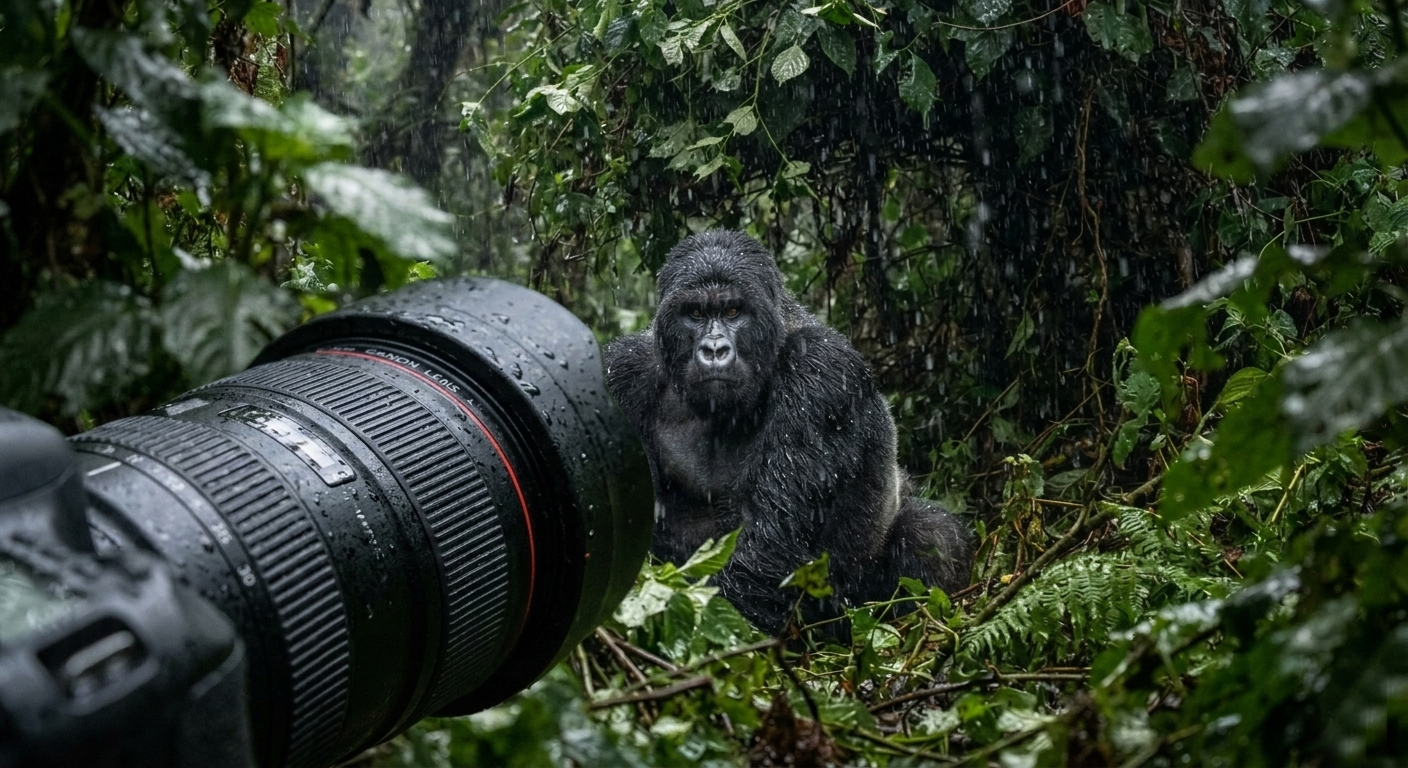
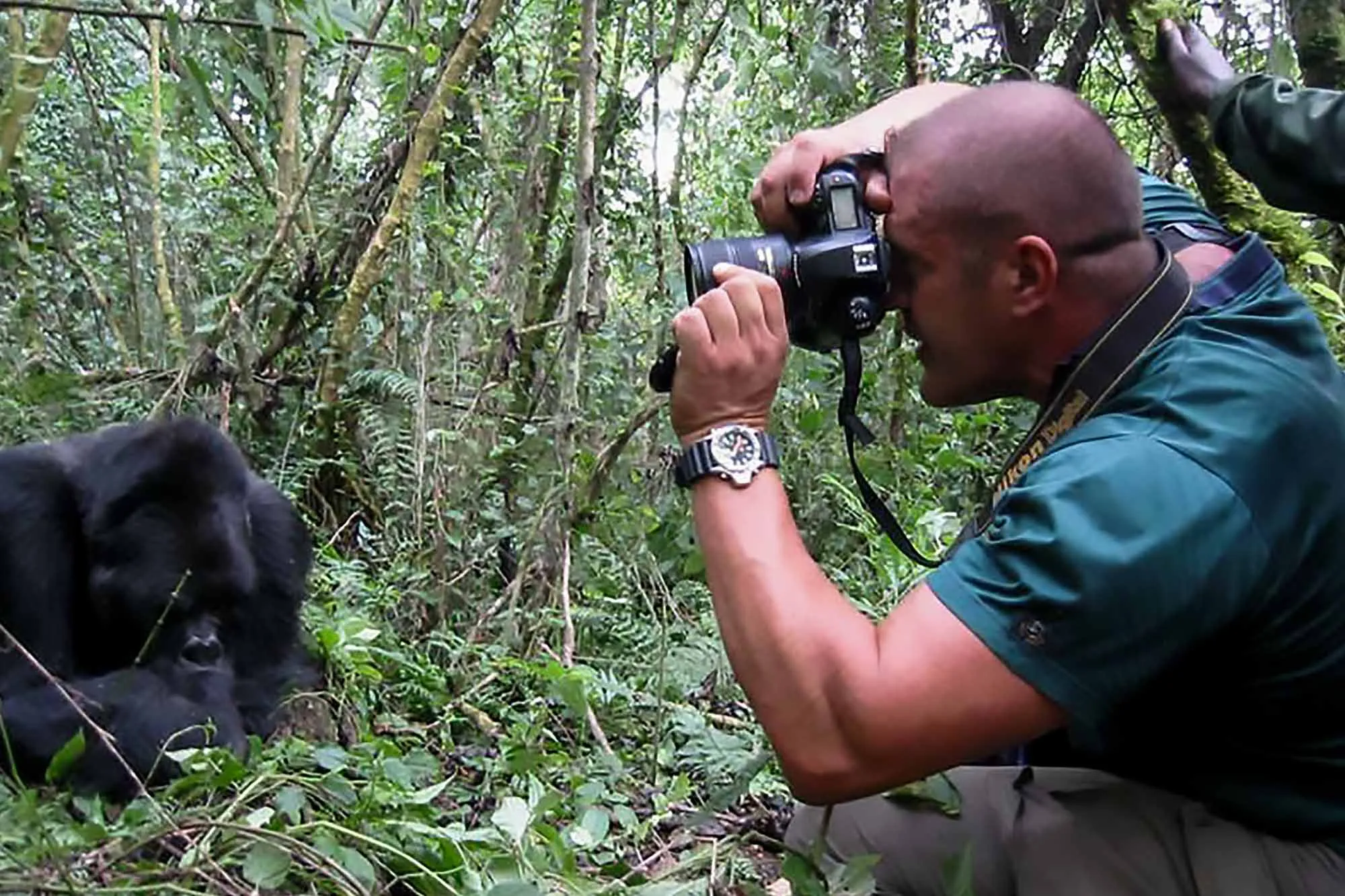
A complete photography itinerary can connect gorilla trekking in Rwanda with Big Five photography in Akagera National Park, scenic landscapes around Lake Kivu and primate photography in Nyungwe Forest National Park. Travellers seeking a premium experience can explore luxury gorilla trekking safaris, while photographers particularly interested in Volcanoes National Park can combine their trek with a Dian Fossey hike or Mount Bisoke adventure. Every extension adds a different photographic subject without requiring the traveller to leave Rwanda.
The strongest photography safari begins with confirmed gorilla permits and enough time to enjoy the encounters without rushing. Rwanda’s standard international gorilla permit currently costs USD 1,500 per person per trek, the minimum trekking age is 15, and permit numbers are deliberately limited, so advance planning remains important. Explore our Rwanda gorilla trekking guide, compare Rwanda gorilla trekking tours or start arranging your journey through our safari booking page. Book your Rwanda gorilla photography safari with the right equipment, enough time in the forest and an itinerary designed to give you far more than one extraordinary photograph.