Amazing Guide: What Camera Equipment Is Best for Rwanda Gorilla Trekking?
What Camera Equipment Is Best for Rwanda Gorilla Trekking? A mirrorless or DSLR camera with strong low-light performance, reliable autofocus and a versatile telephoto zoom is usually the most practical setup. For many photographers, a 70–200mm lens provides the best balance between portraits and wider environmental compositions, while a 100–400mm lens gives additional reach for close facial details and animals sitting deeper within the vegetation. A second wider zoom can be valuable for forest scenes, but the strongest setup is usually the one you can carry comfortably through several hours of mountain trekking rather than the largest collection of equipment you own.
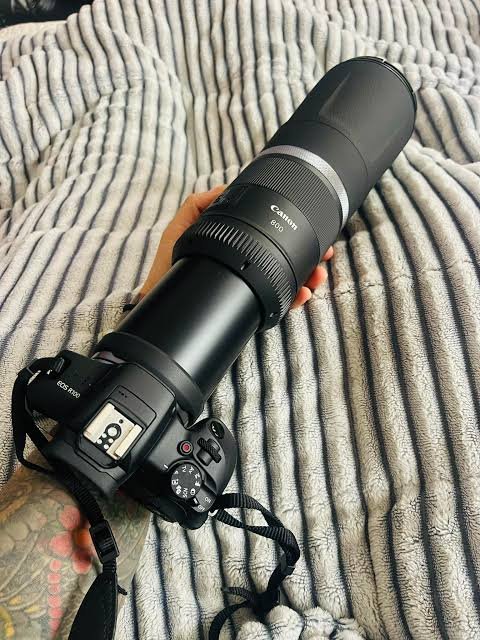
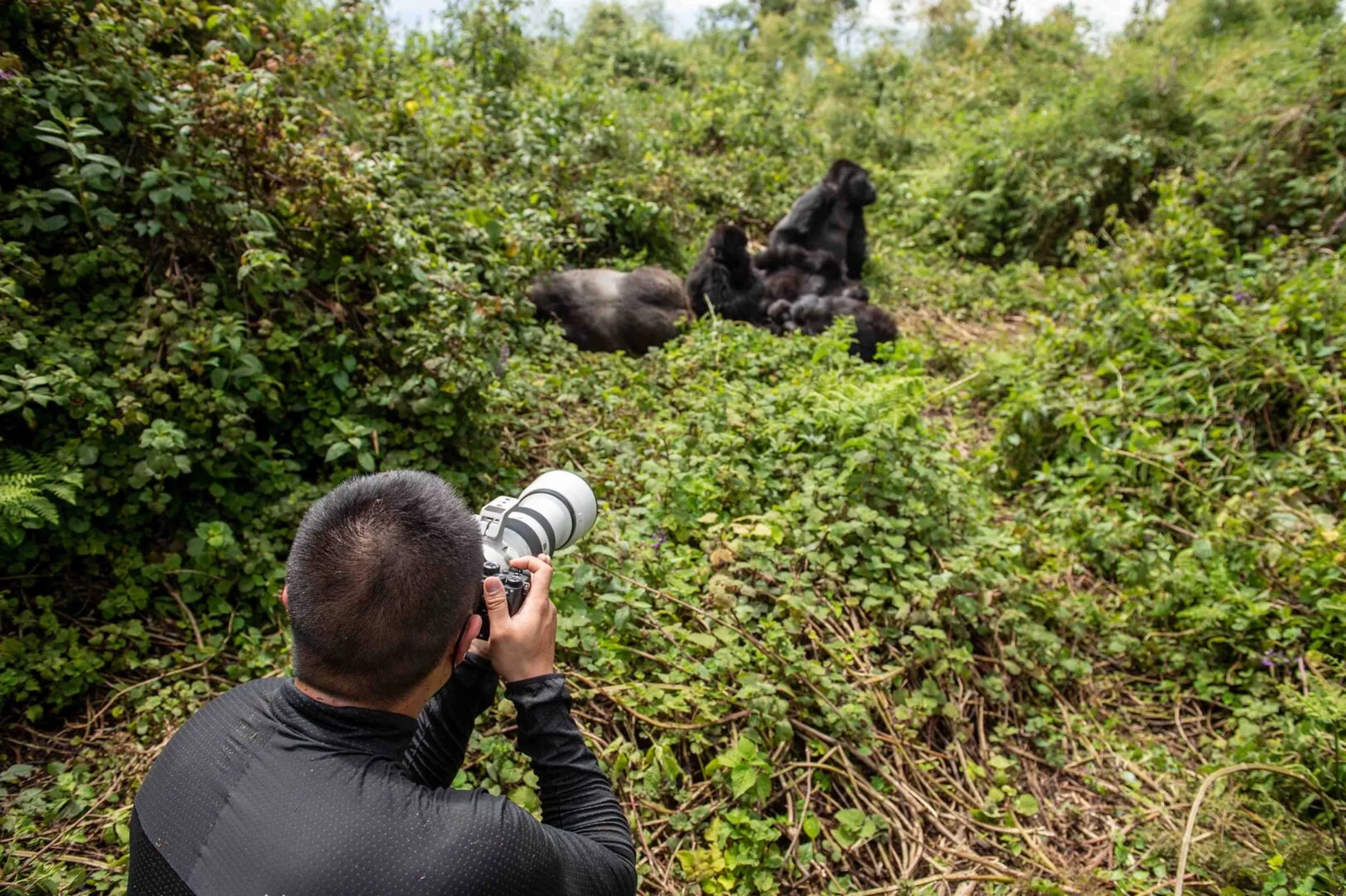
Gorilla photography in Rwanda is very different from photographing lions or elephants from a safari vehicle. Gorilla trekking in Rwanda takes place on foot inside the bamboo and montane forests of Volcanoes National Park, where light can be low, rain can arrive quickly and leaves or branches may separate you from the subject. Rwanda Development Board permits photography but prohibits flash, limits the viewing encounter to one hour and asks visitors to maintain approximately seven metres from the gorillas where possible. Porters are available to help carry daypacks and camera equipment.
The best camera kit therefore needs to balance image quality, flexibility, weather protection and weight. A photographer carrying two professional bodies and several large lenses may have every focal length available but become exhausted before reaching the gorillas. Someone using one familiar camera and a good zoom can often react much faster when a silverback suddenly looks toward them or a juvenile emerges from the bamboo. This guide explains What Camera Equipment Is Best for Rwanda Gorilla Trekking? from the practical perspective of the forest itself, helping photographers choose cameras, lenses, accessories and protection that genuinely improve the experience.
Why Gorilla Photography Requires Different Equipment From a Normal Safari
Traditional East African wildlife photography often takes place from a vehicle, allowing photographers to carry large lenses, beanbags, several bodies and heavy camera bags with relatively little physical effort. Gorilla trekking is completely different. You carry or hire someone to carry your equipment while walking through uneven, sometimes muddy mountain forest. The route may climb steep slopes, pass through thick vegetation and continue for much longer than expected depending on the location of your assigned gorilla family.
Visit Rwanda explains that trekking groups enter the bamboo-covered slopes with expert trackers and may spend anything from around 90 minutes to the whole morning locating their assigned family. The national park itself protects steep volcanic terrain containing bamboo forest, evergreen vegetation, grassland, swamp and high-altitude heath. This means your equipment must perform well while also being realistic to transport through an unpredictable environment.
Light is the second major difference. Gorillas may sit beneath dense vegetation where the forest canopy removes much of the available sunlight. Dark fur can be surrounded by bright green leaves, creating difficult exposure conditions. A camera with good high-ISO performance and a relatively fast lens therefore becomes more useful than a very long lens designed mainly for open savannah. Photographers planning a dedicated journey should think about the entire Volcanoes National Park environment rather than simply asking which lens creates the largest image of a gorilla.
The Best Camera Body for Rwanda Gorilla Trekking
Modern mirrorless cameras are excellent for gorilla photography because they combine strong autofocus, high-ISO capability and relatively compact dimensions. Eye-detection autofocus can be especially helpful when a gorilla’s face is partially surrounded by vegetation, although photographers should always know how to override the system manually when branches confuse the autofocus. A camera body that remains familiar under pressure is far more valuable than a sophisticated model purchased immediately before the trip.
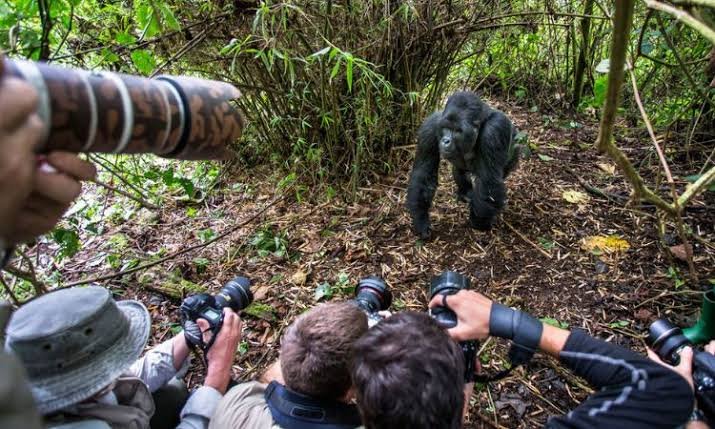
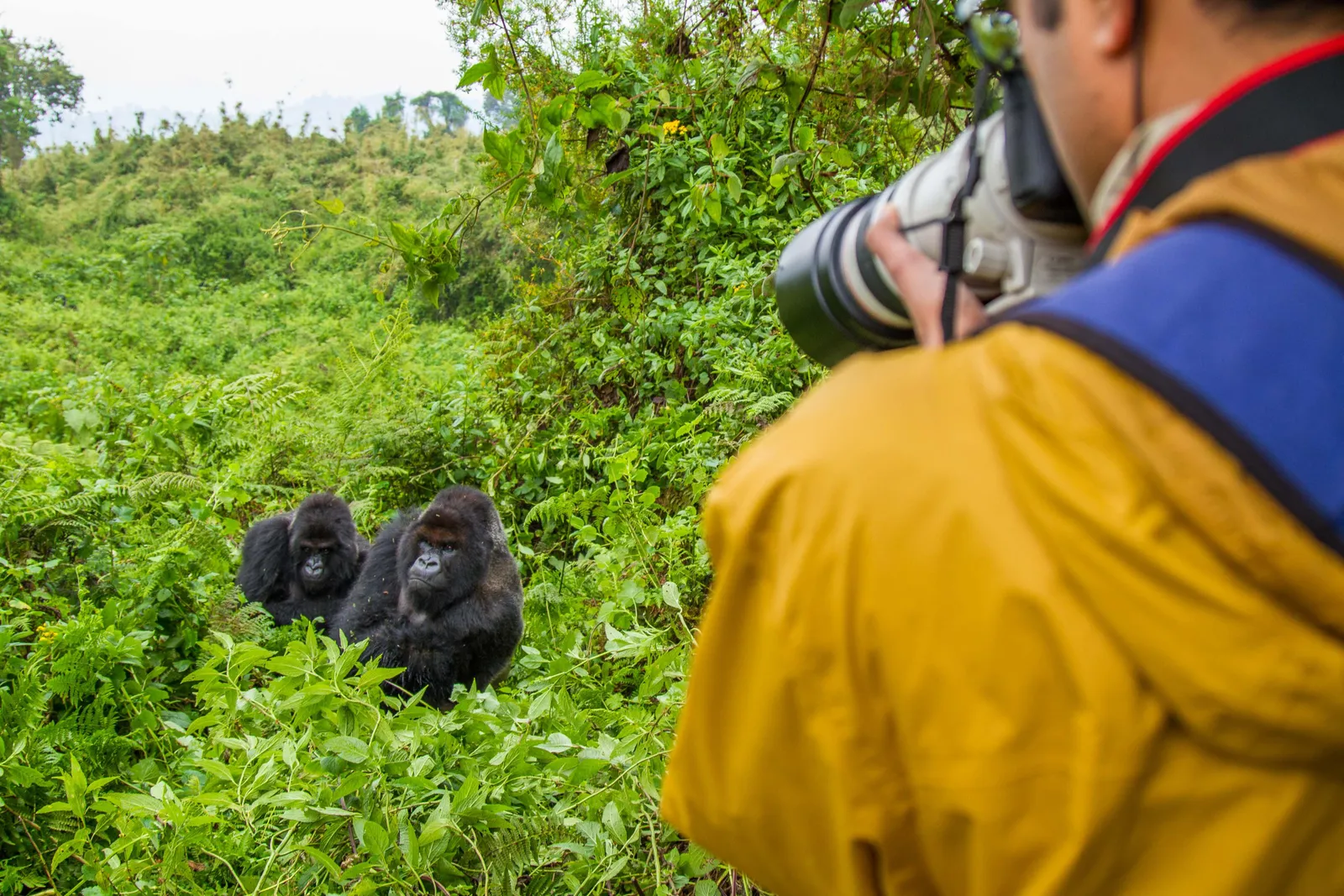
DSLR cameras remain equally capable when used by photographers who understand them. Their optical viewfinders, dependable batteries and extensive lens systems can work extremely well in Volcanoes National Park. The idea that you need to change systems specifically for gorilla trekking is unnecessary. If you already own a DSLR that performs well at ISO 1600–6400 and focuses reliably in lower light, investing in a useful lens or weather protection may improve your results more than replacing the entire camera.
Weather sealing is desirable but should never be treated as permission to expose a camera directly to heavy rain. Even professionally sealed equipment benefits from an additional rain cover. The forest can also be humid, and water may collect on clothing, camera straps and bags during the trek. Whatever camera you choose, the strongest answer to What Camera Equipment Is Best for Rwanda Gorilla Trekking? begins with equipment you understand well, can protect effectively and can carry comfortably.
Why a 70–200mm Lens Is One of the Best Gorilla Trekking Choices
A 70–200mm zoom is perhaps the most versatile lens for Rwanda gorilla photography. At the wider end, it can capture a gorilla surrounded by bamboo, forest and other family members. At 200mm, it provides enough reach for strong head-and-shoulder portraits and behavioural details when the animals remain farther away. The ability to change composition without physically moving is important because photographers must follow ranger instructions and cannot simply step closer to improve framing.
A fast 70–200mm f/2.8 lens has an additional advantage in the forest because the wider aperture admits more light. This helps maintain a useful shutter speed without pushing ISO unnecessarily high. The trade-off is weight. An f/4 version can be significantly easier to carry and may still provide excellent results with a modern camera capable of strong high-ISO performance.
The 70–200mm range also works beautifully for interaction between gorillas. Instead of photographing only individual faces, you can capture mothers carrying infants, young gorillas playing or a silverback positioned among the family. These images often tell a stronger story than extremely tight portraits because they preserve the relationship between the animal and its natural environment.
Is a 100–400mm Lens Better for Gorilla Photography?
A 100–400mm zoom can be an excellent choice for serious photographers who want greater reach without carrying a fixed super-telephoto lens. The longer focal length is particularly useful when a gorilla remains deeper within vegetation or when photographers want detailed images of eyes, hands and facial expressions without moving from the position assigned by the guide.
The disadvantage is that 400mm can sometimes be too tight. Rwanda’s official guideline asks visitors to remain about seven metres from the animals where practical, but gorillas themselves can move around naturally and occasionally come closer. If a gorilla sits relatively near your group, a long lens may leave you unable to fit the complete animal into the frame. This is why photographers using a 100–400mm often benefit from carrying a second body with a wider lens.
A slower maximum aperture can also become challenging under heavy forest canopy. Raising ISO solves much of this problem on modern cameras, but photographers should understand how their own equipment performs before arriving. A 100–400mm is therefore an outstanding option for detail-focused photographers, but it should be selected because it matches your photographic style rather than because longer automatically means better.
Do You Need a 400mm, 500mm or 600mm Prime Lens?
For most travellers, a large 400mm, 500mm or 600mm prime lens is unnecessary for gorilla trekking. These lenses are exceptional for distant wildlife on open plains, especially birds and predators, but they become cumbersome inside mountain forest. The physical challenge of carrying them through vegetation is considerable, and their narrow field of view can be frustrating when a gorilla is relatively close.
Large primes also reduce flexibility. A juvenile may appear several metres away and then disappear behind vegetation while another gorilla sits much closer in a different direction. A zoom lens allows the photographer to respond immediately without changing position. Remember that your movement around the gorilla family is limited by wildlife rules, terrain and ranger instructions rather than by the photograph you want.
If your Rwanda journey also includes Akagera National Park or a specialised Rwanda birding safari, a longer lens may become useful elsewhere. In that case, consider leaving the heaviest lens at the lodge during the gorilla trek and carrying a lighter forest-focused setup.
Should You Carry a Wide-Angle or Standard Zoom?
A second lens around 24–70mm, 24–105mm or a similar range can produce some of the most memorable images of the trip. Gorilla photography is not only about filling the frame with an animal’s face. Wide environmental images showing bamboo, mist, volcanic forest and a gorilla family can communicate what it actually felt like to stand inside Volcanoes National Park.
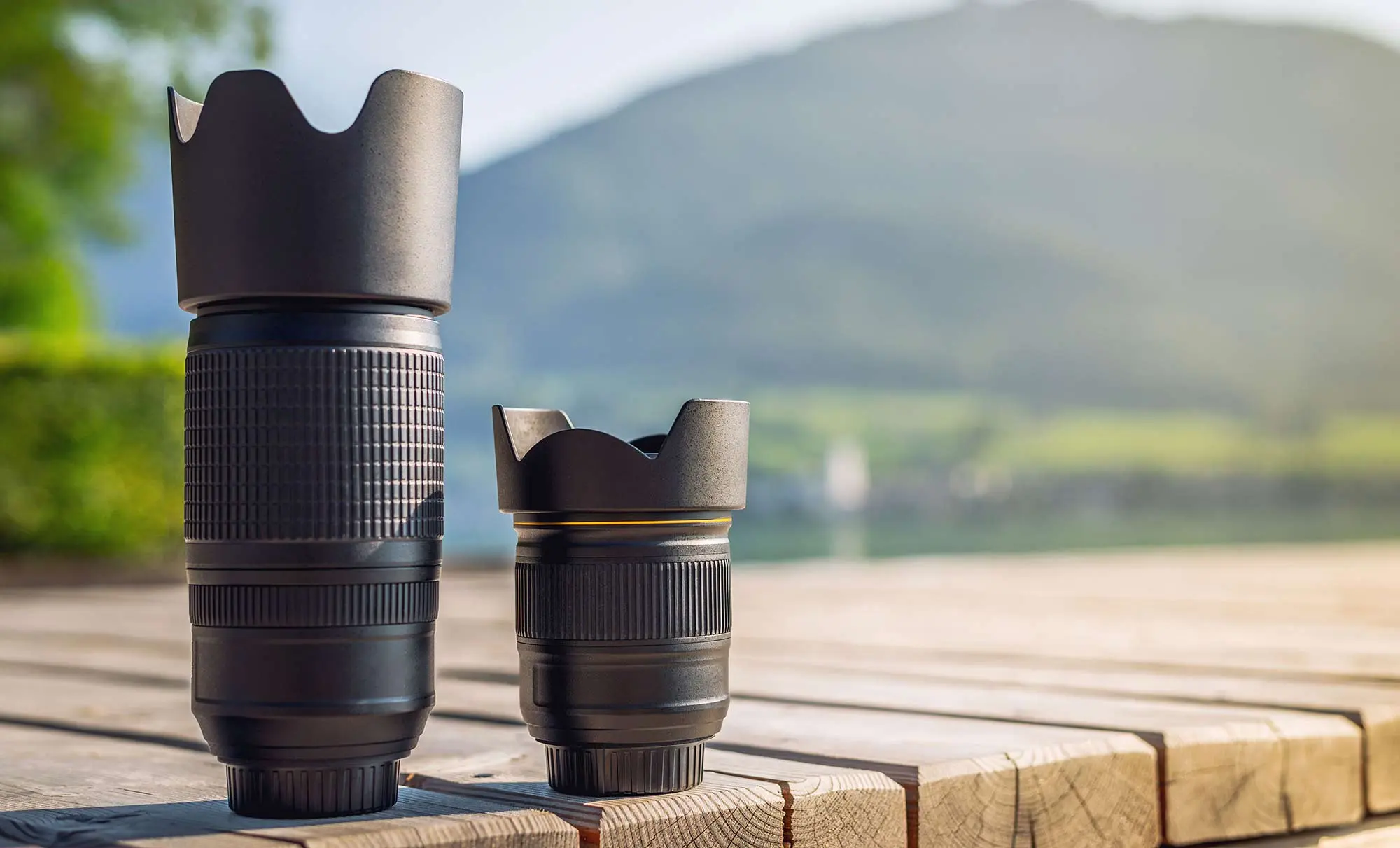
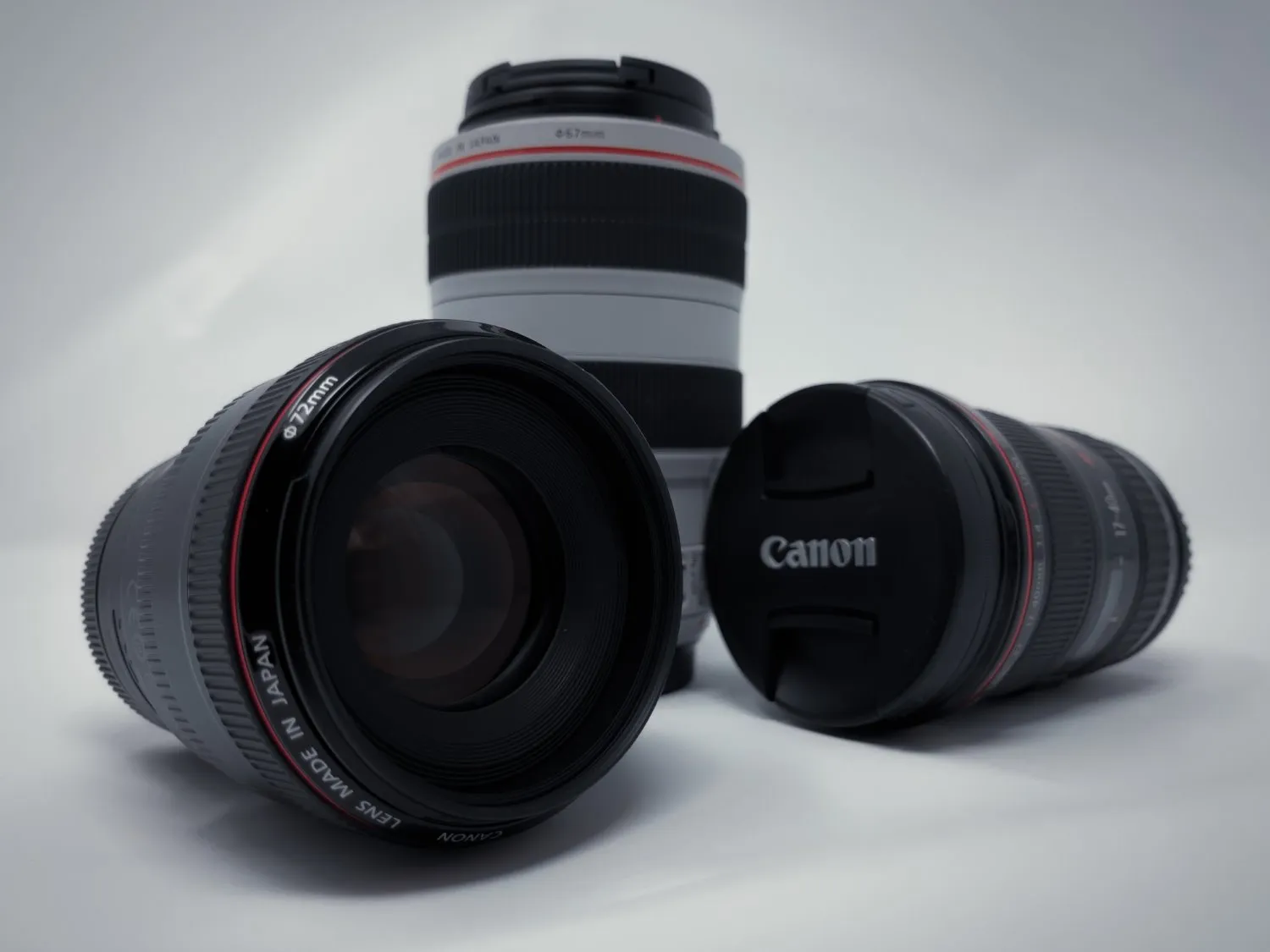
A standard zoom is also useful before and after the trek. The Virunga region provides dramatic landscape photography, lodge views, agricultural hills and volcanic mountains. Visit Rwanda identifies Karisimbi, Bisoke, Sabyinyo, Gahinga and Muhabura among the peaks defining the Volcanoes landscape. A wider lens therefore earns its place across the whole journey rather than only during the one-hour gorilla encounter.
Photographers carrying a single body should avoid changing lenses repeatedly inside wet forest if possible. Choose the lens most likely to match your priorities before approaching the gorillas. Those carrying two bodies can mount a telephoto on one and standard zoom on the other, creating an extremely flexible setup.
One Camera Body or Two for Rwanda Gorilla Trekking?
One camera body is completely sufficient for most travellers. It keeps the equipment lighter, reduces complexity and allows the photographer to concentrate on the encounter. Pairing one reliable body with a 70–200mm or 100–400mm zoom can cover an enormous range of photographic situations.
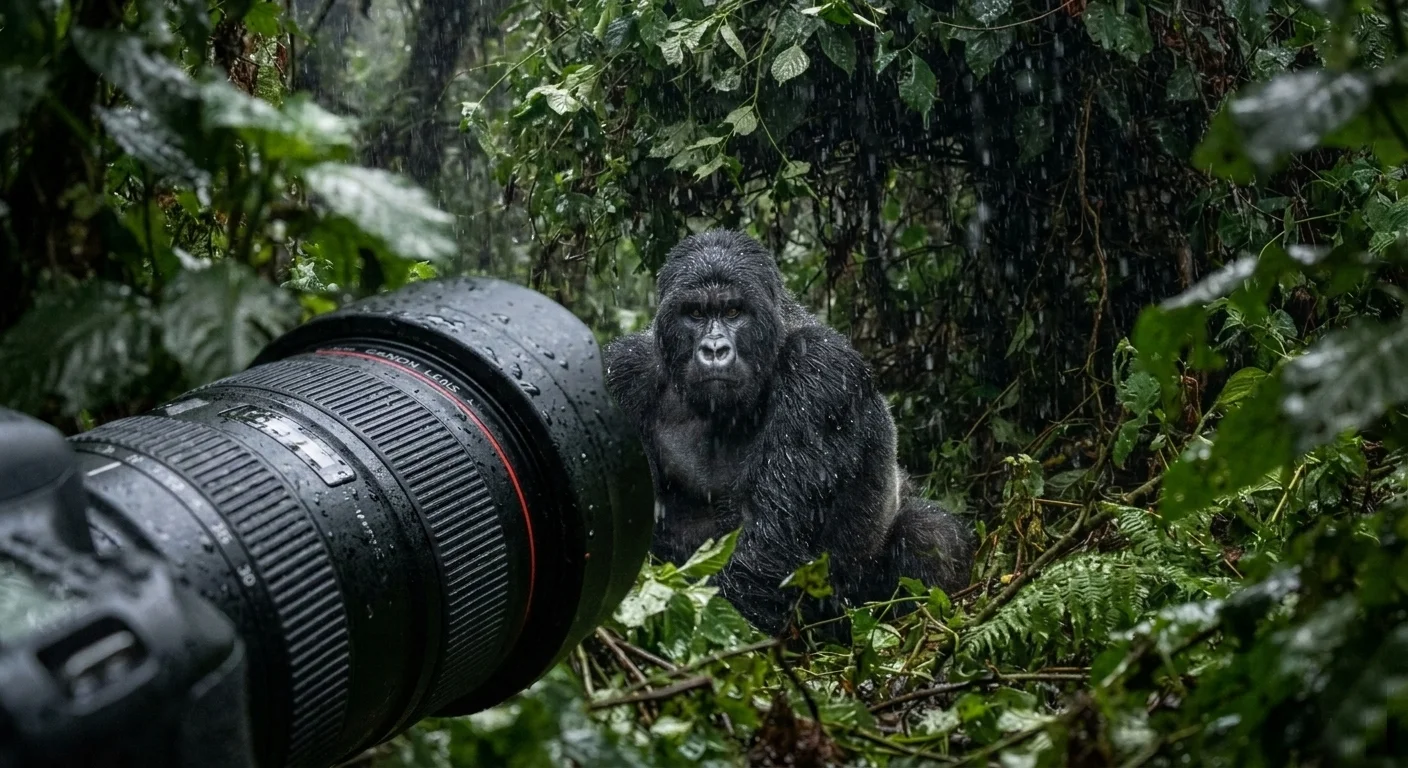
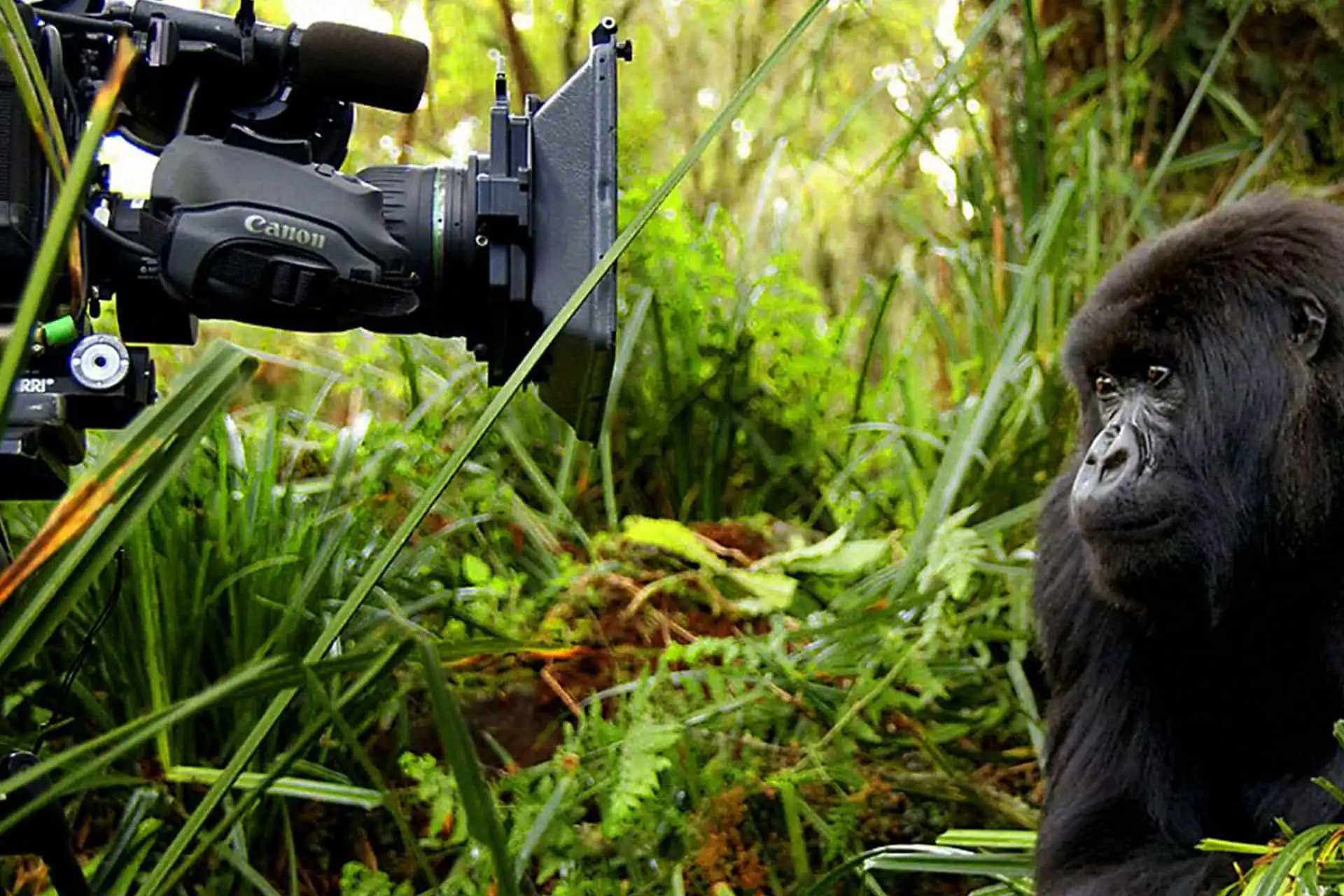
Two bodies become useful for serious photography because they remove the need to change lenses in humid or rainy conditions. One camera can carry a telephoto zoom while the second uses a 24–70mm, 24–105mm or similar standard lens. When a gorilla moves closer, you simply change cameras rather than exposing the sensor while attempting to change lenses quickly.
The penalty is weight. Two cameras, two lenses, batteries and rain protection can make a daypack heavy. Rwanda Development Board confirms that porters can help carry bags for trekkers. Photographers travelling with professional setups should seriously consider using a porter rather than conserving money at the expense of energy needed during the actual encounter.
The Importance of High-ISO Performance
Low light is one of the defining technical challenges of gorilla photography. Even when Rwanda is sunny, thick leaves and bamboo can reduce the amount of light reaching the forest floor. A gorilla may also sit with bright vegetation behind it, forcing the photographer to expose carefully for dark fur without destroying highlights.
Modern cameras produce excellent results at ISO 1600, 3200 and often much higher. Do not become so afraid of noise that you select a shutter speed too slow to freeze movement. A sharp image containing visible grain is usually more successful than a beautifully clean photograph where the gorilla’s face is blurred because it moved during the exposure.
Auto ISO can work extremely well when combined with manual exposure settings. Select the aperture and shutter speed needed for the scene and allow the camera to adjust ISO as forest light changes. Photographing dark gorillas inside vegetation is exactly the kind of situation where understanding exposure before the safari becomes more important than owning another accessory.
Best Shutter Speed, Aperture and Starting Settings
There is no universal exposure setting because gorilla behaviour and forest light change continually. For relatively still adults, a shutter speed around 1/250 second can provide a practical starting point. When juveniles begin running, climbing or playing, 1/500 second, 1/800 second or faster may produce much sharper results.
Apertures around f/2.8 to f/5.6 work well when light is limited and the photographer wants subject separation. However, when several gorillas appear together, stopping down can provide enough depth of field to keep multiple faces sharp. The photographer must balance available light, motion and depth rather than treating one setting as universally correct.
Continuous autofocus and high-speed burst shooting are valuable when behaviour changes quickly, but avoid holding the shutter continuously throughout the encounter. Large bursts create thousands of almost identical photographs that become difficult to edit later. Anticipating behaviour usually produces stronger images than relying completely on frame rate.
Batteries and Memory Cards – Carry More Than You Think You Need
Cold, damp mountain conditions and continuous autofocus can reduce battery performance, while mirrorless cameras may consume power more quickly than expected. Carry at least one fully charged spare battery, preferably more if photography is the primary reason for your safari.
Memory cards should also provide generous capacity. Shooting RAW files and bursts during fast behaviour can consume storage quickly. Rather than depending entirely on one very large memory card, many photographers prefer several high-quality cards so that a single card failure cannot affect the entire trip. Cameras with dual card slots can also be configured for simultaneous backup.
Prepare batteries and cards the evening before the trek. Format cards only after confirming previous photographs have been safely backed up, charge every battery and place spares somewhere accessible. Your one regulated viewing hour should not include searching through a backpack for an empty memory card.
Rain Protection Is Essential Camera Equipment
A simple rain cover is one of the highest-value pieces of equipment you can bring. Visit Rwanda specifically advises trekkers to carry a lightweight waterproof jacket because rain can occur in the mountain environment. If your clothing needs protection, so does your camera.
Commercial camera rain sleeves work well, but even a carefully prepared waterproof cover provides valuable protection when weather changes quickly. Keep the cover somewhere immediately accessible rather than packed beneath lunch, water and clothing. A waterproof camera bag or dry bag liner adds another layer of security during the trekking portion.
Carry several clean microfibre cloths. Mist and light rain may put fine droplets across the lens that are difficult to notice through the viewfinder but become obvious when photographs are reviewed later. Keeping one dry cloth in a waterproof pocket can rescue an entire sequence.
Choosing the Right Camera Bag for Gorilla Trekking
A backpack-style camera bag is generally more practical than a shoulder bag because it distributes weight evenly while keeping both hands available on steep or slippery trails. The bag should fit your essential equipment without encouraging you to carry every lens you own.
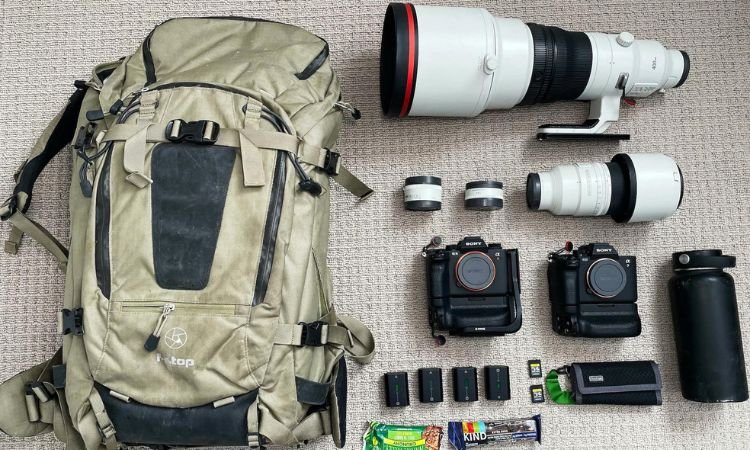
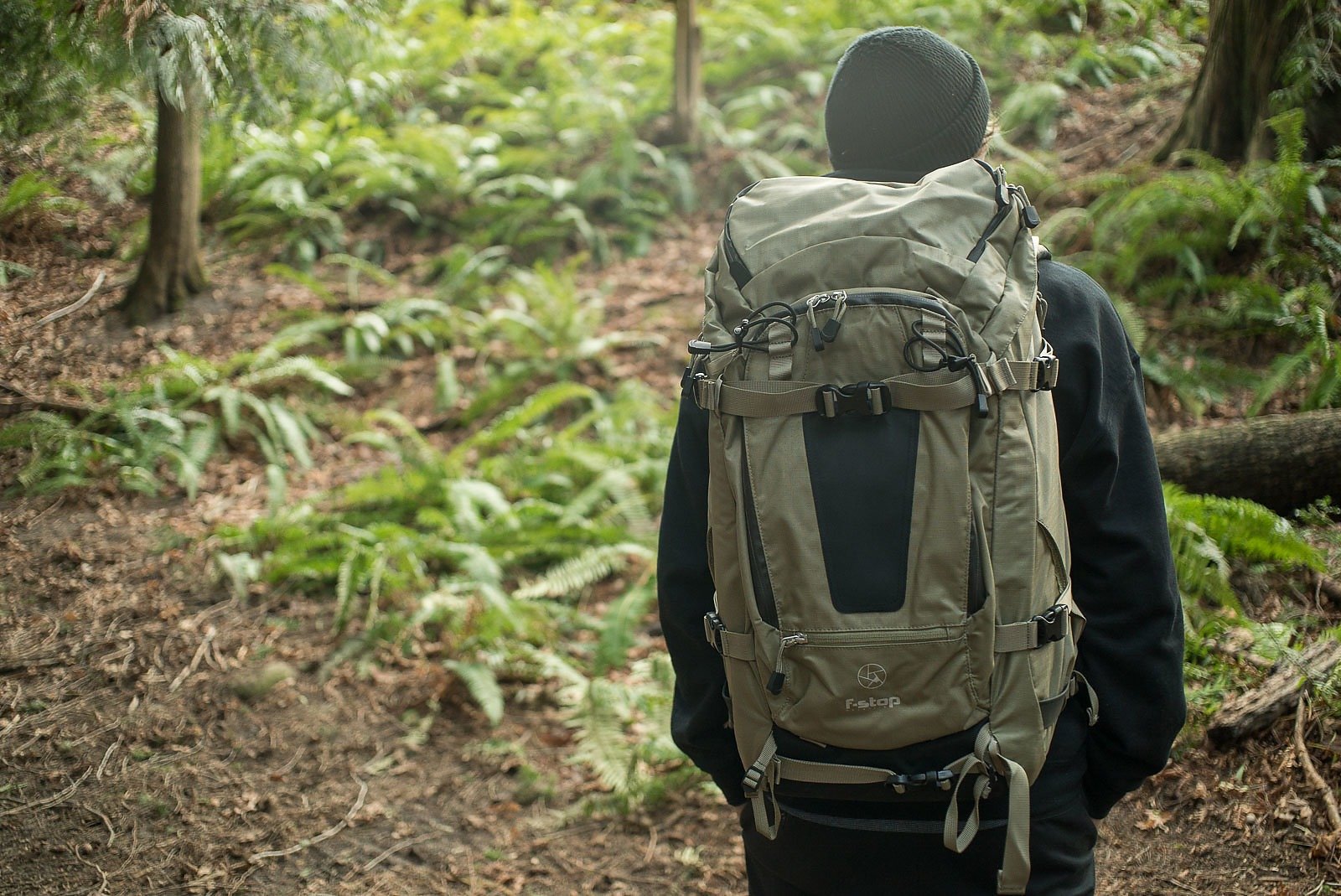
Weather resistance is important, but comfort matters just as much. Padded shoulder straps, a stable waist belt and accessible water storage can make several hours of trekking significantly easier. Avoid oversized expedition bags if you only need one body, two lenses and basic accessories.
A removable insert inside a normal hiking backpack can also work extremely well. This provides room for a rain jacket, water and snacks alongside protected camera equipment. Remember that eating and drinking are prohibited near the gorillas themselves, so supplies remain for the trekking portion rather than the regulated encounter.
Should You Carry a Tripod or Monopod?
A traditional tripod is generally more trouble than it is worth during Rwanda gorilla trekking. Forest terrain can be uneven, space around the viewing group is limited and gorillas can change position before a tripod is properly placed. Setting up large support equipment may also interfere with other visitors.
A monopod is lighter, but many photographers still find it unnecessary because modern image stabilisation and high-ISO cameras allow effective handheld photography. Handholding provides the fastest response when a gorilla moves unexpectedly or an interesting interaction begins in another direction.
If you normally rely heavily on camera support, practise handheld shooting before travelling. Gorilla photography rewards mobility and fast reaction much more than perfectly static composition.
Can You Use Filters During Gorilla Photography?
A clear protective filter is a personal choice, but photographers should understand that additional glass can sometimes reduce image quality or create reflections. The stronger protection comes from a lens hood and careful handling rather than depending entirely on a filter.
Circular polarising filters can be useful for landscapes around Lake Kivu or other parts of Rwanda but are rarely ideal for gorilla photography because they reduce the amount of light reaching the camera. Light is already limited under forest canopy, so losing another stop or two can force unnecessarily high ISO or slower shutter speeds.
Neutral-density filters are similarly unnecessary for most gorilla still photography. Keep accessories focused on what solves real forest problems: rain protection, batteries, storage, cleaning cloths and useful focal lengths.
Can You Photograph Rwanda Gorillas With a Smartphone?
Yes. Rwanda allows photography, and smartphones can create excellent personal images provided flash remains disabled. RDB explicitly permits photography but prohibits flash. For travellers who do not normally use interchangeable-lens cameras, a good smartphone may be far more effective than carrying professional equipment they barely understand.
Phones perform best when the gorillas are reasonably close and natural light is good. Avoid excessive digital zoom because image quality declines rapidly. Instead, photograph slightly wider and crop modestly afterward. Modern portrait and computational modes can help, but be careful that automatic flash remains disabled.
A smartphone is also a useful secondary camera for professional photographers. It can capture short videos or wider forest scenes while the main camera remains configured with a telephoto lens. This provides flexibility without requiring a second full camera system.
Flash Photography Is Prohibited – Check Every Device Before Trekking
No equipment guide would be complete without emphasising this rule. Flash photography is not permitted during Rwanda gorilla trekking. Rwanda Development Board clearly states that photographs may be taken but flash cannot be used.
Disable flash before the trek rather than waiting until you reach the gorillas. Smartphones and compact cameras can automatically trigger flash in low light, and some cameras may return to automatic settings after being switched off. Check everything during the morning briefing.
There is no photographic justification for breaking this rule. Modern cameras and phones offer many ways to compensate for low light without introducing artificial flashes around wildlife. Increase ISO, use a wider aperture and control shutter speed instead.
Why the Recommended Viewing Distance Changes Your Lens Choice
RDB asks trekkers to remain approximately seven metres from the gorillas where possible. This is important when selecting lenses because photographers sometimes assume gorillas will always be far enough away to require extremely long focal lengths.
At seven metres, 200mm can already create very tight portraits depending on sensor size. A 400mm lens may become difficult when photographing an entire silverback. This is why zoom lenses provide such a strong advantage over fixed super-telephotos.
Gorillas may occasionally move closer on their own. Never step toward them simply to improve the photograph. Follow the ranger’s directions, remain calm and allow the animal to determine its path. Your lens should adapt to the encounter, not the other way around.
Should Serious Photographers Book Two Gorilla Treks?
For photographers, one of the most valuable equipment decisions may actually be purchasing a second gorilla permit rather than another lens. Rwanda currently has twelve fully habituated tourism gorilla families, each receiving visitors for a maximum of one hour per day, with eight visitor permits per family. Behaviour, light, vegetation and trekking conditions can vary dramatically between separate encounters.
The first trek teaches you what equipment really works. You may discover that the 70–200mm remained on the camera for almost the entire hour, that a second body was useful or that half the accessories in your bag were unnecessary. A second trek allows you to apply those lessons immediately.
A second trek also provides insurance against photographic unpredictability. One family may spend much of the hour inside thick vegetation, while another encounter could provide beautifully open compositions. Travellers whose primary objective is wildlife photography should seriously consider two trekking days before investing in increasingly expensive equipment.
Photographing Golden Monkeys With the Same Equipment
Your gorilla kit can also work extremely well for golden monkey trekking. Golden monkeys live within the Volcanoes ecosystem and move much faster than gorillas, making autofocus and shutter speed particularly important. Visit Rwanda identifies golden monkeys as another important primate attraction within Volcanoes National Park.
A 70–200mm lens is excellent because the monkeys can move rapidly through relatively close bamboo vegetation. Faster shutter speeds become more important, often requiring higher ISO than you might expect even during daylight.
Photographers can combine both species through a 3-Day Rwanda Gorilla and Golden Monkey Trekking Safari. This adds more photographic variety without requiring a completely different equipment setup.
Building a Complete Rwanda Photography Safari
Once you have decided What Camera Equipment Is Best for Rwanda Gorilla Trekking?, the same equipment can support a much broader photographic journey. After Volcanoes National Park, photographers can continue toward Lake Kivu for landscapes, fishing communities, islands and sunset photography.
The journey can then extend to Akagera National Park, where a longer telephoto lens becomes much more valuable for elephants, giraffes, antelopes, predators and birds. This is one point where bringing a 100–400mm or longer lens for the overall safari may make sense even if it is not your primary gorilla lens.
Primate and bird specialists can continue toward Nyungwe and explore chimpanzee trekking in Rwanda or a dedicated Rwanda birding safari. A carefully planned photography itinerary therefore provides enough variety to justify multiple lenses without forcing the entire collection into your gorilla daypack.
What Camera Equipment Should You Leave at the Lodge?
Leave equipment that does not solve a realistic photographic problem. Large tripods, enormous prime lenses, several overlapping zooms, elaborate lighting systems and excessive accessories increase weight without necessarily improving your photographs.
Do not carry valuable items simply because they fit inside your bag. Every additional kilogram needs to be transported through the forest. Even if you hire a porter, simplifying the equipment means faster access to what actually matters when the gorillas are located.
A strong professional setup might consist of two bodies, a 70–200mm and a 24–70mm or 24–105mm, with a 100–400mm replacing the 70–200mm depending on photographic preference. A lighter enthusiast setup can be one camera and one telephoto zoom. A casual traveller may need nothing more than a high-quality smartphone. Each can produce meaningful images when used well.
The Ideal Gorilla Photography Equipment Checklist
The essential kit is surprisingly simple: a camera you understand, one versatile lens, spare battery power, sufficient memory, rain protection and a comfortable carrying system. Everything else should earn its place by solving a specific problem.
For enthusiasts, add a second battery, multiple memory cards, lens cloths and perhaps a wider lens. Professional photographers may choose two camera bodies and two complementary zooms. Keep a waterproof cover immediately accessible and use a porter when equipment weight begins interfering with the physical experience.
Most importantly, arrive with camera settings already understood. Practise changing shutter speed, ISO, focus mode and exposure compensation without looking through complex menus. The best equipment becomes useless if the photographer needs five minutes to configure it while the gorillas continue moving.
What Camera Equipment Is Best for Rwanda Gorilla Trekking? Final Recommendation
What Camera Equipment Is Best for Rwanda Gorilla Trekking? For most photographers, the strongest combination is one modern mirrorless or DSLR body paired with a 70–200mm or 100–400mm zoom, several batteries, sufficient memory cards, a waterproof camera cover and a comfortable backpack. Serious photographers can add a second body with a wider 24–70mm or 24–105mm lens, while casual travellers can achieve excellent personal photographs using a modern smartphone with flash permanently disabled.
The best kit remains light enough to carry comfortably and flexible enough to adapt when the gorillas move. Rwanda’s trekking environment rewards photographers who react quickly rather than those carrying the greatest number of lenses. Photography is officially permitted, flash is prohibited, viewing time is limited to one hour and porters are available to help with equipment.
Your camera should ultimately support the experience rather than dominate it. Take portraits, photograph behaviour, capture the gorillas within their forest habitat—and occasionally lower the camera completely. Standing quietly inside the Virunga forest while a mountain gorilla family continues its daily life remains more extraordinary than any technical specification on a camera body.
Frequently Asked Questions About What Camera Equipment Is Best for Rwanda Gorilla Trekking?
1. What Camera Equipment Is Best for Rwanda Gorilla Trekking?
What Camera Equipment Is Best for Rwanda Gorilla Trekking? For most travellers, a mirrorless or DSLR camera paired with a versatile 70–200mm or 100–400mm zoom lens is an excellent choice. The camera should perform well in low light because gorillas are often encountered beneath dense forest vegetation.
You should also carry spare batteries, memory cards, a waterproof camera cover, lens cloths and a comfortable camera backpack. A modern smartphone can also work well for travellers who mainly want personal memories rather than professional wildlife photographs.
2. What Camera Equipment Is Best for Rwanda Gorilla Trekking for Beginners?
If you are a beginner asking What Camera Equipment Is Best for Rwanda Gorilla Trekking?, keep the setup simple. One camera body with a versatile zoom lens is usually better than carrying several lenses that you are not comfortable using.
A 70–200mm zoom is particularly useful because it allows you to photograph both wider forest scenes and close gorilla portraits without changing lenses repeatedly. The most important factor is knowing how to operate your camera quickly when the gorillas appear.
3. What Camera Equipment Is Best for Rwanda Gorilla Trekking for Professional Photographers?
For professional photographers wondering What Camera Equipment Is Best for Rwanda Gorilla Trekking?, two camera bodies can provide the most flexibility. One can carry a 70–200mm or 100–400mm lens, while the second can use a 24–70mm or 24–105mm lens for wider environmental photographs.
This setup reduces the need to change lenses in humid or rainy forest conditions. However, professional equipment can become heavy during a long trek, so hiring a porter is strongly recommended when carrying several camera bodies and lenses.
4. What Camera Equipment Is Best for Rwanda Gorilla Trekking in Low Light?
When considering What Camera Equipment Is Best for Rwanda Gorilla Trekking? in low-light forest conditions, choose a camera with strong high-ISO performance and a lens with a relatively wide maximum aperture.
A 70–200mm f/2.8 lens can be particularly useful because it allows more light to reach the sensor. Modern cameras can also produce strong results at ISO 1600, 3200 or higher, making it easier to maintain shutter speeds that prevent motion blur.
5. What Camera Equipment Is Best for Rwanda Gorilla Trekking in Rainy Weather?
If you are asking What Camera Equipment Is Best for Rwanda Gorilla Trekking? during wet conditions, rain protection becomes essential. Use a weather-resistant camera body where possible, but also carry a dedicated camera rain sleeve or waterproof cover.
A waterproof camera backpack, dry lens cloths and spare batteries stored in sealed compartments are also useful. Rain and mist are common in the mountain forests around Volcanoes National Park, so protecting equipment should be part of your preparation.
6. What Camera Equipment Is Best for Rwanda Gorilla Trekking: 70–200mm or 100–400mm?
Travellers comparing lenses often ask What Camera Equipment Is Best for Rwanda Gorilla Trekking? A 70–200mm lens provides excellent flexibility for environmental photographs, full-body compositions and portraits, while a 100–400mm lens provides greater reach for detailed facial images.
For most photographers, the 70–200mm range is easier to use when gorillas are relatively close. The 100–400mm becomes particularly useful when subjects remain farther inside the vegetation.
7. What Camera Equipment Is Best for Rwanda Gorilla Trekking With One Camera Body?
If you want to travel light and are wondering What Camera Equipment Is Best for Rwanda Gorilla Trekking?, one camera body and one versatile zoom lens can be completely sufficient.
A 70–200mm or 100–400mm zoom allows you to adjust composition quickly without repeatedly changing lenses. Carrying less equipment also makes the trek more comfortable, especially when the route becomes steep or muddy.
8. What Camera Equipment Is Best for Rwanda Gorilla Trekking With a Smartphone?
Travellers who prefer smartphones sometimes ask What Camera Equipment Is Best for Rwanda Gorilla Trekking? without wanting to carry a traditional camera. A recent smartphone with a strong camera system can produce very good personal photographs, particularly when the gorillas are relatively close.
Avoid excessive digital zoom and make sure the flash remains switched off. You can learn more about responsible photography through our guide to gorilla trekking in Rwanda.
9. What Camera Equipment Is Best for Rwanda Gorilla Trekking if I Want Video?
When deciding What Camera Equipment Is Best for Rwanda Gorilla Trekking? for both photography and video, choose a camera with reliable autofocus, good image stabilisation and strong low-light performance.
A mirrorless camera with a versatile zoom can handle both formats efficiently. Smartphones are also useful for short video clips while your main camera remains configured for still photography.
10. What Camera Equipment Is Best for Rwanda Gorilla Trekking if I Am Carrying Two Cameras?
For photographers carrying two bodies and asking What Camera Equipment Is Best for Rwanda Gorilla Trekking?, a strong combination is a 70–200mm or 100–400mm lens on the first camera and a 24–70mm or 24–105mm lens on the second.
The telephoto camera handles portraits and behavioural details, while the wider camera captures gorillas within the forest environment. This setup is especially useful because it avoids changing lenses during the one-hour gorilla encounter.
11. What Camera Equipment Is Best for Rwanda Gorilla Trekking if I Want Close-Up Portraits?
If close-up portraits are your main objective, What Camera Equipment Is Best for Rwanda Gorilla Trekking? A 100–400mm zoom is particularly useful because it provides additional reach for facial expressions, hands and detailed behavioural images.
However, avoid choosing equipment that encourages you to move closer to the animals. Always follow ranger instructions and allow your lens to create the composition rather than trying to physically reduce the viewing distance.
12. What Camera Equipment Is Best for Rwanda Gorilla Trekking if I Want Wider Forest Photos?
For environmental photography, What Camera Equipment Is Best for Rwanda Gorilla Trekking? A wider lens such as a 24–70mm or 24–105mm can be extremely valuable.
This type of lens allows you to photograph mountain gorillas together with bamboo, vegetation and the surrounding forest. Wider compositions often communicate the atmosphere of the experience better than extremely tight portraits.
13. What Camera Equipment Is Best for Rwanda Gorilla Trekking Without Carrying Heavy Gear?
For travellers who prioritise a lightweight setup, What Camera Equipment Is Best for Rwanda Gorilla Trekking? One compact mirrorless body with a lightweight telephoto zoom is usually ideal.
You do not need large professional lenses to return home with excellent photographs. Reducing equipment weight makes the trekking experience more comfortable and allows you to concentrate on the gorillas rather than managing a heavy camera bag.
14. What Camera Equipment Is Best for Rwanda Gorilla Trekking if I Also Visit Akagera?
If your safari combines gorillas with Akagera National Park, the answer to What Camera Equipment Is Best for Rwanda Gorilla Trekking? may include a longer wildlife lens.
A 100–400mm lens works well for both gorillas and Akagera wildlife, while photographers focusing heavily on birds or distant animals may carry an even longer lens for the savannah section and leave it at the lodge during the gorilla trek when appropriate.
15. What Camera Equipment Is Best for Rwanda Gorilla Trekking if I Also Photograph Golden Monkeys?
If your itinerary includes golden monkey trekking, What Camera Equipment Is Best for Rwanda Gorilla Trekking? A 70–200mm lens remains one of the strongest choices because it also works extremely well for fast-moving golden monkeys.
Golden monkeys move more quickly than gorillas, so strong autofocus and faster shutter speeds become particularly important. The same camera setup can therefore serve both primate experiences.
16. What Camera Equipment Is Best for Rwanda Gorilla Trekking if I Want to Book Two Treks?
For photographers planning two trekking days, What Camera Equipment Is Best for Rwanda Gorilla Trekking? remains a familiar camera system rather than an unnecessarily complicated one.
The first trek gives you an opportunity to understand which lens and settings work best. On the second trek, you can simplify your setup and concentrate more on behaviour, composition and changing light.
17. What Camera Equipment Is Best for Rwanda Gorilla Trekking if I Hire a Porter?
If you are carrying professional equipment and asking What Camera Equipment Is Best for Rwanda Gorilla Trekking?, hiring a porter makes it easier to bring a slightly larger setup.
A porter can help carry your camera backpack, water and rain gear during the trekking portion. You can then take the camera bodies and lenses you need once the group approaches the gorillas.
18. What Camera Equipment Is Best for Rwanda Gorilla Trekking Without Flash?
Since flash photography is not allowed, What Camera Equipment Is Best for Rwanda Gorilla Trekking? Choose equipment that performs well using natural light.
A fast lens, strong high-ISO performance and good image stabilisation are particularly useful. Photographers should disable automatic flash settings before entering the forest.
19. What Camera Equipment Is Best for Rwanda Gorilla Trekking and a Full Rwanda Photography Safari?
If you are planning a complete photography safari, What Camera Equipment Is Best for Rwanda Gorilla Trekking? A flexible system with a standard zoom and telephoto zoom can cover most Rwanda experiences.
The same kit can be used for gorillas, Lake Kivu, golden monkeys and landscapes, while a longer telephoto becomes useful for wildlife and birds in Akagera and Nyungwe.
20. How Can I Book a Safari After Learning What Camera Equipment Is Best for Rwanda Gorilla Trekking?
Once you understand What Camera Equipment Is Best for Rwanda Gorilla Trekking?, Visit Rwanda Safaris can help build the journey around your photography priorities.
Your itinerary can include one or two gorilla trekking days, Volcanoes National Park, golden monkeys, Lake Kivu, Akagera National Park and chimpanzee trekking. You can begin planning through the safari booking page.
Book Your Rwanda Gorilla Photography Safari
If you are researching What Camera Equipment Is Best for Rwanda Gorilla Trekking? because photography is central to your journey, Visit Rwanda Safaris can plan the safari around your photographic priorities. Your itinerary can include one or two gorilla trekking experiences in Rwanda, carefully selected accommodation near Volcanoes National Park and private transportation with enough room for camera equipment.
A longer photography safari can include golden monkey trekking, the Dian Fossey hiking experience, the volcanic landscapes around northern Rwanda and relaxation beside Lake Kivu. Travellers wanting traditional wildlife photography can continue to Akagera National Park, while primate and bird photographers can extend toward Nyungwe for chimpanzee trekking and specialised forest photography.
The strongest photography safari is not necessarily the journey carrying the greatest amount of equipment. It is the one that gives you enough time in the right places to observe behaviour, understand the light and wait for meaningful moments. When you are ready, begin through the safari booking page and share your dates, number of travellers, preferred accommodation and whether photography is casual, enthusiast or professional. Visit Rwanda Safaris can then design a Rwanda journey that gives both you and your camera the best opportunity to capture mountain gorillas responsibly in one of Africa’s most extraordinary forest environments.