
Unforgettable Guide: What Are the Best Scenic Drives in Rwanda?
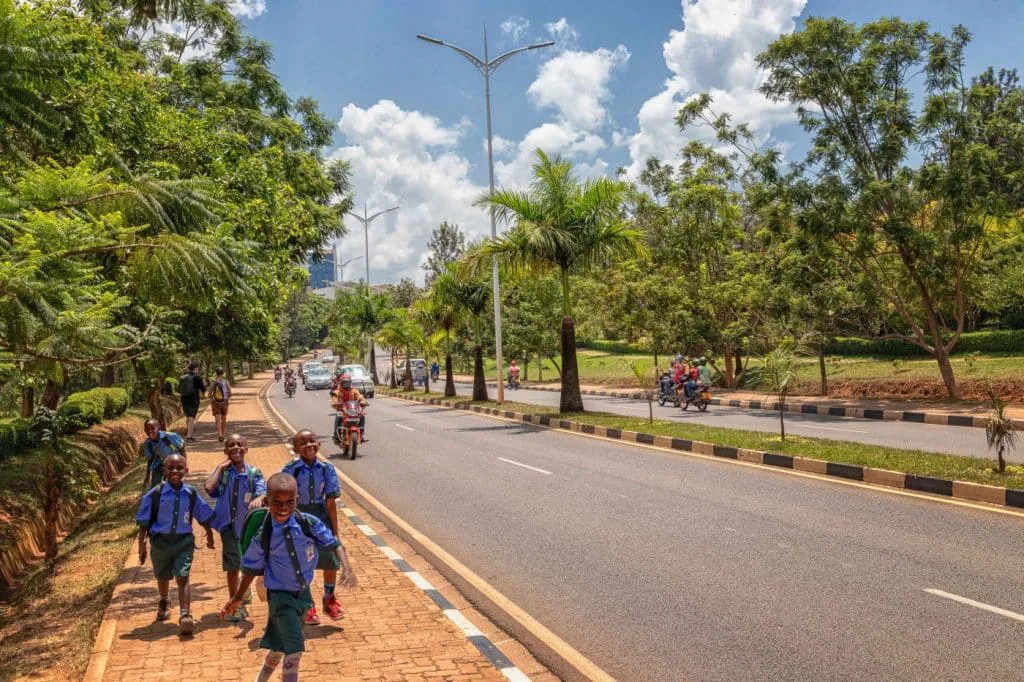
What Are the Best Scenic Drives in Rwanda? Rwanda offers some of East Africa’s most rewarding road journeys, where the drive between major attractions often becomes an important part of the safari itself. Among the most memorable routes are Kigali to Musanze beneath the Virunga Mountains, Volcanoes National Park to Lake Kivu, the Kivu Belt through Rwanda’s western highlands, Kigali to Akagera National Park, the tea-covered roads surrounding Nyungwe Forest, the Twin Lakes circuit around Burera and Ruhondo, and the southern journey through Nyanza and Huye toward Nyungwe. These routes reveal why Rwanda is called the Land of a Thousand Hills: roads constantly climb ridges, descend through valleys and reveal changing combinations of farmland, forest, lakes and distant mountains.
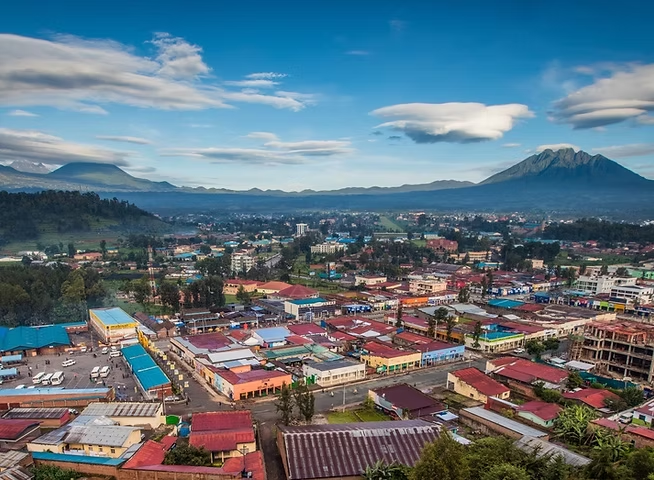
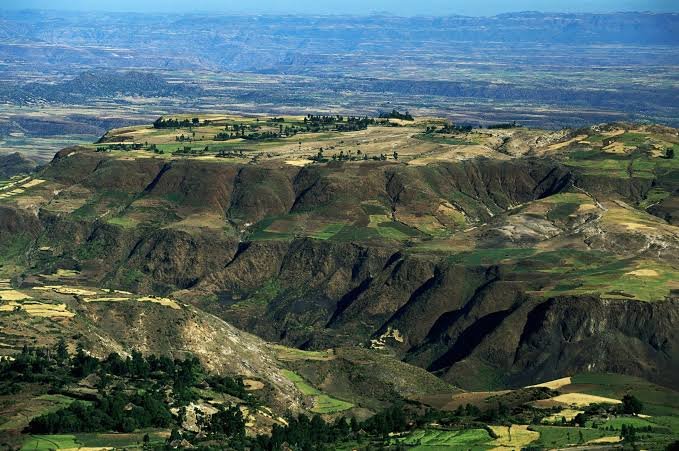
A scenic drive in Rwanda is also much more than looking through a vehicle window. Travellers can stop at viewpoints, tea plantations, lakes, cultural sites and small towns while moving between the country’s major safari destinations. A private road safari can connect Akagera National Park with Volcanoes National Park, Lake Kivu and Nyungwe Forest National Park without turning every transfer into an airport experience. Visit Rwanda itself highlights how Rwanda’s relatively compact size allows travellers to experience dramatically different wildlife and landscapes within a short journey.
The best scenic drives are therefore not always the fastest roads between two hotels. Photographers may prefer a route that allows time for mountain views, while couples may want a relaxed stop beside Lake Kivu and wildlife travellers may choose a drive that leads naturally into gorilla trekking or Akagera game viewing. What Are the Best Scenic Drives in Rwanda? becomes especially useful when the road journey is designed as part of the holiday rather than regarded as empty time between attractions. With the right routing, some of Rwanda’s most memorable scenery appears before you have even reached the national park.
Kigali to Musanze and Volcanoes National Park – The Classic Road Into the Virunga Highlands
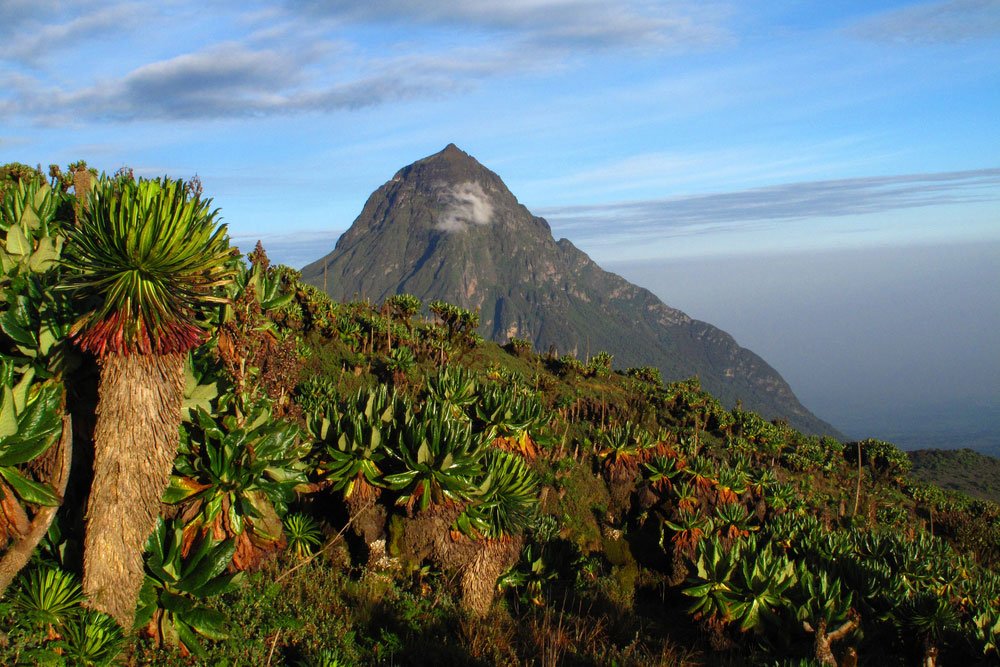
The road from Kigali toward Musanze is one of the most important scenic drives for travellers beginning a Rwanda gorilla trekking safari. Leaving the capital, the urban hills gradually give way to cultivated countryside where small farms occupy slopes and valleys. As the journey continues north, the terrain becomes increasingly dramatic until the Virunga volcanoes begin appearing in the distance. On clear days, their massive silhouettes transform the final portion of the drive and create a powerful introduction to Rwanda’s mountain-gorilla region.
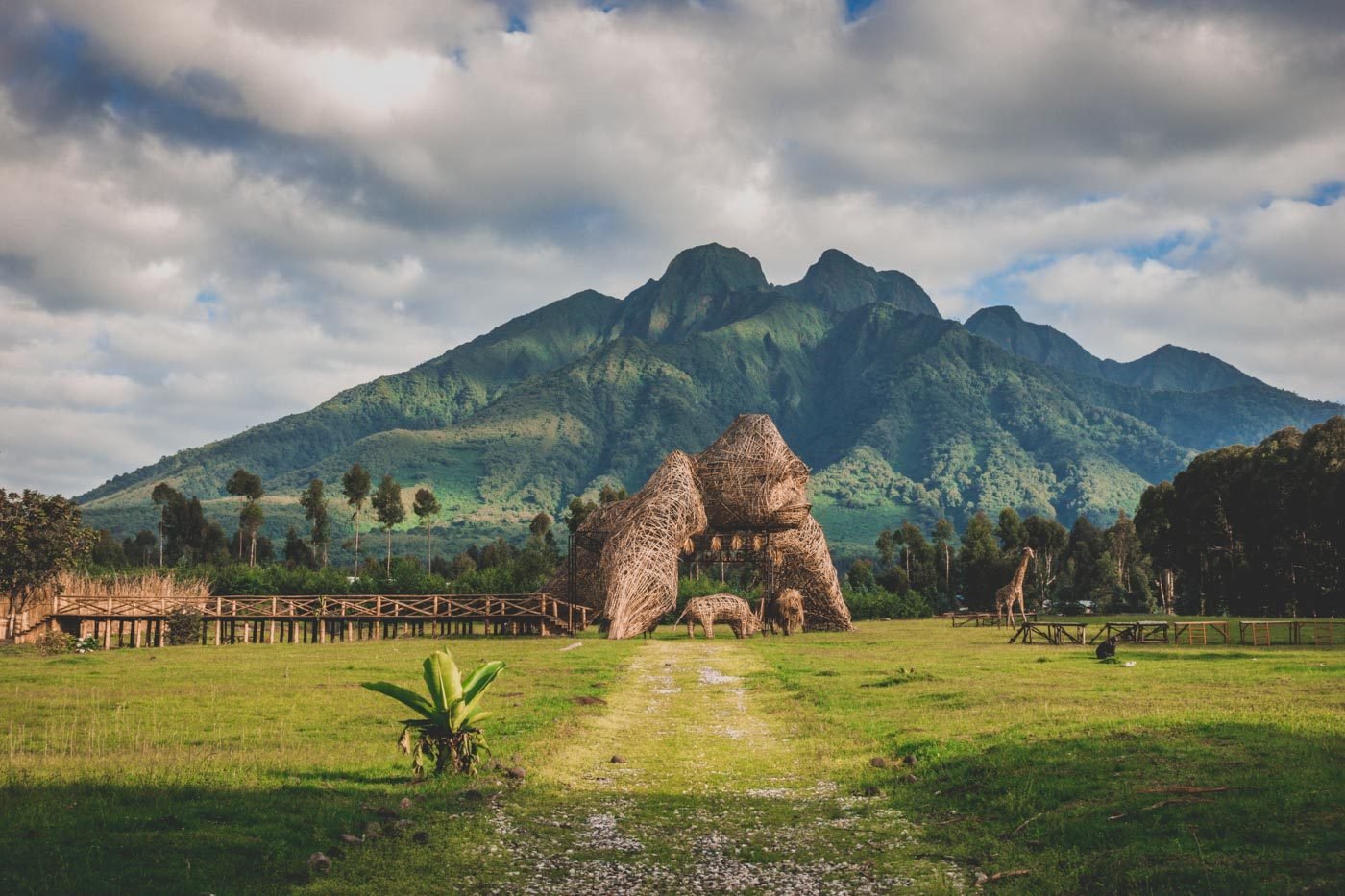
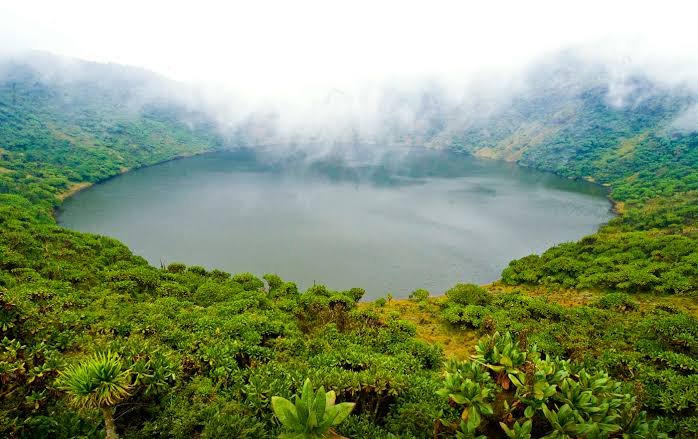
Musanze itself sits at approximately 1,850 metres above sea level at the foothills of the Virunga Massif and acts as the main urban base for the Volcanoes region. Visit Rwanda notes that Kinigi, the principal gorilla-tracking headquarters, lies only 13 kilometres from Musanze and that the wider area provides access to caves, cycling, Buhanga Eco-Park and the lesser-known lakes of Burera and Ruhondo. This makes the drive useful not only as the transfer for gorilla trekking in Volcanoes National Park but also as the beginning of a wider northern Rwanda road adventure.
Travellers should allow the scenery to become part of the experience rather than aiming only to arrive as quickly as possible. Depending on traffic, weather and planned stops, a private driver-guide can pause where it is safe to appreciate agricultural landscapes or mountain views. Once in the region, couples can stay at a scenic lodge, photographers can wait for clear Virunga views and active travellers can add golden monkey trekking, a Dian Fossey hike or Mount Bisoke hiking. The road therefore becomes the opening chapter of several days spent beneath Rwanda’s most famous mountains.
Volcanoes National Park to Lake Kivu – Mountains Giving Way to Water
The drive from the Volcanoes region toward Lake Kivu is one of the most satisfying transitions in Rwanda because the landscape changes from high volcanic country to enormous expanses of water within a relatively short section of the journey. Travellers leave Musanze or the lodges surrounding Kinigi with volcanoes still visible behind them and descend through cultivated hills toward Rubavu on the northern shore of Lake Kivu. Visit Rwanda describes Rubavu as around an hour from Volcanoes National Park, making it an especially natural extension after a gorilla trek.
The arrival at Lake Kivu can be particularly impressive because the landscape suddenly feels more open. Rwanda’s largest lake covers roughly 2,700 square kilometres and is surrounded by mountainous terrain, islands and deeply indented shorelines. Rubavu’s waterfront provides an easy place to stop after several days in the forest, while travellers continuing farther south can use the lake as the beginning of a longer western Rwanda road journey. This route is particularly attractive for honeymooners and couples because it naturally shifts the holiday from physically active trekking toward a slower lakeside atmosphere.
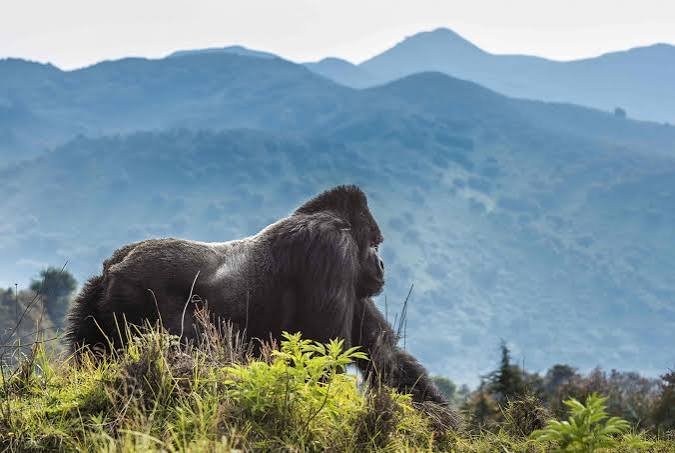
Combining this drive with a Lake Kivu adventure can transform a simple transfer into a two- or three-night experience. Travellers can enjoy boating, kayaking, waterside photography or relaxed evenings before continuing to the next destination. Those arriving after Rwanda gorilla trekking often find the contrast particularly rewarding: one morning may begin inside misty bamboo forest with mountain gorillas, while the following evening ends beside an enormous lake framed by green hills.
The Kivu Belt – One of Rwanda’s Most Spectacular Western Scenic Routes
The western landscapes beside Lake Kivu provide some of Rwanda’s strongest road-trip scenery. Roads move through steep hills above the shoreline, occasionally revealing islands, coves and broad stretches of water between cultivated slopes. The wider Kivu corridor overlaps with the famous Congo Nile Trail, which runs for approximately 227 kilometres parallel to much of Lake Kivu’s eastern shoreline. Visit Rwanda describes the trail as passing through mountains and hills beside the lake, with eucalyptus trees, terraced banana slopes and extensive lake views.
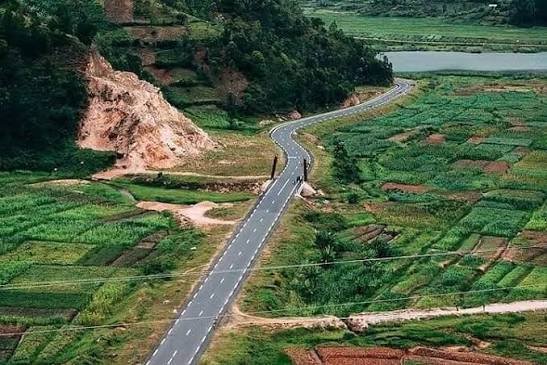
Karongi is one of the most attractive places to break the journey. Located roughly halfway along Rwanda’s side of Lake Kivu, it sits amid hills covered with pine and eucalyptus overlooking the water. The area is quieter than the better-known northern resort town of Rubavu and can be especially rewarding for photographers or travellers who want to stay somewhere between the major safari hubs. Sections of the wider Kivu Belt also reveal coffee areas, fishing communities and terraced agriculture, giving the road a strong sense of everyday Rwanda rather than functioning merely as a route between tourist attractions.
Current travel guidance must be considered when planning western Rwanda drives. As of 24 September 2026, the U.S. State Department advises against travel within 10 kilometres of Rwanda’s border with the Democratic Republic of Congo, while the UK FCDO currently advises against all but essential travel to specified parts of Rusizi District within 10 kilometres of the DRC frontier. These advisories do not describe every western tourism location in the same way, but they mean a scenic road itinerary should be checked against the traveller’s own government guidance and insurance conditions before departure. A professional operator can select appropriate routing rather than simply following an old road-trip itinerary.
The Nyungwe Tea-Country Drive – Rwanda at Its Greenest
The roads around Nyungwe Forest National Park provide an entirely different scenic experience. Here the landscape is dominated by mountain rainforest and expansive tea plantations laid across steep green hills. Gisakura and Gisovu are among Rwanda’s most important tea-growing areas, and Visit Rwanda describes Gisakura as one of the country’s most beautiful tea estates, while Gisovu’s fields sit directly against the edge of Nyungwe’s ancient forest.
Driving through this landscape can be especially atmospheric in early morning or after rainfall. Mist collects along forest ridges, narrow roads disappear between bright tea fields and the dark natural canopy forms a dramatic backdrop. The geometry of the plantations is visually very different from the irregular rainforest, making the drive particularly rewarding for landscape photographers. Tea workers, winding paths and distant hills give depth to the scenery even before travellers reach one of Nyungwe’s official park activities.
This route pairs naturally with chimpanzee trekking in Rwanda, birding or a longer stay around Nyungwe. Rather than arriving only for the early chimpanzee activity and immediately leaving, travellers can spend time exploring tea country, photographing the forest edge and visiting an estate when appropriately arranged through a tour operator. Those interested in birds can also add Rwanda birding safaris, turning the drive into part of a deeper southwestern Rwanda experience.
The Twin Lakes Drive – Burera and Ruhondo Beneath the Volcanoes
The circuit around the Twin Lakes of Burera and Ruhondo is one of the best shorter scenic drives for travellers already staying near Volcanoes National Park. Visit Rwanda identifies these as among the lesser-known lake excursions from Musanze, while its hiking guidance notes that viewpoints over the lakes can be reached by vehicle. The combination of water, terraced hills and the nearby Virunga volcanoes creates one of northern Rwanda’s finest panoramic landscapes.
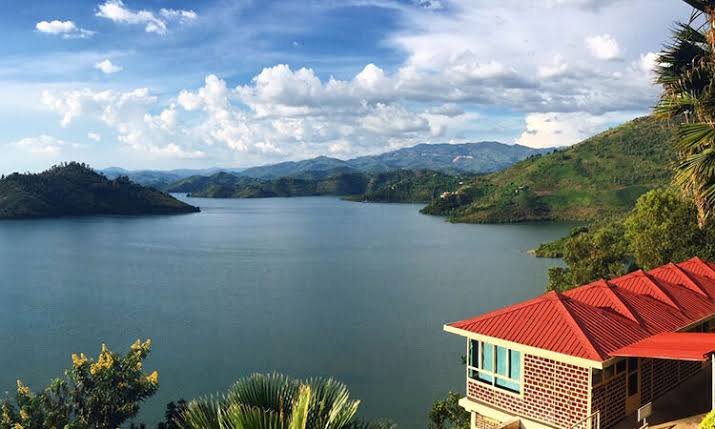
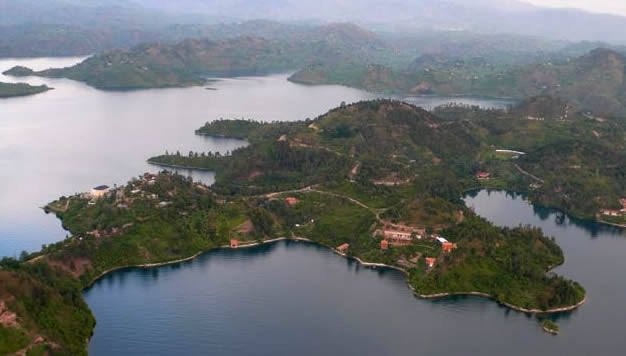
This route works particularly well on the day before or after gorilla trekking in Rwanda. After several hours walking through dense vegetation, a relaxed drive toward the lakes allows travellers to continue experiencing the northern landscape without undertaking another demanding hike. Boat excursions can also be arranged, providing views from water level and creating a natural contrast with the road journey.
Photographers should ideally visit during clearer morning conditions when volcano views can be particularly impressive, although mist can create an equally atmospheric scene. Couples may prefer to combine the drive with lunch or a quieter afternoon, while families can use it as a scenic activity that does not require every member to participate in primate trekking. The Twin Lakes are also featured in official Rwanda cultural itineraries as a place for boating, community visits and panoramic photography.
Kigali to Akagera National Park – From Urban Hills to Open Savannah
The road east from Kigali to Akagera National Park provides another important contrast. The journey leaves Rwanda’s hilly capital and gradually moves toward warmer, lower country dominated by agricultural landscapes before entering the savannah ecosystem of Akagera. Visit Rwanda’s official safari itinerary notes that much of the journey uses good-quality tarmac roads before the final approach to the national park.
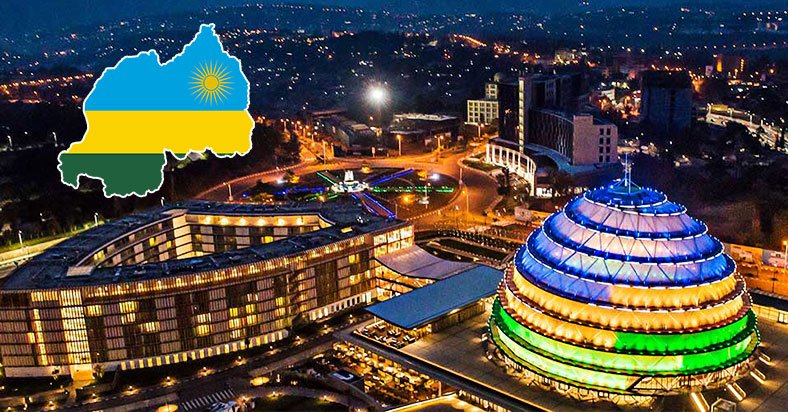
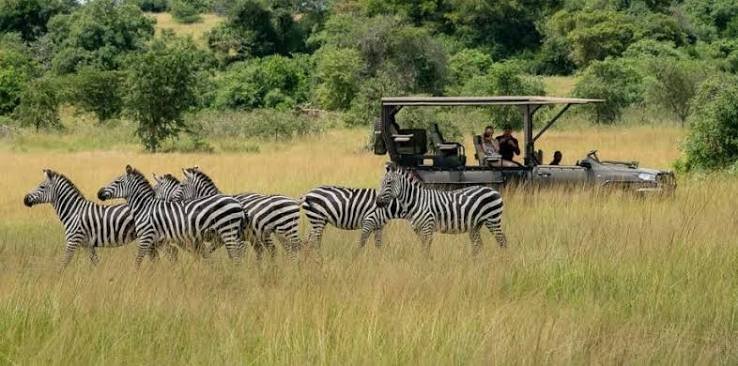
What makes this drive attractive is not necessarily a single spectacular viewpoint but the gradual visual transition. Rwanda’s densely settled central hills begin to open, roadside landscapes change and the sense of space increases as travellers approach the eastern plains. For visitors arriving specifically for a Big Five safari, this progression builds anticipation before the first official game drive. Once inside Akagera, the road itself becomes a wildlife experience as savannah, woodland, wetlands and grassy highlands replace ordinary public-road scenery.
A private guide can make the journey more interesting by explaining the changing landscapes rather than treating it solely as a transfer. Once inside the park, photographers and wildlife enthusiasts can continue with game drives, boat experiences and longer exploration of the park’s varied habitats. Visit Rwanda describes Akagera as containing some of East Africa’s most scenic savannah, including open plains, woodland, lakes, swamps and low mountains. This makes the Kigali–Akagera route one of the best scenic drives for travellers who want the road to end in classic African wildlife.
The Akagera North–South Safari Drive – Rwanda’s Best Wildlife Road Journey
Some of Rwanda’s finest driving takes place after entering the national park rather than on public highways. A full north–south game drive through Akagera can reveal broad savannah, acacia woodland, wetland systems, lakes and distant ridges within the same day. Wildlife may appear anywhere along the route, turning the road itself into a continuously changing safari rather than a transfer.
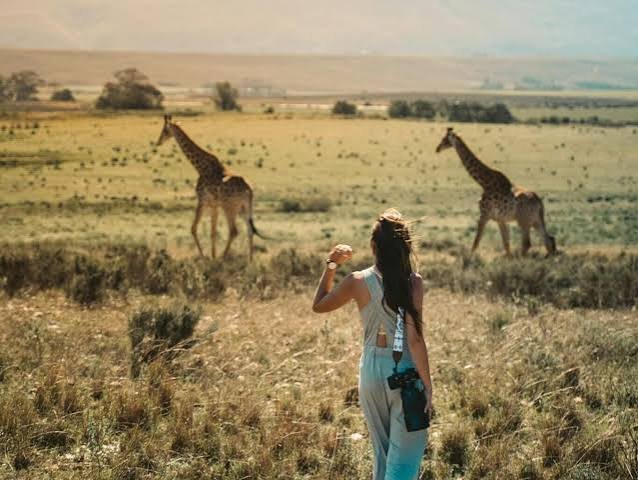
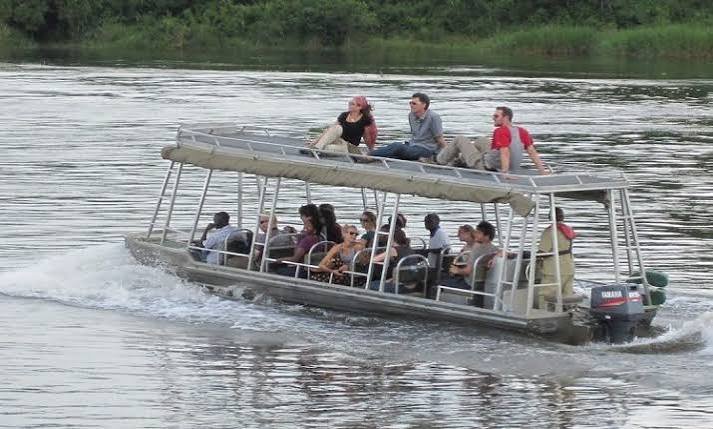
For photographers, this internal park drive can be especially rewarding because the open scenery allows animals to be photographed within the landscape. Giraffes against distant hills, elephants near wetlands, antelope crossing grassland and buffalo moving across open country can create environmental images that differ completely from forest photography in Volcanoes or Nyungwe. A private vehicle also allows the guide and travellers to decide when a sighting deserves more time.
The route is especially strong when combined with an overnight stay inside or near the park rather than attempting to drive from Kigali, explore extensively and return in the same day. A longer visit provides morning and evening light, boat experiences and more opportunity for unpredictable wildlife sightings. Travellers interested in combining this with primates can then continue toward Rwanda gorilla trekking tours for one of the country’s strongest contrasts: open savannah followed by misty mountain forest.
Kigali’s Hill Roads – A Scenic Introduction Before Leaving the Capital
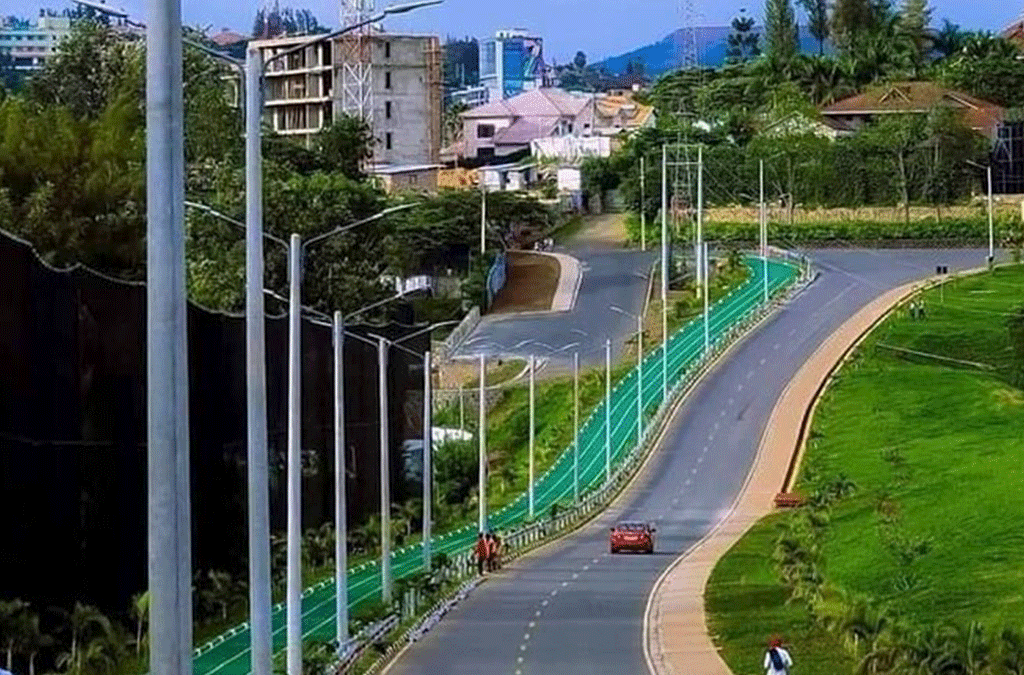
Not every scenic drive requires a full safari day. Kigali itself spreads across numerous hills and valleys, creating elevated urban roads with views over neighbourhoods, gardens and distant ridges. For travellers arriving after a long flight, a relaxed city drive can provide an excellent introduction before beginning the more ambitious national-park circuit.
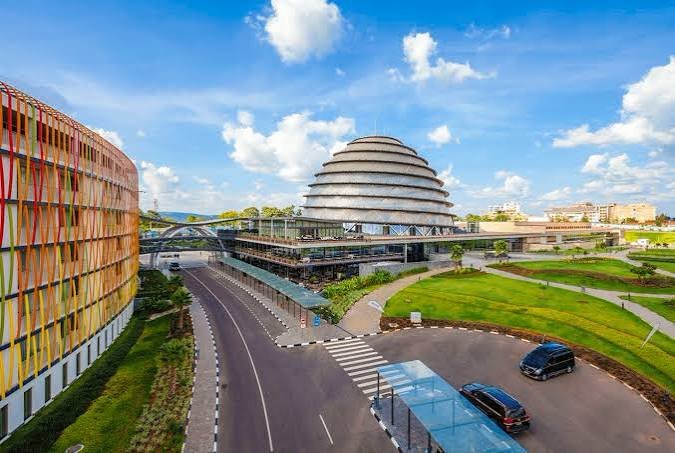
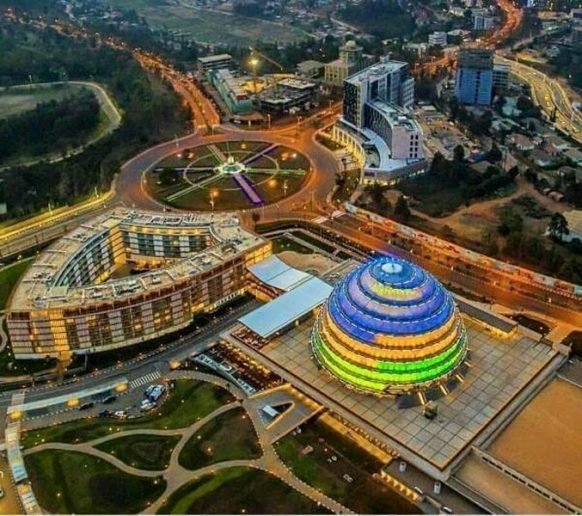
The city’s roads reveal the same geography that becomes more dramatic elsewhere in Rwanda. Hills layer into the distance while new buildings, residential neighbourhoods and green spaces create a contemporary urban landscape. A private city tour can combine scenic driving with cultural or historical sites rather than immediately leaving Kigali after landing.
This works particularly well for first-time Africa travellers because it allows them to adjust gradually. After Kigali, the road north toward Musanze, east toward Akagera or south toward Nyungwe begins to reveal progressively more rural scenery. The capital therefore becomes the starting point of Rwanda’s road story rather than merely the place containing the international airport.
What Is the Best Vehicle for Scenic Drives in Rwanda?
A comfortable 4×4 safari vehicle is one of the best ways to experience Rwanda’s scenic roads, particularly when the journey includes national parks, mountain regions or photography equipment. Main tourism routes are often paved, but final lodge approaches, park tracks and rural detours can involve rougher surfaces. A 4×4 therefore provides flexibility even when the majority of the day’s driving happens on good-quality roads.
A private vehicle is particularly valuable because scenic travel rarely follows a perfectly fixed schedule. A cloud may suddenly lift from the Virunga Mountains, a roadside viewpoint may become especially beautiful or a photographer may want several additional minutes to work with a landscape. Travelling privately allows those stops to be managed safely without delaying unrelated passengers in a scheduled group.
Travellers should still avoid asking a driver to stop in unsafe locations or obstruct traffic simply for a photograph. Rwanda’s roads can be winding, visibility changes quickly around mountain bends and weather can affect conditions. A professional driver-guide who knows where safe stops and viewpoints are located adds far more value than attempting to turn every roadside view into an improvised parking area.
When Is the Best Time for Scenic Driving in Rwanda?
Rwanda’s roads can be travelled throughout the year, but the visual experience changes with weather and season. Relatively drier periods may provide clearer long-distance views and easier conditions on unpaved sections, while greener and wetter months can create intensely lush landscapes, dramatic cloud and mist around the mountains. Neither condition is automatically better for every traveller.
Photographers may actually appreciate changing weather. A completely clear blue sky is excellent for wide volcano views, while low mist can make Nyungwe or the Virunga highlands feel far more atmospheric. Rain also deepens the greens of tea plantations and cultivated hills. The key is allowing enough time that one cloudy afternoon does not become the only opportunity to see a particular landscape.
Morning and late afternoon can be especially attractive for scenic photography because light tends to reveal more texture across Rwanda’s hills. Travellers should nevertheless remember that long road journeys are better planned primarily during daylight. A private itinerary should not be so overloaded that every scenic transfer finishes after dark simply because another attraction was added earlier in the day.
How to Build the Best Rwanda Road Trip
A well-balanced Rwanda road journey might begin in Kigali before travelling east to Akagera for two or three nights. From Akagera, travellers can return through the central part of the country and continue toward Volcanoes National Park for gorillas and golden monkeys. Several nights in the north create time for the Twin Lakes before the route descends toward Lake Kivu.
From the lake, the journey can continue through appropriate western sections toward Karongi and, depending on current travel advice and route suitability, onward toward Nyungwe. The southwestern stage can combine tea country, forest scenery and chimpanzee trekking, before returning toward Kigali through Huye and Nyanza. This creates a circular journey rather than repeatedly retracing the same roads.
Travellers with seven days should select fewer regions and enjoy them properly. Ten to fourteen days allows the scenic driving itself to become an important part of the itinerary. Those interested in a premium experience can combine the route with luxury gorilla trekking safaris, while photographers can add extra nights around the Virungas, Lake Kivu and Nyungwe rather than continually moving to the next destination.
Frequently Asked Questions About What Are the Best Scenic Drives in Rwanda?
1. What Are the Best Scenic Drives in Rwanda?
What Are the Best Scenic Drives in Rwanda? Some of the finest routes include Kigali to Musanze and Volcanoes National Park, Volcanoes to Lake Kivu, the Kivu Belt around Karongi, the tea-country roads surrounding Nyungwe, the Twin Lakes circuit, Kigali to Akagera and the southern route through Nyanza and Huye toward Nyungwe.
2. Is the Kigali to Volcanoes National Park drive scenic?
Yes. The drive north from Kigali becomes increasingly beautiful as urban hills give way to cultivated countryside and the Virunga volcanoes begin to dominate the horizon. It is an excellent introduction to Volcanoes National Park and a natural beginning for a gorilla safari.
3. What Are the Best Scenic Drives in Rwanda around Lake Kivu?
The road sections around Rubavu, Karongi and the wider Kivu Belt provide some of Rwanda’s finest lakeside views. Travellers can see islands, terraced hills, mountains and sections of the Congo Nile Trail while exploring Lake Kivu.
4. Is the Volcanoes National Park to Lake Kivu drive worth doing?
Absolutely. It is one of the easiest scenic combinations because Rubavu is close to the Volcanoes region. Travellers can finish gorilla trekking and then exchange mountain forest for lakeside scenery without needing an additional flight.
5. What Are the Best Scenic Drives in Rwanda for photographers?
The Twin Lakes road, the Kivu Belt, Nyungwe tea-country routes and the approach to Volcanoes National Park are particularly rewarding for landscape photographers. Akagera’s internal safari roads are excellent for photographers who want wildlife incorporated into broad environmental scenes.
6. Is Nyungwe a beautiful place for a road trip?
Yes. Roads around Nyungwe Forest National Park move through mountainous rainforest and some of Rwanda’s finest tea-growing landscapes. Gisakura and Gisovu are especially attractive for travellers interested in green hills and agricultural photography.
7. Can I drive to the Twin Lakes of Burera and Ruhondo?
Yes. Scenic viewpoints around the lakes can be reached by road, and boat experiences can be added once there. The Twin Lakes make an excellent half-day extension while staying in the Musanze or Volcanoes National Park region.
8. What Are the Best Scenic Drives in Rwanda for wildlife?
Akagera’s internal safari roads offer Rwanda’s strongest wildlife driving, with opportunities to see savannah, wetlands, lakes and large mammals. The public-road journey from Kigali to Akagera also reveals the gradual transition from Rwanda’s central hills toward the eastern plains.
9. Do I need a 4×4 for scenic driving in Rwanda?
A 4×4 is strongly recommended for a complete safari itinerary because national-park tracks, rural detours and some lodge approaches may be rough even when major highways are paved. It also provides greater comfort and space for luggage and camera equipment.
10. Can I self-drive Rwanda’s scenic routes?
Self-driving is possible for travellers who meet local driving requirements and are comfortable with unfamiliar mountain roads and local traffic conditions. However, a professional driver-guide can make the journey easier by managing navigation, park logistics and appropriate scenic stops while also explaining the places you pass.
11. Is the western Rwanda road trip currently suitable for all travellers?
Route selection should be checked against current official travel advice. As of 24 September 2026, some governments advise against travel in areas close to Rwanda’s DRC border, with wording varying by nationality and location. Travellers should check advice and insurance conditions immediately before departure.
12. How many days do I need for a scenic Rwanda road trip?
Seven days can cover two or three major regions, while ten to fourteen days allows a much better circuit through Akagera, Volcanoes, Lake Kivu and Nyungwe without rushing. Additional time also makes it easier to include the Twin Lakes, tea plantations and cultural stops.
13. Can scenic drives be combined with gorilla trekking?
Yes. A road journey through northern Rwanda combines naturally with gorilla trekking in Rwanda, golden monkey trekking and scenic drives around the Twin Lakes before continuing toward Lake Kivu.
14. What Are the Best Scenic Drives in Rwanda for couples?
Couples often enjoy the Volcanoes-to-Lake-Kivu route, the Twin Lakes circuit and the quieter Kivu Belt roads because these combine beautiful landscapes with relaxed lodges and private travel. A private vehicle also gives couples more flexibility for scenic stops and photography.
15. How Can I Book the Best Scenic Drives in Rwanda?
Visit Rwanda Safaris can create a private road itinerary based on the landscapes and wildlife experiences that interest you most. The route can combine Akagera National Park, Volcanoes National Park, Lake Kivu and Nyungwe Forest National Park with a professional driver-guide and comfortable 4×4 vehicle.
Book Your Private Rwanda Scenic Road Safari
If you are asking What Are the Best Scenic Drives in Rwanda? because you want to experience the country beyond its individual attractions, Visit Rwanda Safaris can design your journey so that the roads themselves become part of the holiday. Begin in Kigali and travel through Rwanda’s hills toward Akagera National Park, return west toward the Virunga Mountains for gorilla trekking in Rwanda, explore the Twin Lakes and then descend toward Lake Kivu.
A longer private road safari can continue through the western highlands and tea country toward Nyungwe Forest National Park, where travellers can add chimpanzee trekking in Rwanda before returning to Kigali through Rwanda’s southern cultural landscapes. The itinerary can be adapted around current travel guidance, weather, preferred accommodation and photography interests rather than forcing every traveller onto the same fixed circuit.
The best Rwanda road trip is not simply the route with the shortest driving time. It is the journey that gives you time to see the volcanoes appear beyond cultivated hills, watch Lake Kivu emerge between mountain ridges, photograph tea plantations meeting rainforest and enter Akagera as Rwanda’s highlands open into savannah. Explore our Rwanda gorilla trekking tours, discover luxury gorilla trekking safaris or begin designing your private journey through our safari booking page. Let Visit Rwanda Safaris turn the journey between Rwanda’s extraordinary destinations into one of the experiences you remember most.