Amazing Guide: Can You Take Photos During Gorilla Trekking in Rwanda?
Can You Take Photos During Gorilla Trekking in Rwanda? Yes. Photography is permitted during mountain gorilla trekking in Rwanda’s Volcanoes National Park, and visitors are encouraged to bring a camera to capture this extraordinary wildlife encounter. However, flash photography is strictly prohibited around the gorillas.Can You Take Photos During Gorilla Trekking in Rwanda? Rwanda Development Board’s official gorilla trekking guidance explicitly confirms that photographs are allowed but camera flash must not be used. This means travellers can use DSLR cameras, mirrorless cameras, compact cameras and smartphones, provided they respect the rules designed to protect the gorillas and minimise disturbance.
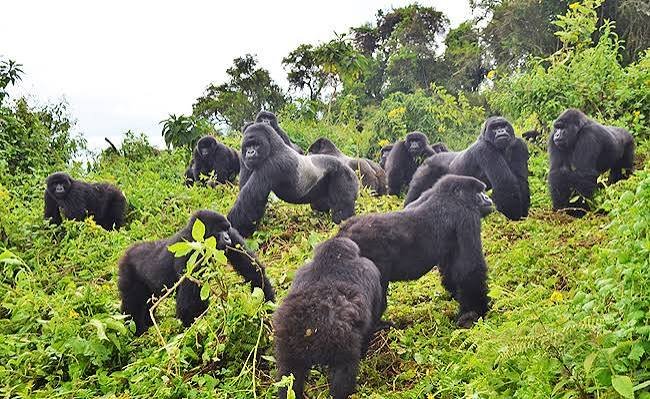
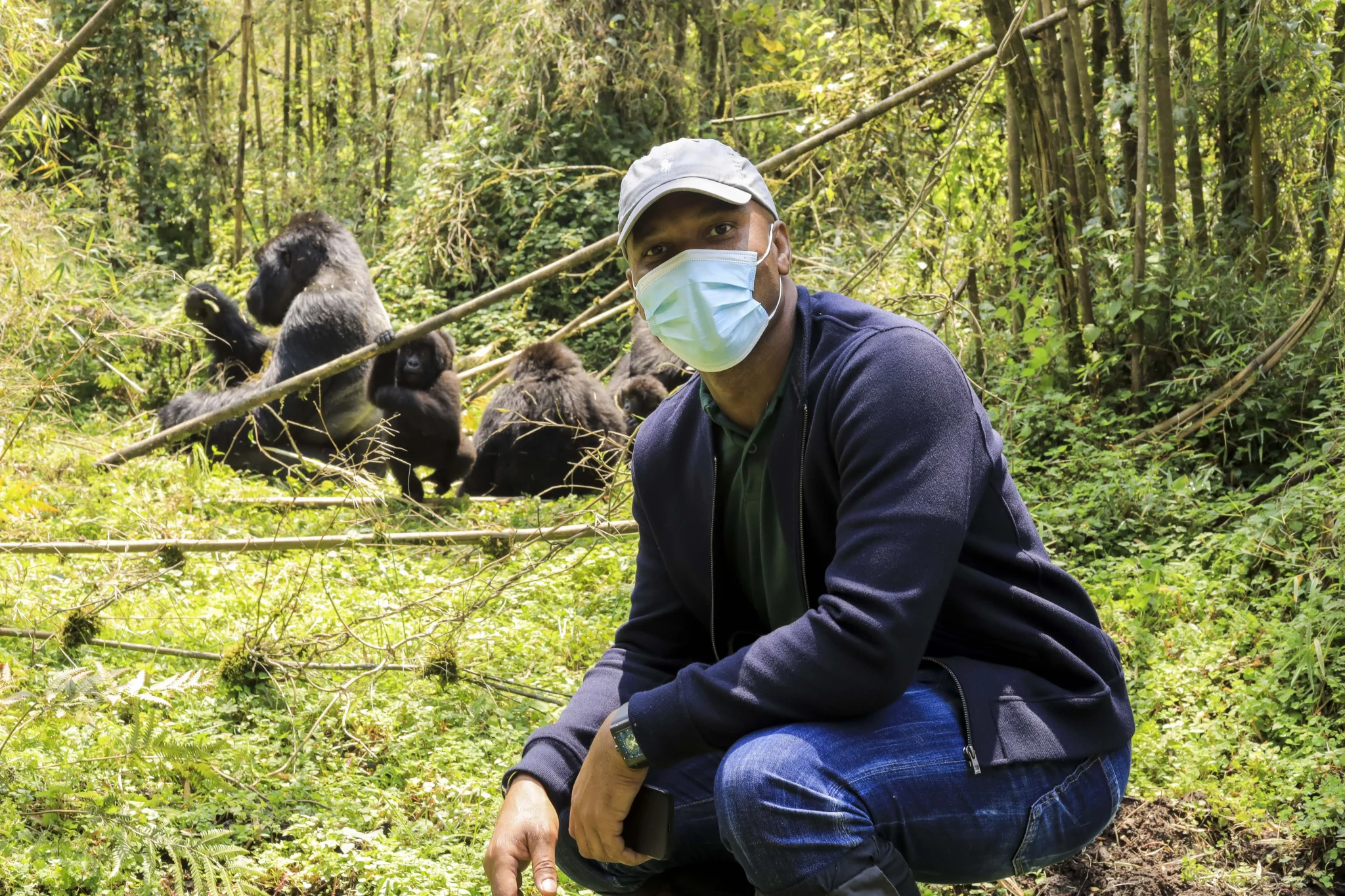
For many visitors, photographing mountain gorillas becomes one of the most memorable parts of a gorilla trekking experience in Rwanda. Can You Take Photos During Gorilla Trekking in Rwanda? The challenge is very different from photographing wildlife on an open savannah. Can You Take Photos During Gorilla Trekking in Rwanda? Gorilla encounters take place inside dense mountain forest where light levels can be low, vegetation can obstruct the subject and conditions can change quickly. A silverback may remain still for several minutes before moving through bamboo, while playful juveniles can shift position constantly. Good photography therefore depends less on carrying the largest camera available and more on understanding the environment, preparing your settings in advance and remaining calm when the encounter begins.
The answer to Can You Take Photos During Gorilla Trekking in Rwanda? is therefore not simply yes. You can take photographs, but the experience should never become a photo shoot that interferes with the animals or distracts you from actually watching them. Rwanda’s gorilla tourism is carefully regulated: visitors are generally required to maintain about seven metres of distance where possible, groups are limited to eight tourists per gorilla family, and viewing time is restricted to one hour. The best photographers work within these rules, allowing the gorillas’ natural behaviour to determine the images rather than attempting to control the encounter.
Photography Is Officially Allowed During Rwanda Gorilla Trekking
Rwanda Development Board specifically advises visitors not to forget their cameras when preparing for gorilla trekking and states that photographs are permitted as long as flash is not used. Can You Take Photos During Gorilla Trekking in Rwanda? This makes Volcanoes National Park one of the world’s most extraordinary wildlife photography destinations because travellers can photograph habituated mountain gorilla families in their natural forest environment rather than in an artificial or captive setting.
The gorillas available for tourism are habituated, meaning they have gradually become accustomed to the carefully controlled presence of humans. Can You Take Photos During Gorilla Trekking in Rwanda? Visit Rwanda currently identifies 12 fully habituated gorilla families available for tourism in Volcanoes National Park. Eight trekking permits are issued for each family per day, giving a maximum of 96 public gorilla permits daily under the current system. Each family receives tourists for a strict maximum of one hour per day. These limitations help keep the encounters relatively intimate while controlling the level of human exposure experienced by individual gorilla groups.
Travellers planning specifically around photography should still remember that a trekking permit does not guarantee a particular photographic situation. Gorillas may be resting in thick vegetation, feeding beneath leaves, moving across slopes or sitting in an unexpectedly open position. Can You Take Photos During Gorilla Trekking in Rwanda? Weather can also change within minutes. This unpredictability is part of what makes wildlife photography meaningful. A private Rwanda gorilla trekking safari can organise the logistics surrounding the trek, but nobody can stage the behaviour that happens once you are with the gorillas.
Why Flash Photography Is Not Allowed Around Mountain Gorillas
Flash photography is prohibited because sudden bursts of artificial light can disturb wildlife and interfere with the calm environment required during the encounter. Rwanda Development Board makes the rule straightforward: photography is allowed, but flash is not. Travellers should therefore disable automatic flash settings before entering the forest rather than waiting until they are already standing in front of a gorilla family.
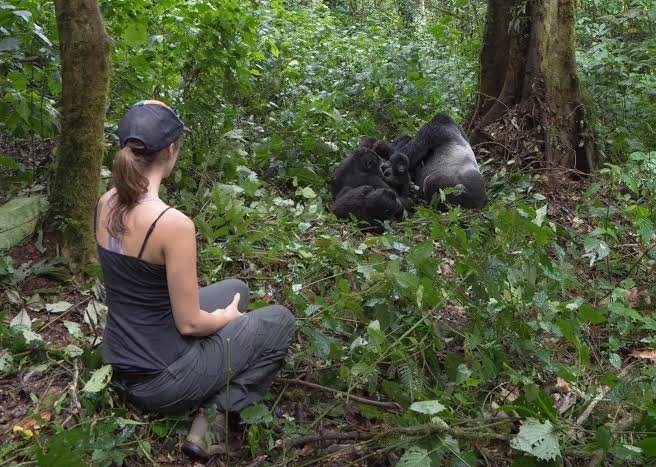
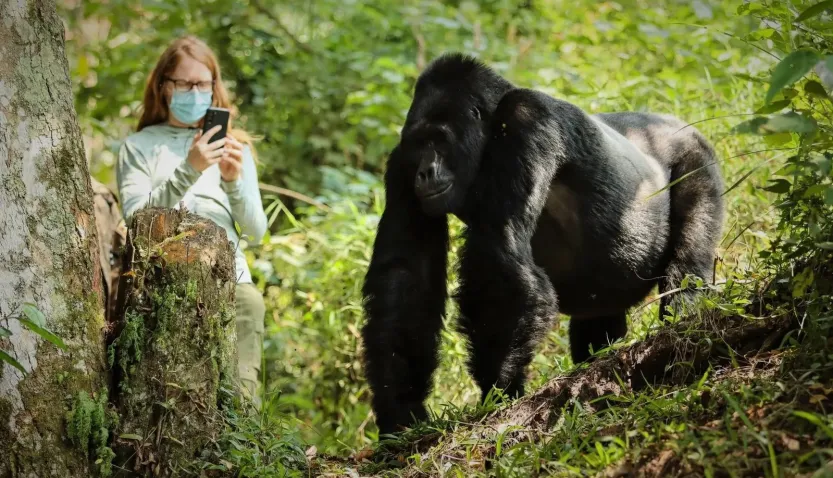
This preparation is particularly important for smartphones and compact cameras, where flash may activate automatically under low-light conditions.Can You Take Photos During Gorilla Trekking in Rwanda? Dense vegetation around Volcanoes National Park can create very dark photographic situations even during the middle of the day. Before trekking, switch your device to a mode where the flash remains permanently off. Photographers using mirrorless or DSLR cameras should also confirm that any built-in flash is disabled.
Low light does not mean good photography is impossible. Can You Take Photos During Gorilla Trekking in Rwanda? Modern cameras perform remarkably well at higher ISO settings, and image stabilisation can help photographers work at slower shutter speeds when gorillas remain relatively still. Wider aperture lenses can also gather more light. The objective should be to adapt your camera to the forest rather than trying to change the forest with artificial lighting.
What Camera Is Best for Gorilla Trekking in Rwanda?
There is no single camera that every traveller needs. A modern mirrorless or DSLR camera provides excellent control over shutter speed, aperture, ISO and focus, making it particularly suitable for serious wildlife photographers. However, high-quality compact cameras and recent smartphones can also create excellent images when the gorillas are reasonably close and the available light is good.
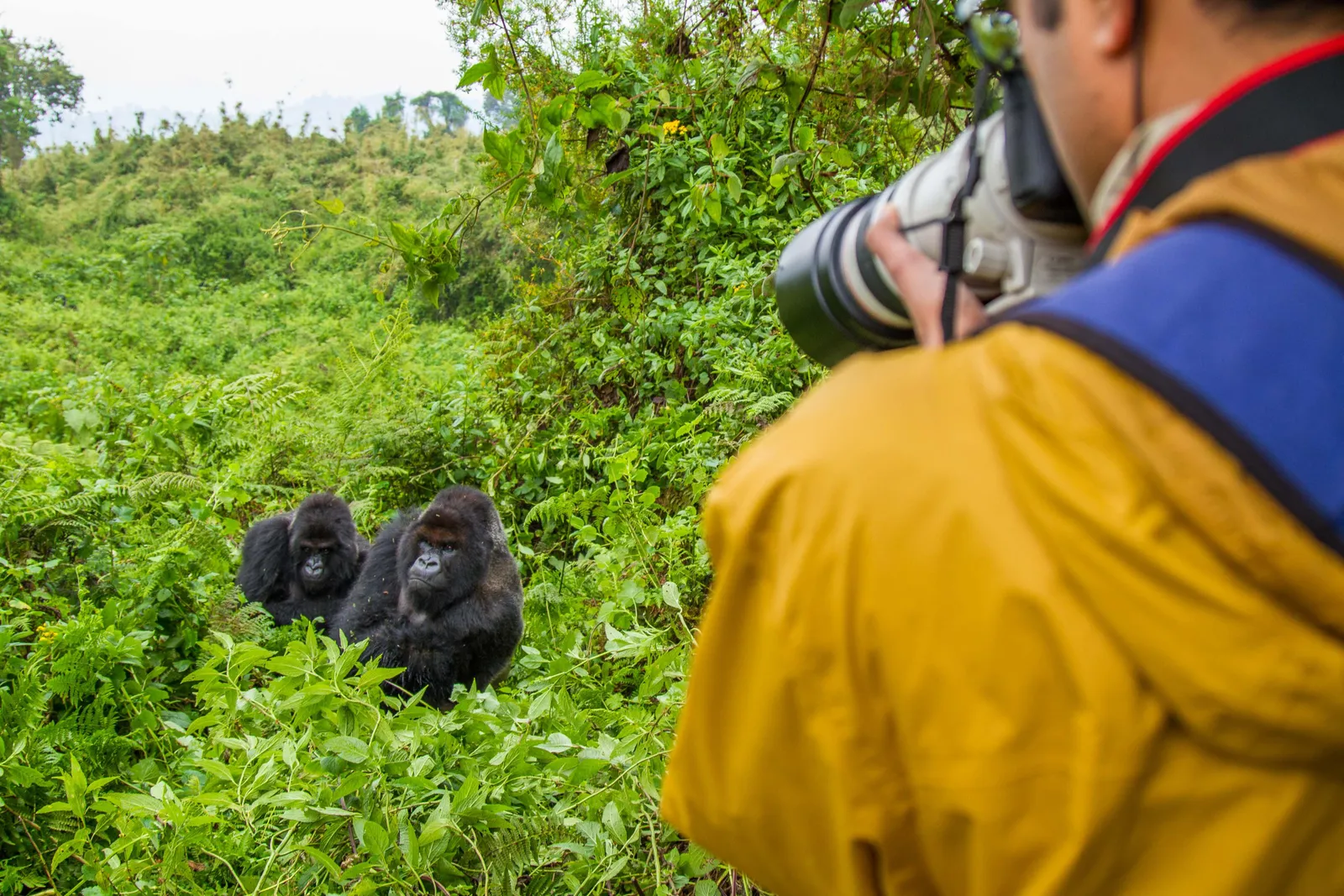
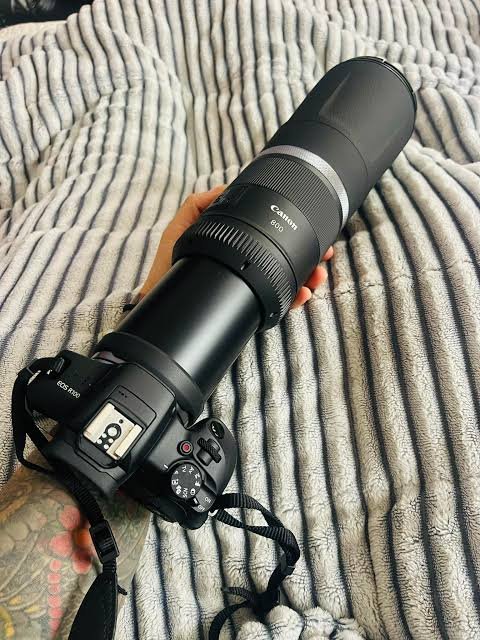
A mirrorless camera is particularly practical because many modern bodies provide strong autofocus, good high-ISO performance and relatively compact dimensions. Can You Take Photos During Gorilla Trekking in Rwanda? Weight matters during gorilla trekking because the walk to the assigned family may take anywhere from around thirty minutes to several hours. Visit Rwanda states that trekking routes can reach altitudes between approximately 2,500 and 4,000 metres and that hikes may last four hours or more depending on the gorillas’ location. Carrying unnecessary equipment can therefore become exhausting long before photography even begins.
DSLR cameras remain excellent for gorilla photography as well. Photographers who already understand their DSLR should not feel pressured to buy a new camera simply because mirrorless systems are newer. Familiarity with controls is more valuable than owning unfamiliar professional equipment. Can You Take Photos During Gorilla Trekking in Rwanda? The moment a juvenile gorilla climbs into clear view is not the ideal time to search through a camera menu trying to remember how to change autofocus settings.
What Lens Is Best for Rwanda Gorilla Photography?
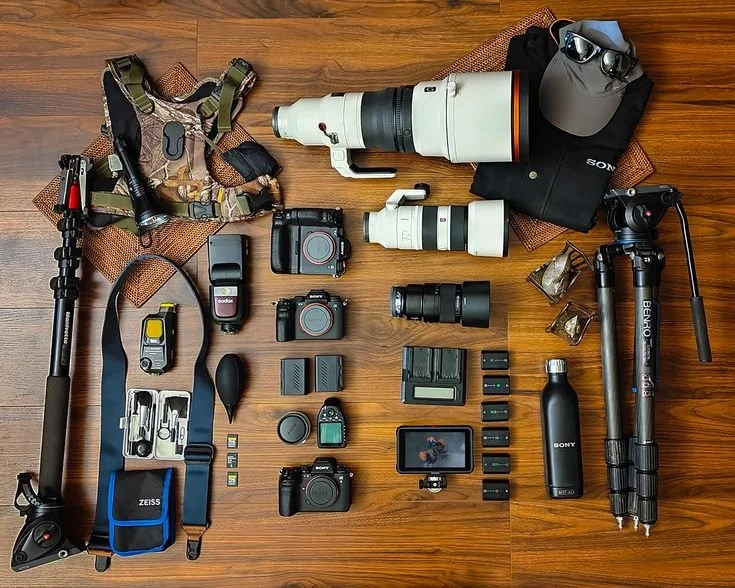
A versatile telephoto zoom is usually the most practical choice. Lenses around the 70–200mm range are popular because they allow photographers to move between wider environmental portraits and tighter facial compositions without changing lenses repeatedly. A 70–200mm lens can capture a silverback sitting within the forest while still providing enough reach for detailed portraits when an individual remains farther away.
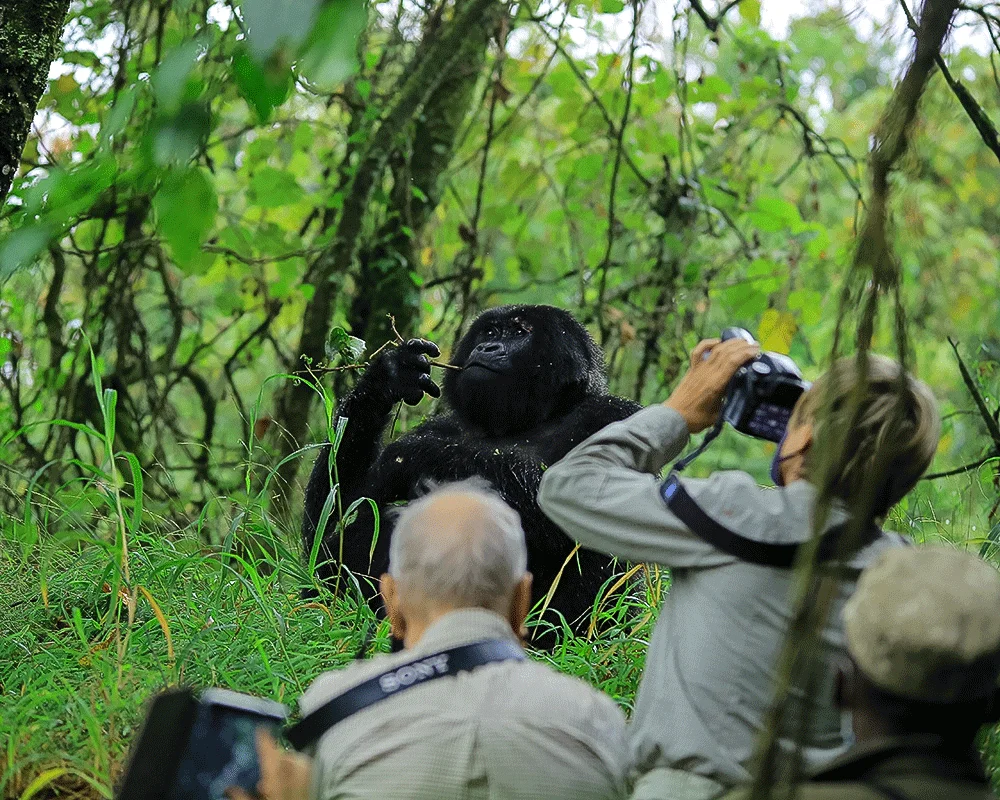
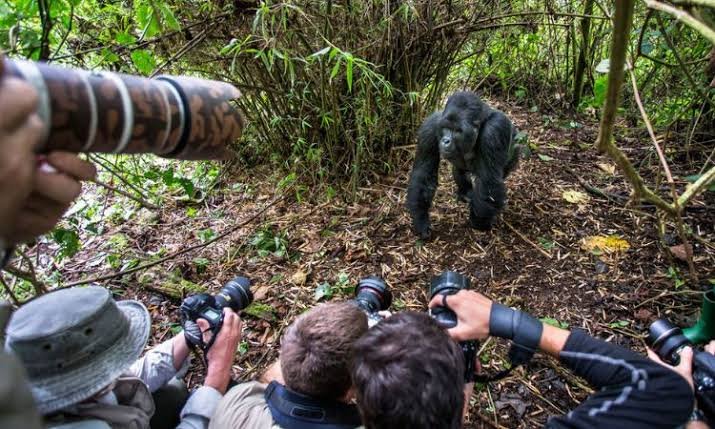
A 100–400mm zoom can also be useful, particularly for photographers who want tight facial details or are using a full-frame camera. Can You Take Photos During Gorilla Trekking in Rwanda? However, extremely long focal lengths are not always necessary because gorillas can sometimes be relatively close. Rwanda’s official guideline asks visitors to maintain a distance of about seven metres from the gorillas where possible. Gorillas themselves do not always follow that guideline, and if one approaches, visitors should follow the guide’s instructions rather than moving closer or attempting to position themselves for a particular frame.
Carrying a wider lens can also be worthwhile. Can You Take Photos During Gorilla Trekking in Rwanda? Environmental photographs showing a gorilla surrounded by bamboo, mist and rainforest often communicate more about the encounter than an extremely tight portrait. Photographers using two camera bodies sometimes keep a medium telephoto lens on one and a wider zoom on the other, reducing the need to change lenses in damp or muddy forest conditions.
Can You Use a Smartphone for Gorilla Photography in Rwanda?
Yes. Smartphones are perfectly acceptable for personal gorilla photography, provided the flash remains switched off. Modern phones can perform remarkably well when the subject is close, and computational photography can help compensate for challenging contrast and lower light. Can You Take Photos During Gorilla Trekking in Rwanda? For many travellers who do not regularly use interchangeable-lens cameras, a familiar smartphone may actually produce better results than an expensive camera they have never learned to operate.
Smartphones are especially useful for short video clips and wider compositions that show gorillas within their environment. A silverback framed by bamboo or a juvenile climbing through vegetation can look extremely powerful when the surrounding forest remains visible. The ability to switch quickly between still photographs and video also makes a phone useful as a second camera even for travellers carrying professional equipment.
The main limitation is low light and longer distances. Smartphone digital zoom can quickly reduce image quality, particularly beneath dense vegetation. Can You Take Photos During Gorilla Trekking in Rwanda? If serious wildlife photography is one of the main reasons for your journey, a mirrorless or DSLR camera with an optical zoom lens will provide significantly more control. If your priority is simply preserving personal memories of mountain gorilla trekking in Rwanda, however, a good smartphone can be entirely sufficient.
The Best Camera Settings for Gorilla Trekking Photography
The forest demands flexibility rather than one fixed setting. Gorilla movement can change from almost completely still to sudden activity within seconds. A shutter speed around 1/250 second or faster is a useful starting point for relatively calm gorillas, while active juveniles may require approximately 1/500 second or considerably faster. Image stabilisation helps with camera movement but cannot freeze an animal that is moving quickly.
A relatively wide aperture such as f/2.8, f/4 or f/5.6 can help gather light while separating the gorilla from distracting vegetation. However, photographers should avoid using such a shallow depth of field that only one eye remains sharp when several gorillas are interacting. If photographing two individuals at different distances, a smaller aperture may be necessary even if that means increasing the ISO.
Auto ISO can be extremely helpful when paired with an appropriate minimum shutter speed. Forest light can change suddenly as clouds pass overhead or gorillas move between dense vegetation and small openings. Modern cameras often produce very usable files at ISO 1600, 3200 or higher. Can You Take Photos During Gorilla Trekking in Rwanda? A slightly noisy sharp photograph is usually more useful than a perfectly clean image ruined by motion blur.
Autofocus and Exposure in Rwanda’s Gorilla Forest
Animal-eye autofocus can be extremely useful on modern cameras, but it should not be trusted blindly. Leaves, branches and high-contrast vegetation can sometimes confuse autofocus systems, particularly when only part of a gorilla’s face is visible. Photographers should know how to switch quickly between eye detection, a smaller autofocus area and single-point selection.
Dark gorilla fur also creates an exposure challenge. Can You Take Photos During Gorilla Trekking in Rwanda? A camera may attempt to brighten the entire frame because so much of the subject is black, potentially overexposing bright vegetation in the background.Can You Take Photos During Gorilla Trekking in Rwanda? Monitoring highlights and using exposure compensation can help preserve detail. Shooting RAW provides significantly more flexibility afterward because shadows and highlights can be adjusted during editing.
The eyes remain the most important part of most gorilla portraits. If the face is visible, prioritise focus on the nearest eye rather than the hands, chest or surrounding leaves. When photographing broader behavioural scenes, however, perfection at the pixel level matters less than capturing meaningful interaction between family members.
Photographing Gorillas During the One-Hour Viewing Period
Rwanda limits tourist contact with each gorilla family to a strict maximum of one hour per day. That sounds short, but sixty minutes can produce an extraordinary range of photographic opportunities if you arrive prepared. The key is having the camera ready before the viewing period begins so that the first ten minutes are not wasted adjusting basic settings.
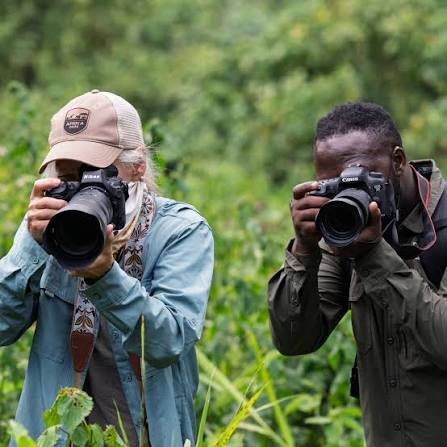
It is tempting to begin shooting continuously as soon as the first gorilla becomes visible. A more effective approach is to observe briefly and understand what the group is doing. Identify the silverback, watch where juveniles are moving and notice whether individuals appear likely to emerge from vegetation. This allows photography to become intentional rather than producing hundreds of nearly identical frames.
Visit Rwanda’s own three-day gorilla itinerary notes that guides help visitors find suitable positions for photographs while respecting the encounter. Listen carefully to those guides. They spend far more time around these gorillas than any visitor and understand how animals are likely to move. Their instructions are also essential for safety and responsible behaviour.
Respect the Seven-Metre Gorilla Viewing Distance
Rwanda Development Board requests visitors to maintain approximately seven metres—about 22 feet—from the gorillas to reduce disease transmission and disturbance. Photographers should never move closer simply because a particular angle would improve the image.
Mountain gorillas are wild animals, however, and they can sometimes approach visitors themselves. When that happens, do not attempt to touch the gorilla, move into its path or reposition yourself for photography. Follow the ranger’s instructions, remain calm and allow the animal to determine where it wants to move.
A photograph is never worth compromising the welfare of the animals. Responsible photography means accepting branches, shadows and imperfect angles when those are the natural conditions of the encounter. The most authentic images often come from observing rather than trying to create the perfect situation.
Should You Hire a Porter When Carrying Camera Equipment?
For photographers, hiring a porter can be one of the smartest decisions of the trekking day. Visit Rwanda and Rwanda Development Board both confirm that porters are available to carry backpacks and cameras and can also assist visitors along difficult sections of the trail. Even a camera bag that feels light at the lodge can become surprisingly heavy after several hours of climbing through humid mountain forest.
A porter allows the photographer to conserve energy and keep attention on footing rather than constantly managing equipment. Once the group approaches the gorillas, you can take the camera equipment you need while leaving unnecessary items safely packed. This is particularly helpful for travellers carrying two camera bodies, spare batteries, water, rainwear and additional lenses.
Hiring a porter also contributes directly to local employment around Volcanoes National Park. Gorilla tourism supports a broad network of trackers, rangers, drivers, lodge employees, porters and community projects. Visit Rwanda notes that a portion of permit revenue is channelled toward surrounding communities and that gorilla tourism provides significant local employment.
Protecting Your Camera From Rain, Mud and Humidity
Volcanoes National Park is a high-altitude rainforest environment, which means rain should always be expected even when the morning begins clear. Visit Rwanda recommends sturdy clothing, gaiters and a lightweight waterproof jacket for gorilla trekking. Your camera equipment deserves the same level of preparation.
Use a weather-resistant camera bag or carry a lightweight rain cover. Individual camera-and-lens covers are useful when photography continues during light rain. Silica gel packets inside the bag can also help manage moisture. Avoid changing lenses unnecessarily in rain or mist because exposing the camera sensor in damp forest conditions increases the possibility of dust and moisture entering the body.
Keep a lens cloth easily accessible. Fine droplets can collect on the front element without being immediately visible through the viewfinder, producing soft or hazy photographs. Having a cloth in a pocket rather than buried beneath other equipment can save important images.
Can You Record Video During Gorilla Trekking in Rwanda?
Visitors commonly use cameras and smartphones to record personal video during gorilla trekking, provided the same wildlife rules are respected. The most important practical principles remain keeping flash or other disruptive lighting off, following ranger instructions and avoiding behaviour that interferes with the gorillas.
Video can preserve aspects of the encounter that still photography cannot capture: juveniles playing, foliage moving as a silverback walks through the forest, subtle vocalisations or the extraordinary calm of a family feeding together. Short, steady clips can often communicate the atmosphere more effectively than recording continuously for the entire hour.
Photographers should nevertheless remember that constantly switching between still photography and video can become distracting. Decide what matters most before the trek. If your primary objective is high-quality still photography, concentrate on that and capture a few short video sequences when opportunities arise rather than trying to document every second.
Is One Gorilla Trek Enough for Serious Photography?
One gorilla trek can produce extraordinary photographs, but serious photographers may benefit considerably from booking two separate trekking days. No two gorilla encounters are identical. On the first day the family may remain largely inside dense vegetation, while another group the following day may spend more time in relatively open bamboo or forest clearings.
The first trek also teaches photographers how quickly the hour passes. You discover which lens you actually use, how your camera performs at high ISO and which equipment becomes unnecessary weight. By the second trek, camera settings and workflow often feel much more natural, allowing you to concentrate on behaviour rather than equipment.
A second Rwanda gorilla trek requires a second permit. With the standard international visitor permit currently priced at USD 1,500 per person per day, two trekking days represent a significant investment. For travellers whose primary purpose is photography, however, the additional encounter may provide more value than adding an unrelated activity simply to increase the number of destinations visited.
What Else Can Photographers Capture Around Volcanoes National Park?
The gorillas may be the principal reason for visiting, but Volcanoes National Park offers much more photographic variety. The Virunga volcanoes dominate the surrounding landscape, especially during clear mornings when Karisimbi, Bisoke, Sabyinyo, Gahinga and Muhabura may appear above cultivated hills. Visit Rwanda describes the park as a rich mosaic of evergreen forest, bamboo, grassland, swamp and heath beneath the volcanic chain.
Golden monkey trekking provides another excellent wildlife photography challenge. Golden monkeys move more rapidly than gorillas and their orange-gold colouring contrasts beautifully against green bamboo. Photographers interested in conservation history can add the Dian Fossey hike, while landscape photographers may prefer the Twin Lakes of Burera and Ruhondo.
A longer itinerary can continue toward Lake Kivu for landscapes and human-interest photography or toward Akagera National Park for classic savannah wildlife. This gives the photographer a portfolio ranging from intimate primate portraits to lakes, volcanoes, elephants, giraffes and open African landscapes.
Can Gorilla Photos Contribute to Conservation?
Rwanda has gone beyond simply allowing visitors to take photographs. Visit Rwanda’s Gorilla Gram initiative encourages guests to share tagged photographs and videos from their encounters, allowing visitor-generated imagery to contribute to monitoring information about identified gorilla families and individuals. This creates an interesting connection between tourism photography and conservation monitoring.
The larger conservation value of gorilla tourism comes through regulated permits, employment and community participation. Visit Rwanda states that 10% of gorilla permit revenue is channelled toward communities surrounding protected areas for projects such as schools, health centres and roads, while compensation mechanisms also help address gorilla-related crop damage.
For photographers, this reinforces the importance of responsible behaviour. The objective is not only to return home with impressive images but to ensure the circumstances that make those photographs possible remain sustainable. Respecting distance, avoiding flash and following the guides are part of that responsibility.
How Much Does a Rwanda Gorilla Photography Safari Cost?
The largest fixed cost is normally the gorilla permit. Rwanda currently charges USD 1,500 per foreign visitor per trekking day, and the minimum trekking age is 15 years. Accommodation, private transportation, meals, guiding and additional activities are added to the permit when calculating a complete safari package.
Photographers may also choose to invest in extra nights around Volcanoes National Park. Staying close to the park reduces morning travel and allows time for scenic photography before and after the trek. Luxury lodges can add exceptional comfort, while good mid-range accommodation can keep the overall trip more affordable without changing the official gorilla viewing experience.
The most important budgeting decision is often whether to trek once or twice. Someone primarily interested in photography may gain more from spending another USD 1,500 on a second gorilla permit than from moving quickly to another destination. Travellers interested in broader Rwanda imagery may instead prefer one trek followed by Lake Kivu, Nyungwe or Akagera.
The Best Time for Gorilla Photography in Rwanda
Gorilla trekking operates throughout the year, so there is no single month when photography is guaranteed to be perfect. Relatively drier periods can make hiking easier and reduce the amount of rain falling on equipment, but forest light remains variable and weather in the Virunga Mountains can change rapidly.
Cloudy conditions can actually be excellent for photography. Soft, diffused light reduces harsh highlights and can reveal detail in dark gorilla fur more effectively than direct sunshine. Mist can also create atmospheric environmental photographs that clearly communicate the mountain-forest setting.
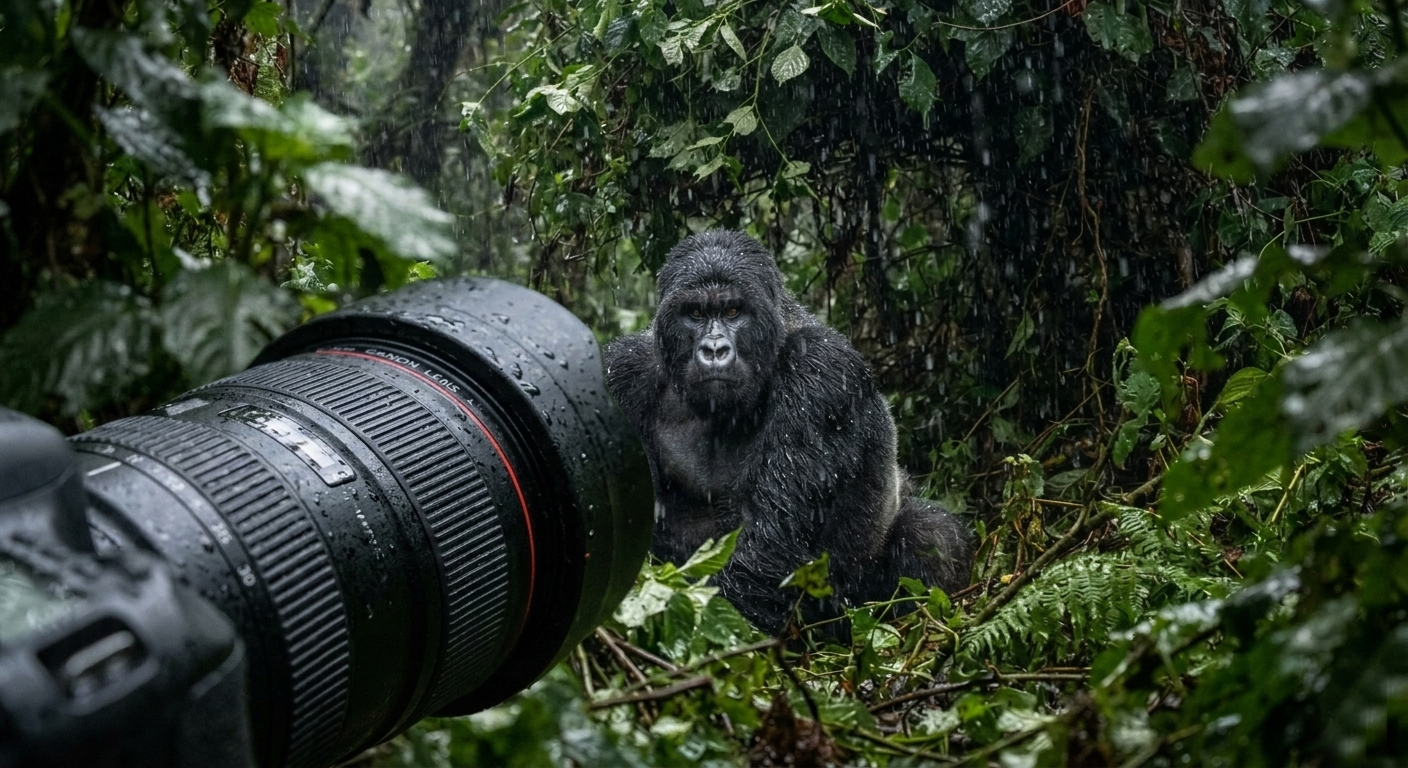
Rain should therefore not automatically be regarded as a photographic failure. Water on gorilla fur, mist among bamboo and saturated green vegetation can produce some of the most evocative images of the safari. The key is protecting equipment properly and understanding your camera well enough to continue working when conditions change.
Photography Etiquette During the Gorilla Encounter
Good wildlife photography begins with behaviour, not camera technology. Keep your voice low, avoid rapid movements and follow the ranger’s instructions throughout the encounter. Rwanda’s official gorilla guidelines specifically ask visitors to remain quiet, avoid sudden movements and listen to guides if a gorilla approaches or vocalises.
Do not block another visitor simply because you have professional camera equipment. Every person in the group has paid for the same limited encounter. Move only when the ranger indicates that movement is appropriate, and allow others access to good viewing positions rather than treating the hour as an individual photography session.
Most importantly, occasionally lower the camera. The goal of gorilla trekking in Rwanda is not to spend sixty minutes staring through an electronic viewfinder. Some of the strongest memories come from simply watching a silverback breathe, observing a mother holding an infant or making eye contact with a juvenile without immediately pressing the shutter.
Can You Take Photos During Gorilla Trekking in Rwanda? The Final Answer
Can You Take Photos During Gorilla Trekking in Rwanda? Absolutely. Photography is officially permitted, cameras and smartphones are welcome, and capturing the encounter can become one of the highlights of your journey. The essential rule is that flash photography is prohibited, and photographers must always respect the instructions of guides, the regulated viewing period and the required distance from the gorillas.
For casual travellers, a smartphone or compact camera may be enough. Enthusiast photographers will benefit from a mirrorless or DSLR camera with a versatile telephoto zoom, while serious wildlife photographers may consider two camera bodies and two separate gorilla trekking days. Whatever equipment you choose, prepare your settings before the encounter, protect everything from rain and keep the setup light enough to carry comfortably through mountain forest.
Rwanda also provides enough photographic variety to build an entire safari around cameras. Mountain gorillas can be followed by golden monkeys, volcanic landscapes, Lake Kivu, rainforest scenery and the wildlife of Akagera National Park. The result can be far more than a collection of gorilla portraits—it can become a visual story of Rwanda’s wildlife, landscapes and conservation.
Frequently Asked Questions About Can You Take Photos During Gorilla Trekking in Rwanda?
1. Can You Take Photos During Gorilla Trekking in Rwanda?
Yes. Can You Take Photos During Gorilla Trekking in Rwanda? Absolutely. Visitors are allowed to photograph mountain gorillas in Volcanoes National Park using smartphones, compact cameras, mirrorless cameras and DSLR cameras. The most important rule is that flash photography is not permitted because sudden artificial light can disturb the gorillas.
Travellers should prepare their camera settings before reaching the gorilla family so that valuable viewing time is not lost adjusting equipment.
2. Can You Take Photos During Gorilla Trekking in Rwanda With a Smartphone?
Yes. Smartphones are perfectly suitable for personal gorilla photography, especially when the gorillas are relatively close and natural light is good. Modern smartphones can capture excellent portraits, wider forest scenes and short video clips.
If you are using a smartphone, switch the flash off before entering the forest. Photographers wanting more control over low-light conditions and longer focal lengths may prefer a mirrorless or DSLR camera.
3. Can You Take Photos During Gorilla Trekking in Rwanda With Flash?
No. Flash photography is prohibited during gorilla trekking in Rwanda. Even though Can You Take Photos During Gorilla Trekking in Rwanda? has a clear yes answer, all photography must be completed using available natural light.
Visitors should disable automatic flash settings before approaching the gorillas, especially on smartphones and compact cameras that may automatically activate flash in darker forest conditions.
4. What Camera Is Best If You Can Take Photos During Gorilla Trekking in Rwanda?
A mirrorless or DSLR camera with strong autofocus and good high-ISO performance is excellent for serious gorilla photography. However, the best camera is usually one you already understand well enough to operate quickly under changing forest conditions.
A versatile zoom lens can be more useful than carrying several heavy lenses. Travellers can also learn more about gorilla trekking in Rwanda before choosing their equipment.
5. What Is the Best Lens for Gorilla Photography in Rwanda?
A 70–200mm zoom is one of the most versatile choices because it can capture both environmental photographs and tighter gorilla portraits. A 100–400mm lens provides additional reach for detailed images when gorillas remain farther away.
Photographers should also consider a wider lens for scenes showing gorillas surrounded by bamboo and rainforest. Carrying fewer, more versatile lenses also reduces the need to change equipment in damp forest conditions.
6. Can You Take Photos During Gorilla Trekking in Rwanda for the Entire Viewing Hour?
Yes, photography is allowed throughout the regulated gorilla viewing period as long as visitors follow park rules and ranger instructions. The standard Rwanda gorilla encounter allows visitors a maximum of one hour with the assigned gorilla family after it has been located.
However, photographers should occasionally stop shooting and simply observe the animals. The encounter is often more memorable when photography supports the experience rather than completely dominating it.
7. Can You Take Photos During Gorilla Trekking in Rwanda From Close Range?
Photography is allowed, but visitors should maintain the recommended distance from the gorillas whenever possible. Travellers should never move closer simply to achieve a better photograph.
If a gorilla approaches on its own, remain calm and follow the ranger’s instructions. Do not touch the animal, block its path or reposition yourself aggressively for a photograph.
8. Should Photographers Book Two Gorilla Treks in Rwanda?
Photographers who want the strongest possible gorilla portfolio may benefit from booking two separate trekking days. Gorilla behaviour, weather, lighting and vegetation can be completely different from one day to another.
The first trek also helps photographers understand the pace of the encounter and determine which equipment works best. A second trek can therefore provide more confidence and a completely different set of photographic opportunities.
9. Can You Take Photos During Gorilla Trekking in Rwanda in Rainy Weather?
Yes. Can You Take Photos During Gorilla Trekking in Rwanda? even when it rains? Certainly, provided your equipment is properly protected. Volcanoes National Park is a high-altitude forest environment, and rainfall can occur throughout the year.
Use a waterproof camera cover, weather-resistant bag and lens cloth. Rain and mist can actually create beautiful atmospheric photographs because gorilla fur, bamboo and surrounding vegetation become especially dramatic.
10. How Can I Book a Rwanda Gorilla Photography Safari?
Visit Rwanda Safaris can organise a private photography-focused itinerary around gorilla trekking in Rwanda, Volcanoes National Park and additional photographic destinations.
Your journey can include one or two gorilla treks, golden monkey trekking, Lake Kivu and Akagera National Park. Travellers ready to plan can begin through the safari booking page.
Book Your Rwanda Gorilla Photography Safari
If you are asking Can You Take Photos During Gorilla Trekking in Rwanda? because photography is one of the main reasons for your journey, Visit Rwanda Safaris can structure the trip around giving you the strongest possible opportunities without compromising responsible gorilla-tourism rules. Your safari can include one or two gorilla treks in Volcanoes National Park, carefully chosen accommodation close to the trekking headquarters and private 4×4 transportation with enough space for camera equipment.
A longer photographic journey can combine gorillas with golden monkey trekking, the Virunga landscapes and Twin Lakes before continuing to Lake Kivu for sunsets, fishing communities and lakeside scenery. Wildlife photographers can then add Akagera National Park for elephants, giraffes, predators, birds and savannah photography, while primate specialists can continue toward chimpanzee trekking in Rwanda.
The best Rwanda photography safari gives you enough time to observe rather than constantly moving to another destination. Whether you travel with a smartphone, mirrorless camera or professional wildlife photography system, the most important moment remains the same: standing quietly inside a Virunga forest while a wild mountain gorilla family continues its daily life only metres away. Explore Rwanda gorilla trekking and begin planning through our safari booking page. Visit Rwanda Safaris can build a private journey that gives you the time, positioning and variety needed to return home with both extraordinary photographs and an unforgettable gorilla experience.