Can You Take Photos During Gorilla Trekking in Rwanda? Ultimate Photography Guide
Can You Take Photos During Gorilla Trekking in Rwanda? Yes. Visitors are allowed to photograph mountain gorillas during their trek in Rwanda, making a camera or smartphone one of the most valuable items to bring into the forest. The most important restriction is that flash photography is not permitted. Rwanda Development Board guidance specifically tells visitors not to forget their cameras while clearly stating that photographs are allowed only without flash. Once a habituated gorilla family has been located, viewing time is normally limited to one hour, giving travellers an extraordinary but carefully controlled period in which to watch, photograph and appreciate the gorillas in their natural habitat.
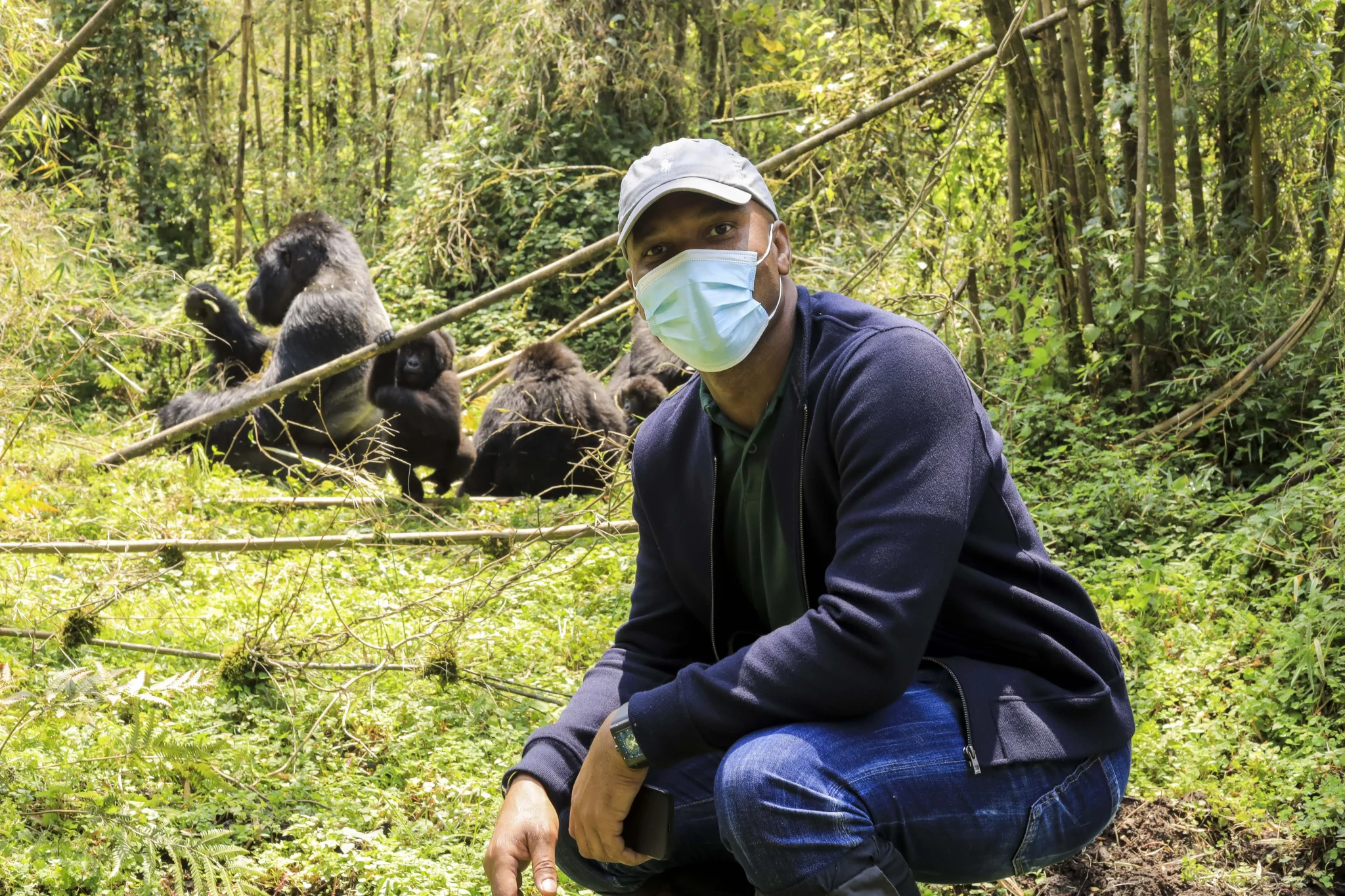
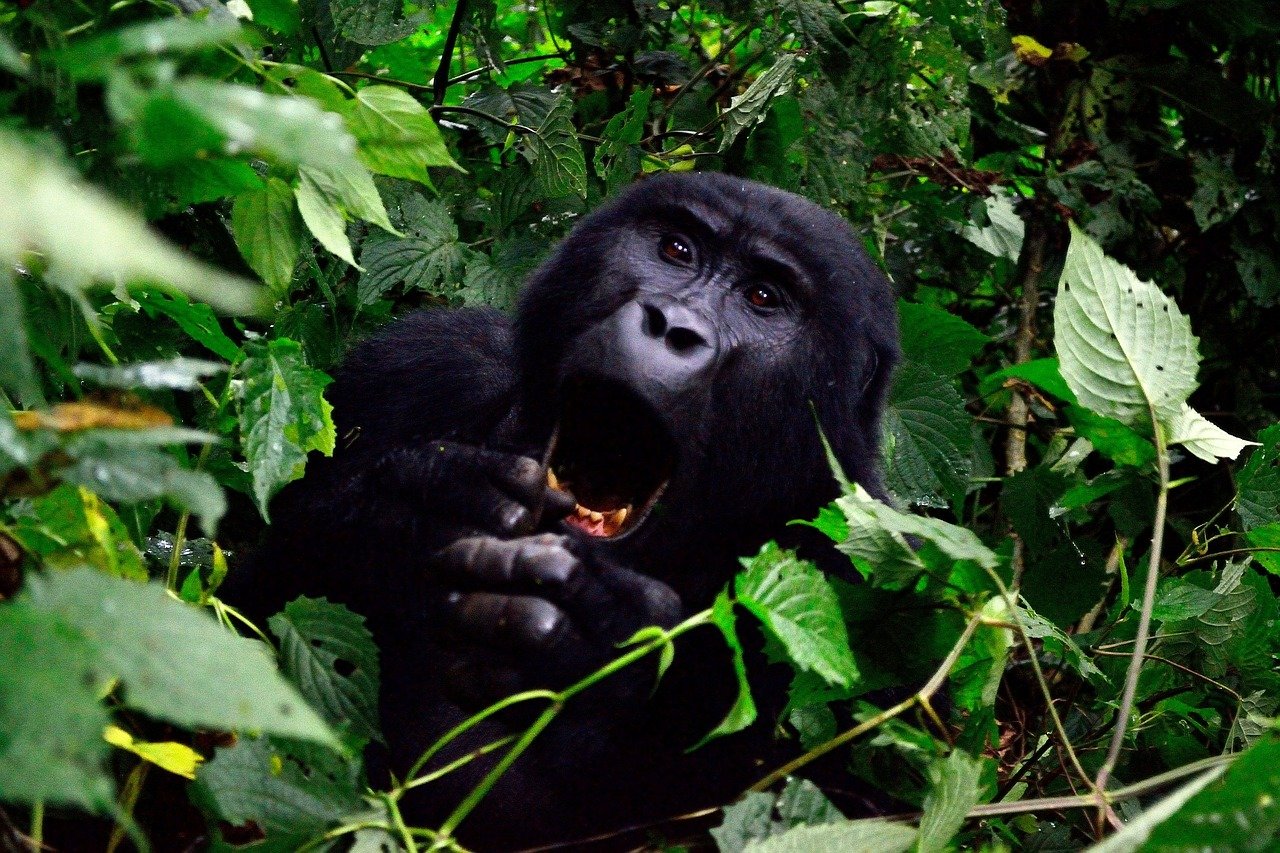
The experience takes place inside Volcanoes National Park, where the mountain gorillas live among bamboo forest, montane vegetation and the slopes of Rwanda’s Virunga volcanoes.Can You Take Photos During Gorilla Trekking in Rwanda?, Photography here is dramatically different from photographing animals from a safari vehicle because you are moving on foot through thick vegetation, uneven terrain and constantly changing natural light. A silverback may be sitting beneath dark bamboo while an infant moves into a brighter clearing only seconds later, so photographers need to react quickly while remaining calm and respecting the instructions of their guides. Travellers preparing for the experience can read more about gorilla trekking in Rwanda and gorilla trekking in Volcanoes National Park before selecting their safari dates.
You do not need professional equipment to return with beautiful photographs. Modern smartphones, compact cameras, mirrorless cameras and DSLRs can all produce memorable images when used correctly. More important than owning the most expensive camera is knowing how to operate it before entering the forest. Gorilla behaviour can change in seconds, and your one-hour encounter passes surprisingly quickly, so this is not the ideal place to begin learning a complicated new camera. Whether you are planning a simple gorilla holiday or a complete luxury gorilla trekking safari, preparing your equipment and understanding Rwanda’s photography rules beforehand will help you enjoy both the photographs and the encounter itself.
Gorilla Photography Rules You Need to Know Before Your Trek
The first and most important photography rule is turn off your flash before reaching the gorillas. Dense rainforest can become surprisingly dark, and automatic camera modes or smartphones may decide that additional light is needed, so never assume that the flash is already disabled. Can You Take Photos During Gorilla Trekking in Rwanda?, Check the setting before leaving your lodge and check it again when trackers indicate that the gorillas are nearby. Rwanda’s official tourism regulations permit photography but prohibit the use of flash, while visitors must also keep their voices low and avoid sudden movements that could disturb the animals. Working with natural light is not only respectful but often photographically superior, because soft forest light preserves the texture of black gorilla fur and the rich greens of the surrounding vegetation.
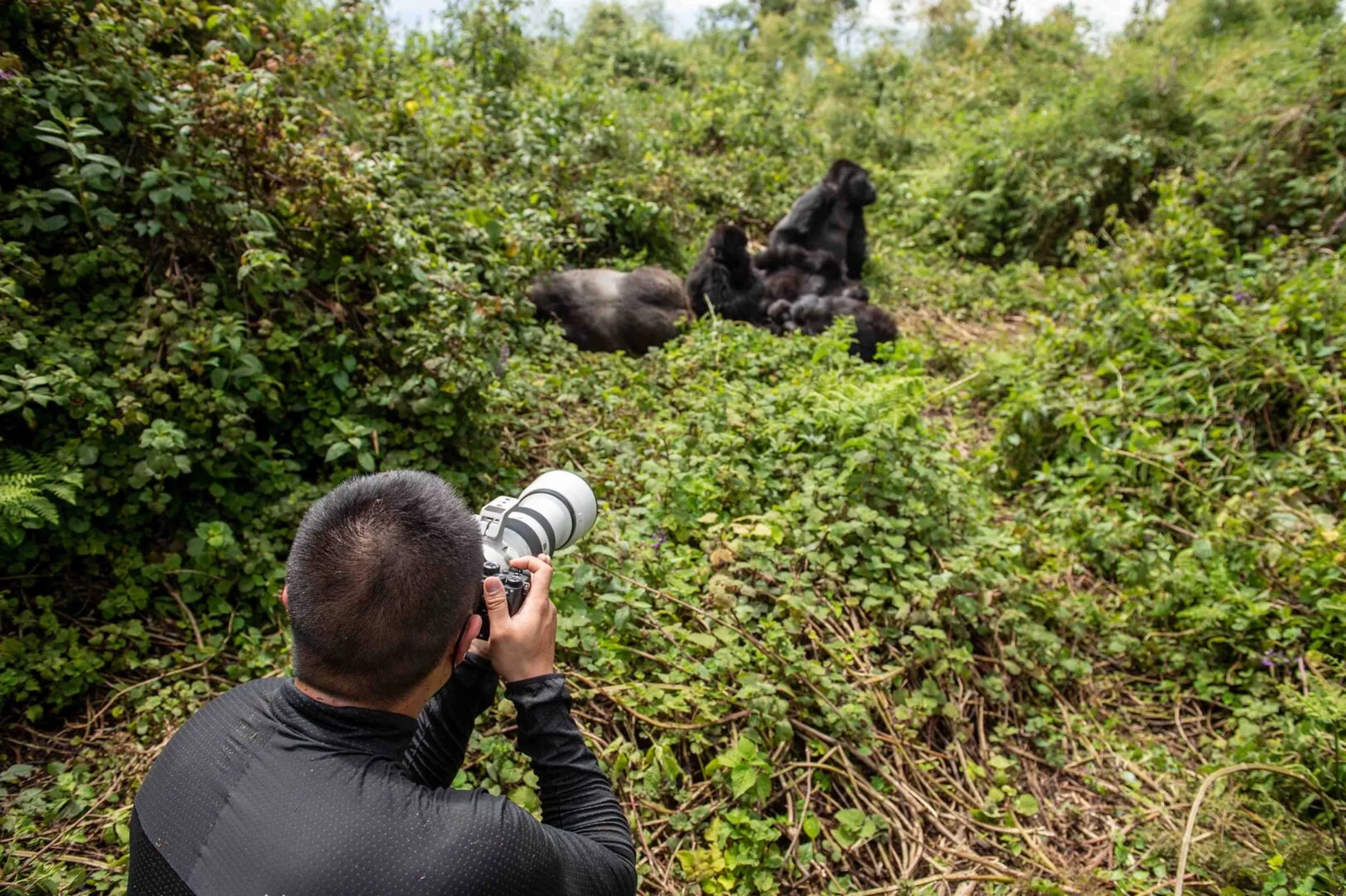
Visitors are also instructed to maintain approximately seven metres of distance from the gorillas whenever possible, and the standard group size is limited to eight visitors. Can You Take Photos During Gorilla Trekking in Rwanda?, Viewing time is limited to one hour once the gorillas are located. If a gorilla approaches you, particularly an inquisitive juvenile, do not move closer, reach toward it or attempt to create a dramatic selfie. Stay calm, listen to your guide and allow the animal to choose its own path. The official RDB guidance specifically instructs visitors to stand still, look away and follow their guide’s directions if a gorilla vocalises or displays toward them.These rules apply whether you are carrying a professional camera or simply taking photographs with your phone.
The health rules surrounding gorilla trekking are equally important. Visitors suffering from a cold, flu or another contagious illness may be denied access because mountain gorillas are vulnerable to human diseases. The minimum trekking age is currently 15 years, while the standard international gorilla permit remains USD 1,500 per person per trek. When planning your Rwanda gorilla trekking tour, remember that the permit gives you the opportunity to enter the protected experience; it does not mean photography overrides conservation rules. The gorillas always come first, and some of the best photographs are created precisely because the photographer remains patient, quiet and unobtrusive.
Best Camera, Lens and Settings for Gorilla Photography in Rwanda
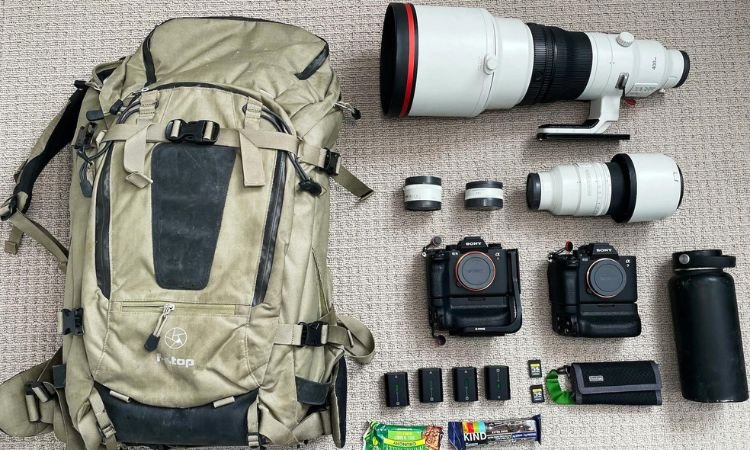
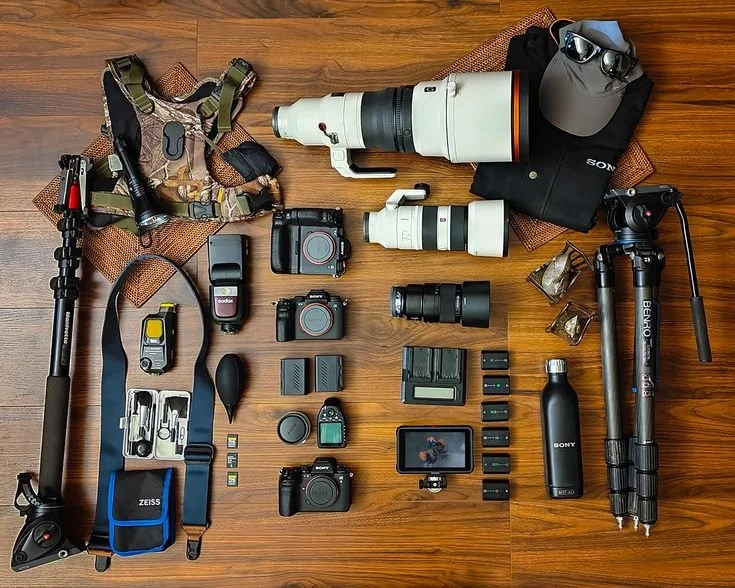
A DSLR or modern mirrorless camera is ideal for serious gorilla photography because these systems generally provide strong low-light performance, responsive autofocus and interchangeable lenses. The forest can shift rapidly between relatively bright openings and deep shade, so a camera that handles higher ISO values comfortably gives photographers greater freedom. However, a familiar mid-range camera will almost always outperform an unfamiliar flagship model in the hands of someone still learning its menus. Can You Take Photos During Gorilla Trekking in Rwanda?, Before travelling for Rwanda gorilla trekking, practise changing ISO, shutter speed, aperture and focus modes without spending long periods looking away from your subject. That preparation becomes invaluable when a baby gorilla suddenly climbs onto its mother’s back or a silverback turns toward an opening in the vegetation.
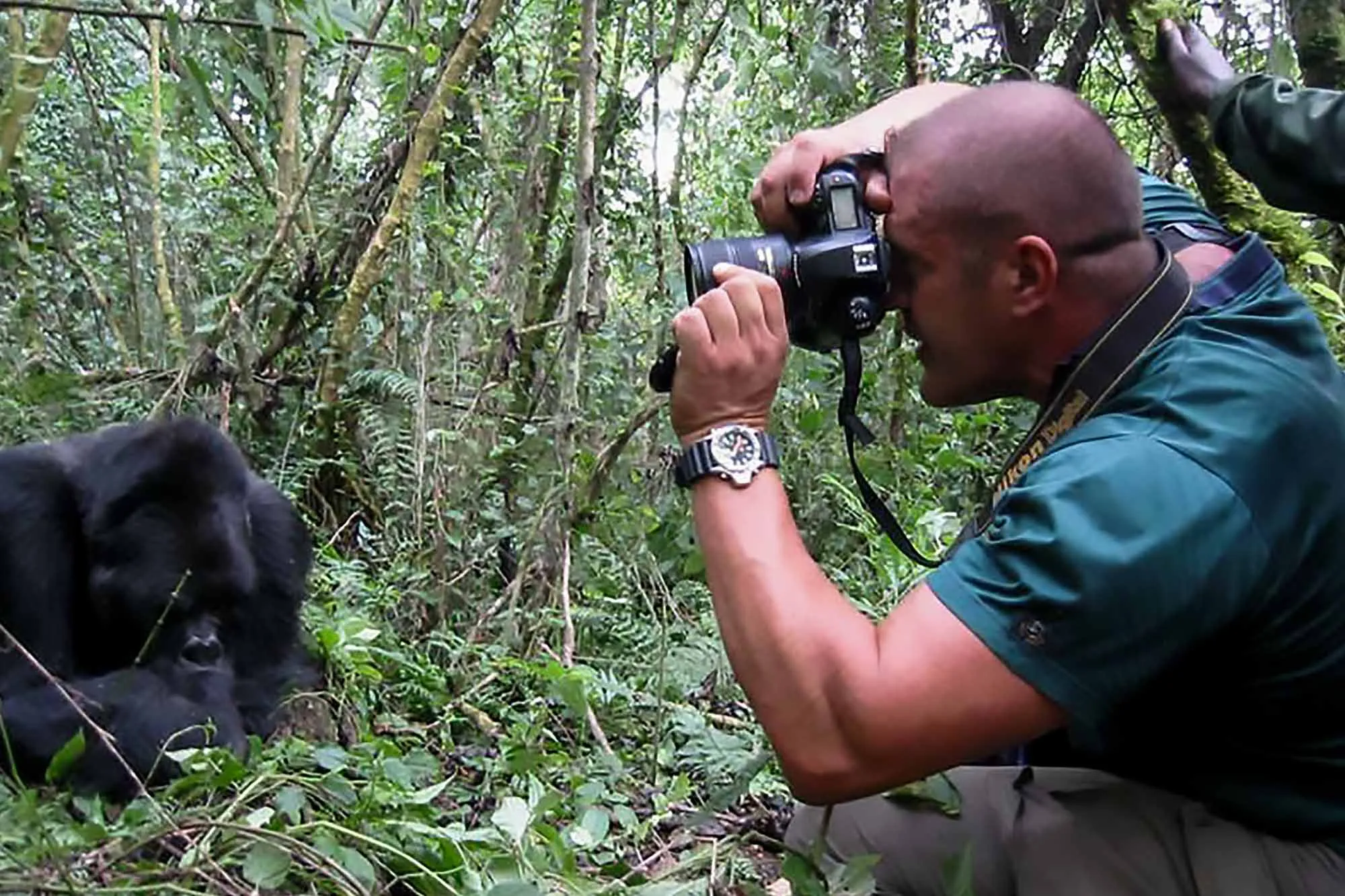
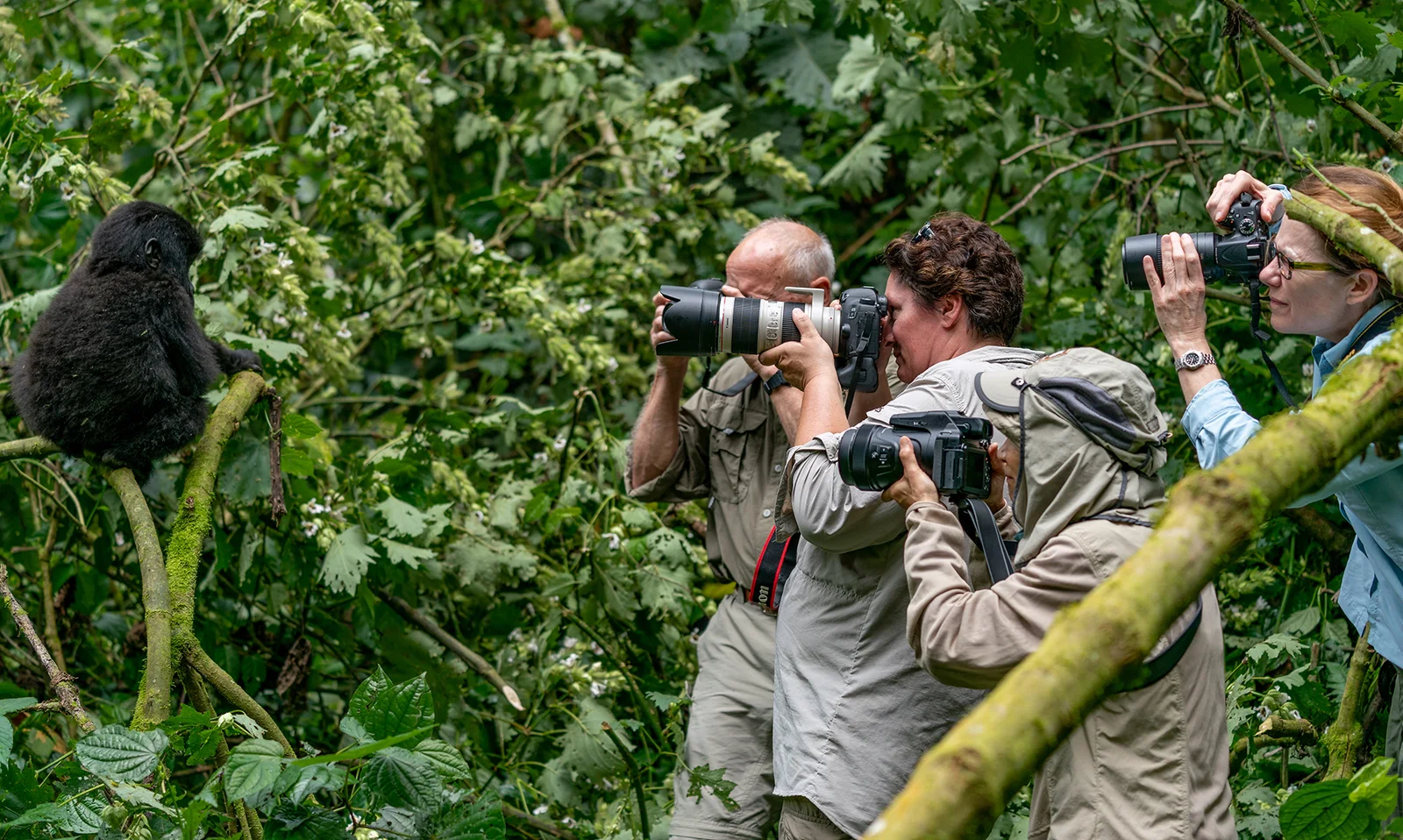
A medium telephoto zoom is particularly useful. A lens around 70–200mm on a full-frame camera provides excellent flexibility for portraits and behavioural images, while longer zooms such as a 100–400mm can be useful when the animals remain farther away. However, bigger is not always better. Can You Take Photos During Gorilla Trekking in Rwanda?, Remember that you may need to carry the lens for several hours over muddy and sometimes steep terrain before reaching the gorillas. A wider lens can also be valuable because it allows you to photograph the gorilla within its forest environment rather than producing only tightly cropped portraits. A silverback surrounded by bamboo and mist can communicate the atmosphere of Volcanoes National Park more powerfully than a frame containing only its face.
Camera settings should respond to behaviour rather than remain fixed throughout the hour. A resting adult may allow a slightly slower shutter speed, while playful juveniles often require much faster settings to freeze movement. Use a wide aperture when light is limited or when you want to separate the gorilla from a complicated background, but increase depth of field when photographing a mother and infant positioned on different planes. ISO should be allowed to rise when necessary; a sharp photograph containing some digital noise is usually far more useful than a clean but blurred image. When photographing a single gorilla, prioritise focus on the eyes. Eye-detection autofocus can be extremely useful, but dense vegetation occasionally confuses automatic systems, so know how to move your autofocus point manually when necessary.
How to Capture Better Gorilla Photos Without Losing the Experience
Successful gorilla photography is as much about observation as equipment. Rather than taking hundreds of photographs immediately, spend a moment watching what the gorillas are doing. A mother repeatedly looking toward an active infant may be preparing to move. Juveniles playing together may pause briefly after a burst of activity. A silverback feeding quietly may eventually raise his head and reveal his face through the surrounding vegetation. Anticipating behaviour creates stronger images than reacting after the moment has already disappeared. Travellers taking two Rwanda gorilla trekking tours often find that the second trek produces better photographs simply because they already understand the rhythm of the encounter.
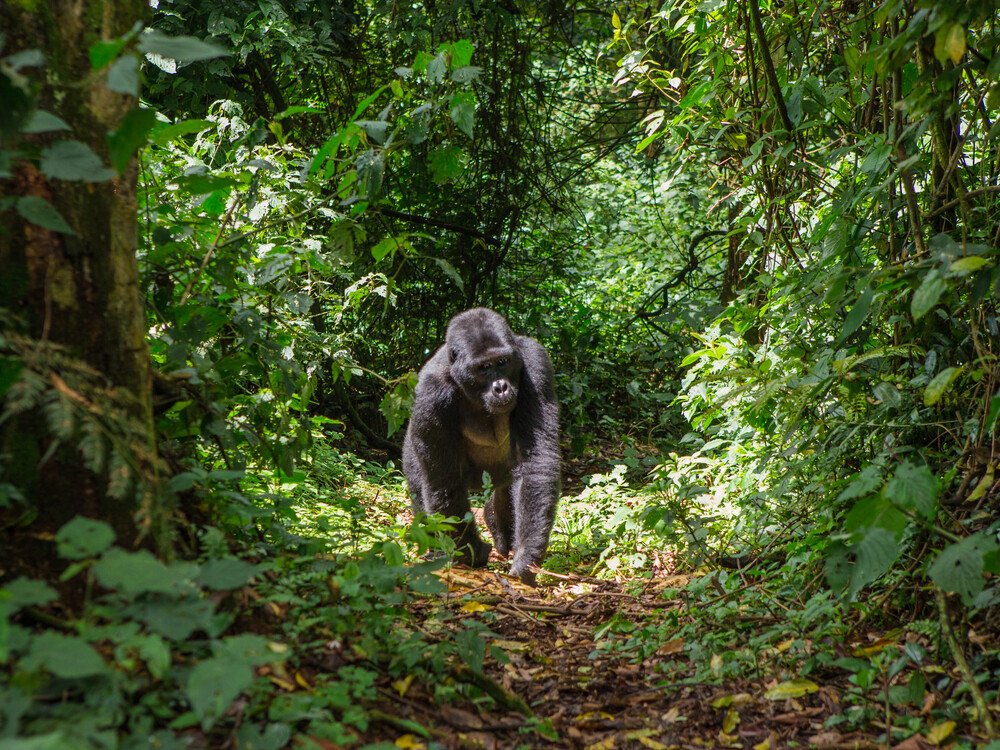
Composition matters enormously in the forest. Leaves, bamboo stems and bright patches of sky can easily distract from a gorilla’s face, so look carefully at the entire frame rather than focusing only on the animal. Use vegetation creatively as natural framing when possible, photograph horizontal compositions for family interactions and switch to vertical orientation when a gorilla sits upright or climbs. Do not move toward the animal merely to remove a branch from your image; wait for the gorilla to move or follow your guide if another appropriate viewing angle becomes available. Photography during mountain gorilla trekking in Rwanda is about working with the forest rather than trying to turn the forest into a studio.
Most importantly, do not spend the complete one-hour encounter looking through a viewfinder. Rwanda limits viewing to one hour precisely because gorilla tourism must remain carefully managed. Take the photographs you want, capture several short videos if appropriate, and then deliberately lower the camera. Listen to the gorillas feeding, notice the sound of bamboo moving and watch family relationships without a screen between you and the animals. Many travellers discover that the moments they remember most clearly are not necessarily the frames they photographed. A camera preserves the experience, but it should never prevent you from actually having it.
Smartphones, Video and Photographing Different Gorilla Behaviour
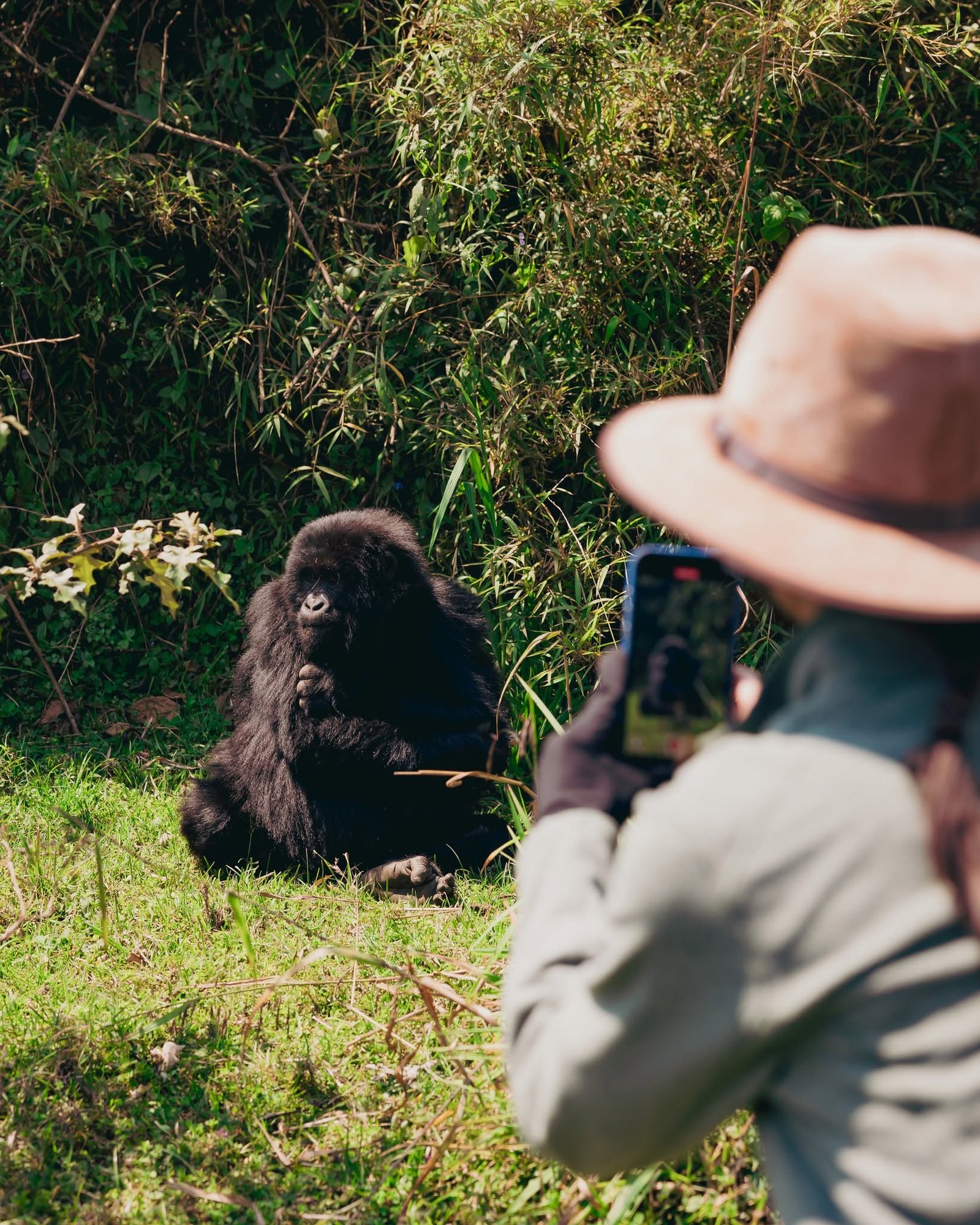
Smartphones can be excellent tools for ordinary travellers asking Can You Take Photos During Gorilla Trekking in Rwanda? Current smartphones are lightweight, simple to carry and capable of producing high-quality photographs when natural light is reasonable. Their biggest advantage is convenience; there is no heavy camera bag, no complicated lens selection and little preparation required. The same photography regulations still apply, however. Can You Take Photos During Gorilla Trekking in Rwanda?, Flash must remain switched off, and visitors should never stretch a phone toward a gorilla simply to create the illusion of a closer encounter. Remaining where your guide has positioned you is more important than achieving an unusual angle.
Video can capture details that still photographs cannot, including the movement of juveniles, the sound of vegetation, a silverback feeding or subtle communication between family members. Short clips can therefore complement your photographs beautifully. Can You Take Photos During Gorilla Trekking in Rwanda?, Keep filming discreet and avoid spending the entire encounter recording continuous video. Ordinary personal photography and video are part of the tourism experience, but travellers planning professional commercial filming should confirm the applicable permissions and conditions separately rather than assuming that the normal tourist trekking permit covers a specialised production.
Different family members also require different photographic approaches. Silverbacks often produce powerful portraits because of their size, facial expression and distinctive silver backs, while mothers and infants offer intimate behavioural scenes. Juveniles are considerably more challenging because they move quickly through vegetation and often change direction unexpectedly, making faster shutter speeds valuable. Instead of chasing every movement, wait for a pause. The same principle applies when photographing golden monkeys in Rwanda, which are even faster and can provide an excellent second primate photography experience after the gorilla trek.
Rain, Clothing, Camera Protection and Using a Porter
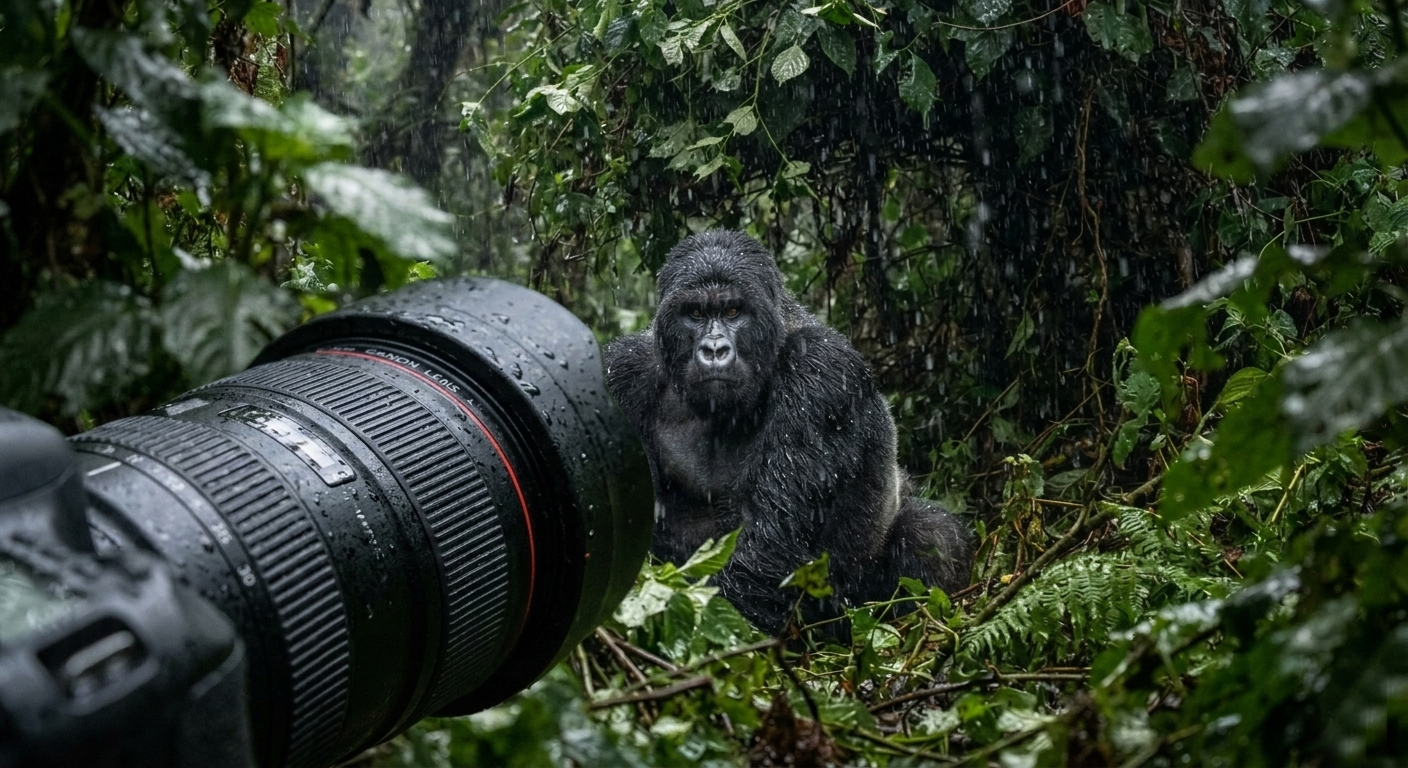
Rain is part of the Volcanoes National Park environment and should be expected at any time of year. Can You Take Photos During Gorilla Trekking in Rwanda?, Official Visit Rwanda guidance recommends sturdy walking shoes, gaiters or protective clothing, gloves and a lightweight waterproof jacket because the forest contains thick vegetation and stinging nettles. Photographers should protect their equipment equally carefully. Can You Take Photos During Gorilla Trekking in Rwanda?, A simple fitted camera rain cover allows you to continue shooting during light rain, while a waterproof camera bag or internal dry bag provides additional protection during heavier showers. Keep several lens cloths accessible because a single water droplet on the front element can soften an otherwise exceptional gorilla portrait.
Rain should not automatically be viewed as bad photography weather. Wet gorilla fur develops beautiful texture, forest vegetation becomes intensely saturated and mist creates depth within the background. Some of the most atmospheric images from Volcanoes National Park are created precisely when conditions are wet and moody. Can You Take Photos During Gorilla Trekking in Rwanda?, The technical challenge is maintaining a sufficiently fast shutter speed as light levels fall, which often requires increasing ISO or opening the aperture. Photographers who arrive prepared for rain can continue working confidently while others are concentrating entirely on protecting their equipment.
If you are carrying a camera body, several lenses, water and rain protection, hiring a porter is strongly recommended. Can You Take Photos During Gorilla Trekking in Rwanda?, RDB confirms that porters are available to help carry daypacks and camera equipment for a fee. Beyond reducing physical strain, a porter allows you to conserve energy for the actual gorilla encounter and provides direct tourism income to people living around the park. This becomes especially valuable on longer treks where several hours of climbing can make even a moderately sized camera bag feel extremely heavy. Travellers adding demanding activities such as a Mount Bisoke hike should build sufficient recovery time into their itinerary rather than scheduling strenuous activities continuously.
Is One Gorilla Trek Enough for Photography?
For most travellers, one trek can produce wonderful photographs and an unforgettable experience. Serious photographers, however, may find that two gorilla trekking days provide considerably greater creative freedom. Wildlife is unpredictable. On the first trek, your assigned family may spend much of the encounter within thick vegetation or the forest light may be particularly difficult. Another family on the following day may be resting in a relatively open area, with infants playing and substantially better photographic conditions. Booking two treks reduces the pressure to achieve every desired image during a single hour.
The second trek also benefits from experience. After the first encounter, photographers can review their work and identify what needs improvement. Perhaps the shutter speed was too slow, the lens unnecessarily long or too much time was spent reviewing photographs instead of watching behaviour. Can You Take Photos During Gorilla Trekking in Rwanda?, The next day, you enter the forest already familiar with the briefing, trek and viewing environment. Travellers interested in multiple encounters can explore luxury gorilla trekking safaris or combine gorilla trekking with a 3-Day Rwanda Gorilla and Golden Monkey Trekking Safari for greater photographic variety.
The financial consideration is important because every trekking day requires its own permit. The standard international permit currently costs USD 1,500 per person per trek, meaning two standard treks represent USD 3,000 in permit fees per traveller before accommodation, transportation and other safari services. For serious photographers, this can still offer more value than spending heavily on additional equipment while relying on a single wildlife encounter. Your camera can only photograph what nature presents, and extra time with the gorillas is the one investment that genuinely creates another opportunity.
Best Time for Gorilla Photography and Building a Complete Rwanda Photography Safari
Gorilla trekking operates throughout the year, and remarkable images can be created in every season. Drier periods are often preferred because trails may be more manageable, but Volcanoes National Park remains a montane rainforest where rainfall can occur unexpectedly. Can You Take Photos During Gorilla Trekking in Rwanda?, Greener periods create their own photographic advantages, including fresh vegetation, dramatic clouds and atmospheric mist. Rather than searching for a month that guarantees perfect conditions—which does not exist—photographers should choose dates that fit their broader Rwanda itinerary and secure trekking permits early. RDB states that bookings operate on a first-come, first-served basis and permits can be reserved in advance.
A photography journey should not end when the gorilla trek is finished. Staying longer around northern Rwanda creates opportunities for golden monkey trekking, a Dian Fossey hike, Mount Bisoke hiking and photography around the scenic Twin Lakes. Can You Take Photos During Gorilla Trekking in Rwanda?, From there, travellers can continue to Lake Kivu, where boats, fishermen, water, rolling hills and sunsets create an entirely different visual atmosphere. Those wanting more active lakeside exploration can incorporate a Lake Kivu adventure.
The strongest complete Rwanda photography itinerary can continue east to Akagera National Park for lions, rhinos, elephants, giraffes and classic savannah landscapes, before heading southwest toward Nyungwe Forest National Park for chimpanzee trekking in Rwanda. Can You Take Photos During Gorilla Trekking in Rwanda?, Bird photographers can add specialist Rwanda birding safaris. This turns one gorilla photography experience into an extraordinary visual journey through rainforest, volcanoes, savannah, wetlands and lakes without needing to leave Rwanda.
Frequently Asked Questions About Gorilla Photography in Rwanda
1. Can You Take Photos During Gorilla Trekking in Rwanda?
Yes. Visitors are allowed to take photographs during Rwanda gorilla trekking, and Rwanda Development Board specifically advises visitors to bring a camera. The key restriction is that flash photography is prohibited. Can You Take Photos During Gorilla Trekking in Rwanda?, Photographers must also obey their guide, remain quiet and respect the required distance whenever possible.
2. Can I use flash when photographing mountain gorillas?
No. Flash photography is specifically prohibited during the gorilla encounter.Disable both normal and automatic flash before reaching the gorillas, particularly when using a smartphone or compact camera that might activate flash automatically in low light.
3. Can I use my smartphone for gorilla photography?
Yes. Smartphones are perfectly acceptable for personal photography and can produce excellent photographs when natural light is good. Keep the flash disabled and remain in the position instructed by your guide. Can You Take Photos During Gorilla Trekking in Rwanda?, Do not extend the phone toward the gorillas or move closer solely to improve a photograph.
4. How long can I photograph the gorillas in Rwanda?
Once the assigned gorilla family is located, visitors are generally allowed one hour with the animals. The maximum tourism group is eight visitors. Because that hour passes quickly, prepare your camera settings before entering the final viewing area.
5. How close can I get to mountain gorillas when taking photos?
Official RDB guidance asks visitors to maintain approximately seven metres or 22 feet from the gorillas whenever possible . Gorillas may occasionally move closer themselves, but visitors should not intentionally approach them. Always follow your guide if an animal moves through the group.
6. What is the best lens for gorilla photography?
A medium telephoto zoom is usually the most versatile choice because it allows close portraits without requiring the photographer to move toward the animals. A 70–200mm-type lens can work particularly well, while longer zooms may be useful for more distant subjects. A wider lens is valuable for photographing gorillas within the beautiful surroundings of Volcanoes National Park.
7. Should I take one or two gorilla treks for photography?
One trek can deliver excellent photographs, but serious photographers often benefit from two because forest light, behaviour and the position of the gorilla family can differ enormously from one day to another. Can You Take Photos During Gorilla Trekking in Rwanda?, Two treks also provide time to improve camera settings after reviewing the first day’s photographs. Each trek requires its own gorilla permit.
8. How much is a Rwanda gorilla permit?
The standard international gorilla trekking permit currently costs USD 1,500 per person per trek, and the minimum trekking age is 15 years. Travellers can combine their permit with private transport, accommodation and additional experiences through a customised Rwanda gorilla trekking safari.
9. Should photographers hire a porter during gorilla trekking?
Yes, particularly if you are carrying a substantial camera bag. Porters are officially available to help visitors carry their daypacks and equipment. This reduces fatigue on steep or lengthy treks and allows photographers to save their energy for the actual gorilla encounter.
10. What other photography experiences can I combine with gorilla trekking?
Excellent additions include golden monkey trekking, Lake Kivu, Akagera National Park, Nyungwe Forest National Park, chimpanzee trekking, the Dian Fossey hike and Rwanda birding safaris. Together, these experiences provide primate portraits, savannah wildlife, forests, volcanoes, birds and landscape photography within one country.
Book Your Rwanda Gorilla Photography Safari
If the question Can You Take Photos During Gorilla Trekking in Rwanda? has inspired you to begin planning the journey, Visit Rwanda Safaris can structure the trip around the kind of photographs and experience you actually want. Can You Take Photos During Gorilla Trekking in Rwanda?, A first-time visitor may prefer three days around Volcanoes National Park with one gorilla trek and golden monkey trekking, while an enthusiastic wildlife photographer may want four or five nights with two separate gorilla permits, carefully positioned accommodation and enough recovery time between trekking days. The itinerary can also include private transportation so that cameras, lenses and other valuable equipment remain organised throughout the journey.
For a broader photographic safari, we can connect gorilla trekking in Rwanda with Akagera National Park for Big Five game viewing, Lake Kivu for scenic landscapes and Nyungwe Forest for chimpanzees and other primates. Can You Take Photos During Gorilla Trekking in Rwanda?, Travellers seeking a premium journey can combine some of Rwanda’s finest lodges with luxury gorilla trekking safaris, while active photographers can add Mount Bisoke or a Dian Fossey hiking experience to capture more of the extraordinary Virunga landscape.
The best time to begin organising your safari is before preferred gorilla permits and lodge rooms become limited. Your photography journey can be designed around travel dates, budget, camera interests, fitness level, preferred accommodation and whether you want one or several primate encounters. Can You Take Photos During Gorilla Trekking in Rwanda? Explore our complete Rwanda gorilla trekking guide, compare Rwanda gorilla trekking tours or begin planning through our safari booking page. Book your Rwanda gorilla photography safari and come prepared not only to capture extraordinary photographs, but to experience one of Africa’s most remarkable wildlife encounters for yourself.